





















































Here’s the thing about hitting your fifties and beyond: it’s not a downhill slide, it’s a fresh, wide-open lane where you finally know what you like, you’ve stopped pretending you enjoy kale crisps, and you get really good at telling people “no” without guilt. Ageing well isn’t about chasing youth; it’s about leaning into habits that help you feel strong, sharp, and delightfully alive.
Below, we break down the essentials—fitness, nutrition, and that all-important mental spark—into something you can actually use (and maybe even have a laugh about along the way).
Also read: Practical Budget-Friendly Tips for Staying Healthy and Fit
Staying strong and active
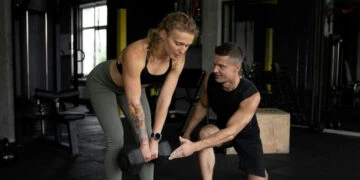
If you’ve noticed the fitness world shifting its attention to older adults lately, you’re not imagining it. The days of “senior exercise” being limited to slow circles in a folding chair are long gone. Research shows that adults over 50 can safely take on more dynamic workouts—think strength training, low-impact aerobics and even modified high-intensity interval training—so long as they start gradually and move with good form.
Research shows that adults over 50 can safely take on more dynamic workouts.
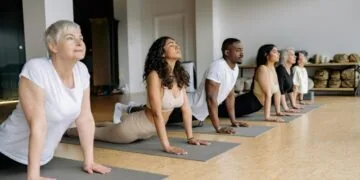
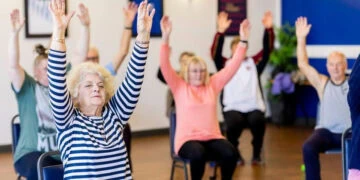
At places like The Residence at Orchard Grove in Shrewsbury, this shift is already in full swing. Residents get two fitness classes a day—yes, every day—and they’re far from slow toe taps. Their barre-and-balance sessions mix stretching and strength with upbeat tunes, giving major Sinatra-meets-stability vibes. Their engagement director even calls the group her “mini Rockettes”.
Why strength training is your new best mate
Strength training is the superhero of ageing well. It fights muscle loss, supports bone strength and helps prevent falls, plus it makes everyday tasks, like carrying the shopping, a whole lot easier.
The power of low-impact cardio
Walking, water aerobics and gentle dance routines do wonders for heart health without punishing your joints. Functional fitness—exercise that mimics daily movement—helps you twist, reach, lift and bend with the kind of ease that makes everyday life smoother.
Indoor fitness: Your winter survival strategy
When cold weather hits, staying active gets trickier, which is why winter fitness is a big deal at Orchard Grove. Movement keeps muscles warm, helps prevent falls and lifts spirits (because let’s be honest: February does its best to break us). From T’ai Chi to barre classes, these sessions create structure, routine and, maybe best of all, community.
For those who prefer home workouts, illustrated guides and online programmes offer step-by-step exercises designed for stability, flexibility and core strength. And yes, even HIIT can be adapted for older adults: short intervals, low intensity, slow progression. No burpees required. Ever.
Smart nutrition for the over-50 body
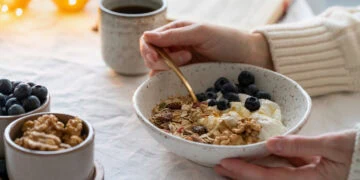
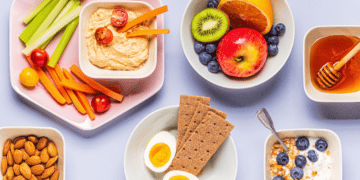
Healthy eating at 50+ isn’t about shrinking your meals to salad-only sadness. It’s about fuelling your body with foods that boost energy, protect bone density, support muscle recovery and keep your brain firing on all cylinders. Think of it less like a “diet” and more like stocking your internal toolkit.
Think of it less like a “diet” and more like stocking your internal toolkit.
Go big on nutrient density: As we age, the body becomes pickier about how it absorbs nutrients. So every bite counts. Load up on colourful produce, whole grains, pulses and lean proteins. Your bones will appreciate calcium and vitamin D. Your muscles will thank you for quality protein. Your immune system will quietly fist-bump you for every antioxidant.
Hydration still matters (even if you don’t feel thirsty): Thirst cues become sneakier with age. Keep sipping water throughout the day, and don’t rely on thirst alone as a signal. Herbal teas, broths and water-rich fruits count too.
Foods that play nice with your metabolism: As metabolism slows a tad, balanced meals help stabilise energy and mood. Think: protein + healthy fats + fibre. The “don’t eat this!” lists aren’t nearly as important as simply choosing whole foods more often.
Keeping the mind sharp and the spirit curious
Ageing well isn’t just about muscles and minerals. Your brain wants attention too—preferably the fun kind. Cognitive engagement, social interaction and curiosity are some of the best things you can do for long-term mental agility. Whether you prefer puzzles, podcasts or learning to play the ukulele, the point is to keep your mind busy with things that excite you.
Digital brain boosters are a thing: Online platforms, such as Age UK’s brain-health tools, offer memory challenges, cognitive assessments and tips for stress management. Think of them as the mental equivalent of going to the gym, minus the sweaty towels.
Community is not optional: Places like Orchard Grove understand that wellbeing isn’t one-dimensional. Their programme blends fitness with community events, arts, culture and lifelong learning. When residents show up for a workout, they’re also showing up for connection—and that’s half the magic.
Movement + socialising = feel-good formula: Group classes don’t just strengthen muscles; they strengthen bonds. Showing up for a daily routine, even something as simple as T’ai Chi or chair yoga, creates a rhythm to your day and a sense of shared purpose.
Ageing well is an art (and you’re the artist)
Feeling vibrant after 50 isn’t about trying to look 25 again. It’s about embracing the energy, wisdom and freedom this chapter offers. Move your body in ways that feel good. Nourish yourself with food that supports your goals. Keep your brain curious. Surround yourself with people who make you laugh. And, most importantly, enjoy the process, because ageing isn’t the enemy. In many ways, it’s the best stage yet.
If “healthy ageing” had a slogan, it might just be: More joy. More strength. More you.