










































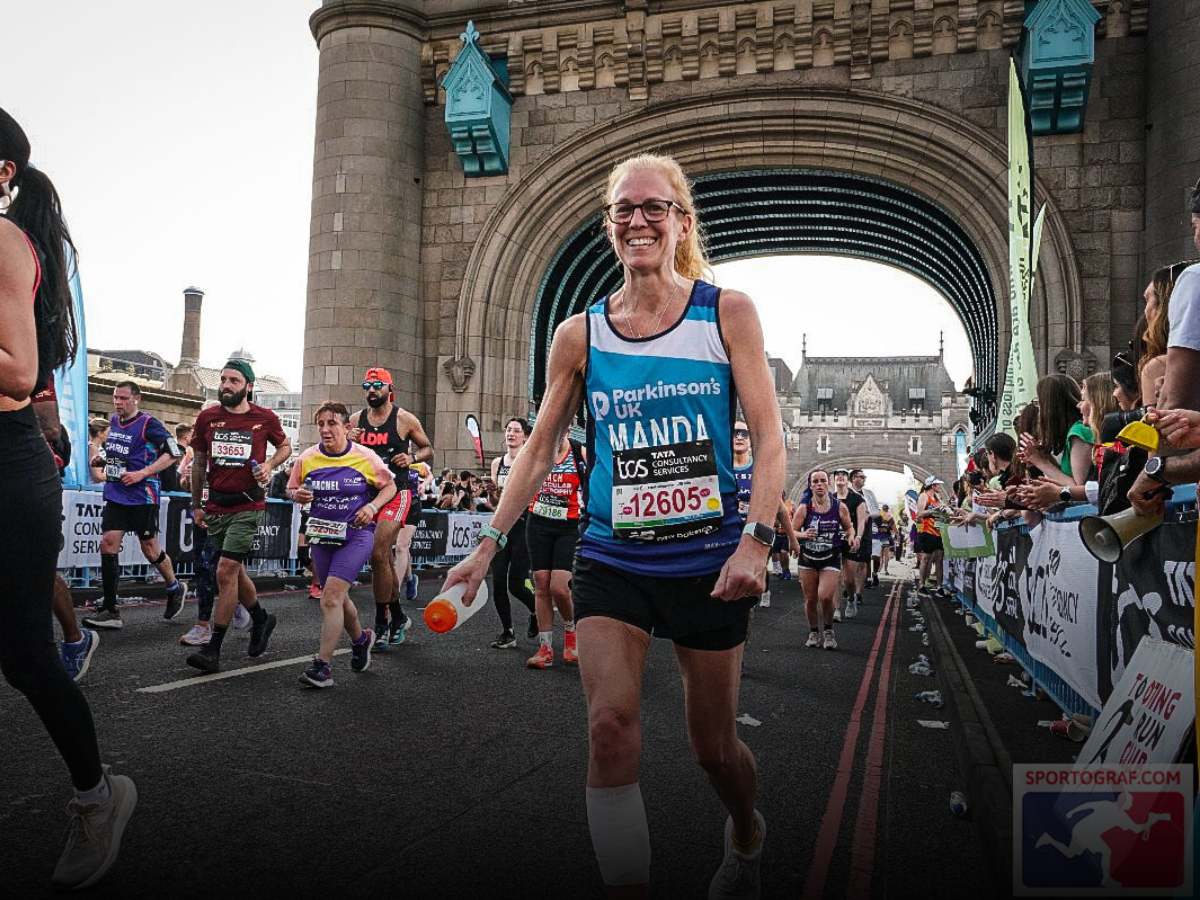
When Amanda Palmer was diagnosed with Parkinson’s disease in 2021, her first response was not acceptance or clarity, but fear in its most consuming form.
“Fear. Absolute whole body and mind consuming fear,” she says. “I catastrophised my situation. All I could see was the end stage of Parkinson’s – me in a wheelchair, totally unable to function independently, totally reliant on other people.”
In that moment, there was no sense of a gradual journey ahead, only an imagined ending that arrived all at once in her mind. The reality, as she would later come to understand, is far more complex.
“I wasn’t able to see that Parkinson’s is a journey and a diagnosis doesn’t bypass the journey and drop you instantly at the end. I couldn’t see the ‘living’ part of the journey.”
Learning that a diagnosis is not the end of the story
Processing that diagnosis did not happen immediately. It unfolded slowly in the weeks that followed, shaped by conversations, tears and the quiet support of those closest to her.
“I am lucky that I have an incredible group of people around me who supported me, listened while I rambled my fears, held me when I cried and allowed me space and time to come to terms with how my life might change direction.”
Out of that difficult period emerged a mantra that now anchors her thinking.
“Grieve, believe, achieve. Grieve for the life lost, believe you still can do things you love and go and achieve your goals and challenges.”
“Grieve, believe, achieve. Grieve for the life lost, believe you still can do things you love and go and achieve your goals and challenges.”
It is a philosophy that makes space for loss without allowing it to define what comes next. Over time, it also reshaped how she understands strength itself.
Finding a version of strength that looks completely different
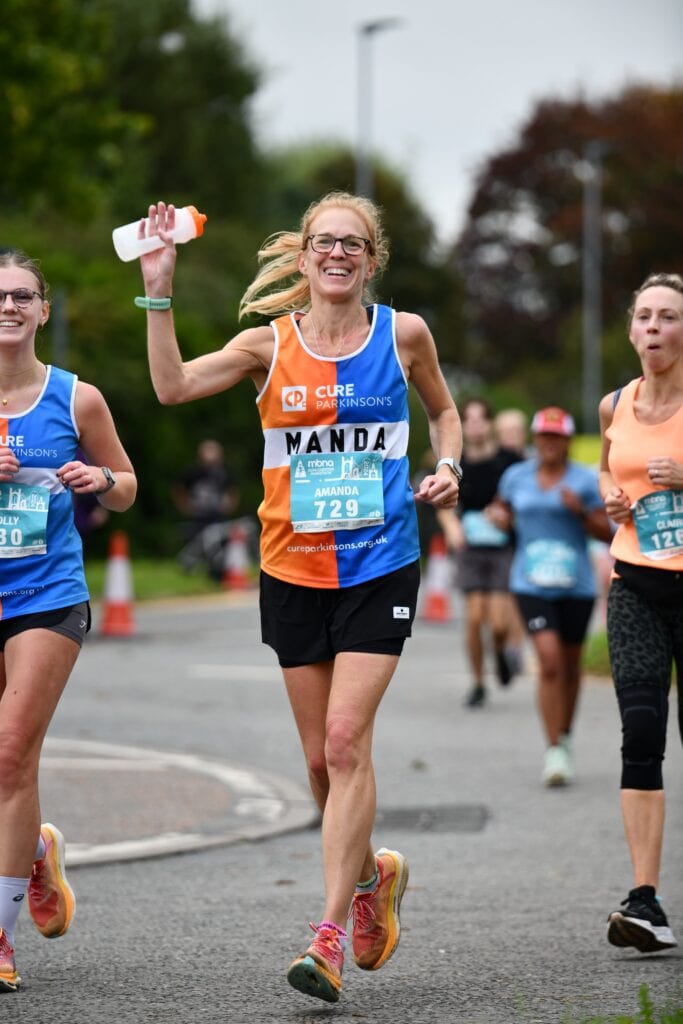
“Strength could be just showing up. It could be admitting you’re struggling. It could, weirdly, be admitting your vulnerabilities.”
For Amanda, strength is no longer about suppressing difficulty but acknowledging it. “I’ve learnt that strength isn’t in never admitting life is hard, but in admitting it is, because you know you have the mindset and tools to get back to days where you are okay.”
That shift has also transformed how she defines success in running. Before Parkinson’s, success was measured in pace and personal bests. Now, it is far simpler. “Success is no longer about how fast I can run but in that I do run.”
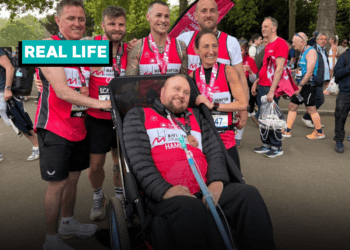
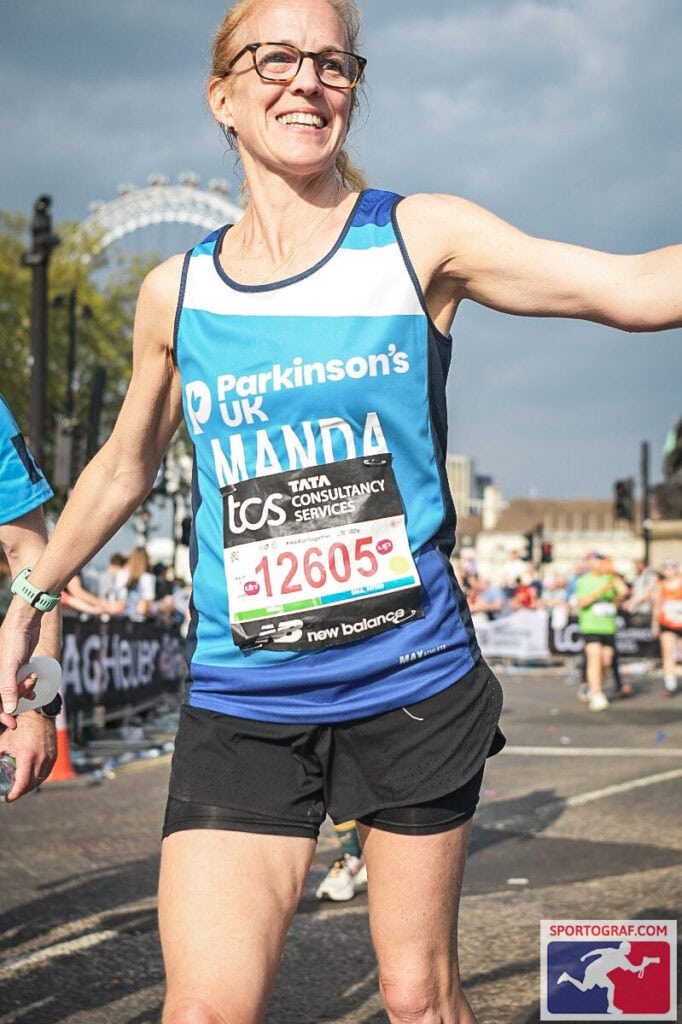
That distinction became especially real during the 2025 London Marathon, when dystonia in her leg and an Achilles injury forced her into one of the hardest races of her life.
“I damaged my Achilles at mile 3. That day, my success was not in completing the event in a PB, but in not quitting and instead limping my way round the course and crossing the finish line.”
It was, by her own account, her slowest marathon – and her most meaningful.
Also read: “Type 1 Diabetes Hasn’t Stopped Me” – How Colleen Smith Balances Blood Sugar, Grit and 10Ks
A place where nobody asks you to hide
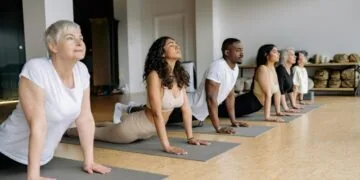
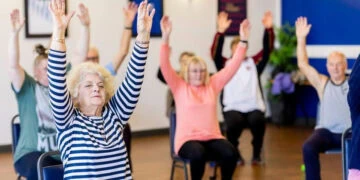
Her relationship with movement has been strengthened through her involvement with PD Warrior, an exercise programme designed specifically for people living with Parkinson’s. “I was given an info sheet about PD Warrior at my diagnosis,” she explains. “I attended an initial course and then graduated to the community classes.”
What struck her most was not only the structure of the programme, but the environment it created. “The great thing about the classes is that everyone attending has Parkinson’s so you don’t ever feel self-conscious.”
In that space, there is no need to mask symptoms or explain movement that might look different from day to day. “It’s a safe place where you can relax and not try to hide what your body is currently doing, or rather refusing to do.” That sense of acceptance allows something important to return: confidence in the body. “I think because you are in a safe place you relax and appreciate what your body can still do and that increases confidence.”
The training itself focuses on exaggerated, high-amplitude movement designed to counteract the physical symptoms of Parkinson’s. For Amanda, it complements her running rather than replaces it.
“Running is what I love. I always have. PD Warrior covers moves that are beyond running and are specifically designed to work on the symptoms that can come with Parkinson’s.”
She describes the relationship between the two as a “yin-yang”. “It’s very much about exaggeration and amplitude. The PD Warrior classes will hopefully allow me to keep on running by pushing my body to use rather than lose the movements that Parkinson’s tries to steal.”
The difficult days that require a different kind of strength
There are still difficult days, particularly when dystonia affects her foot and makes running painful and unpredictable.
“A difficult training day at the moment is dystonia in my foot which makes running almost impossible and certainly very painful.” Even then, her approach remains consistent.
“I never skip a session. That’s my rule to myself. I will always complete the time set aside but I may just adjust my activity.” That might mean slowing to a walk or adapting her form on a treadmill, but the principle remains the same: continue moving forward in whatever way is possible. “I think pushing through is my accountability to myself. I won’t let myself down and I won’t admit defeat to Parkinson’s.”
Two consecutive marathons capture this mindset more clearly than anything else. In 2024, everything came together. Her training held, her body cooperated and she crossed the finish line in under four hours.
“I had a little tear knowing on that day I was stronger than Parkinson’s.”
“I had a little tear knowing on that day I was stronger than Parkinson’s.”
A year later, the experience could not have been more different. The injury came early, the pain came quickly, and the race became something entirely unexpected. “That year it felt like Parkinson’s did everything it could to knock me off balance but I wasn’t prepared to admit defeat.”
She finished the course slowly, determinedly, and in her own words, it became her greatest victory.
“This was probably my biggest victory.”
The reality of Parkinson’s that people often do not see
Part of Amanda’s mission now is to challenge misconceptions about Parkinson’s, particularly the idea that it only affects older people. “It’s not an old man’s disease, it does affect women and it does affect the young.”
She also speaks openly about the hidden symptoms that shape daily life in ways others often do not see. “The fatigue, the sleep disorders, the anxiety, the apathy and so many other symptoms you’d only realise if you talk to people with Parkinson’s.”
What people sometimes interpret as positivity, she explains, can mask a far more complex reality. “I think people sometimes see a ‘positive parky’ and think oh it’s not that bad then. What they don’t see are the mental battles, the self-doubt.” Her approach is not about ignoring difficulty but choosing how to respond to it.
“Determination and positivity are life choices.”
“Determination and positivity are life choices.”
And that mindset has already begun to ripple outward, inspiring others living with the condition.
“Not long after my first marathon a lovely chap contacted me and said he had been diagnosed and was spurred on to apply for a marathon himself after seeing me.” For Amanda, that impact matters deeply.
“Active “parkies” are a great community to be a part of.”
Why movement became more than just exercise
At the heart of everything is movement, not just as exercise but as a form of mental resilience. “Movement is medicine,” she says. “On days when I’m unable to exercise, I definitely notice my mood slip and self-doubt enter my head.”
There is a clear cycle between physical movement and mental strength that she has learned to trust.
“You exercise and feel strong so because you feel strong you want to move more and so it goes on.”
The simplest message for anyone newly diagnosed
For anyone newly diagnosed and unsure of what life might look like ahead, her message is steady and unembellished. “There is a life ahead, a rich and rewarding life if you choose it. Yes there’s days where you might ask why me, but know that you can still live a good life.”
It may not be the life she once imagined. But it is still hers.
And she continues to meet it the same way she meets every challenge: one step at a time, with honesty, discipline, and the quiet determination to keep moving forward.
“Grieve, believe, achieve.”
Parkinson’s UK is the charity that’s here to support every Parkinson’s journey, every step of the way. For information and support, visit parkinsons.org.uk or call the charity’s free, confidential helpline on 0808 800 0303.