




























































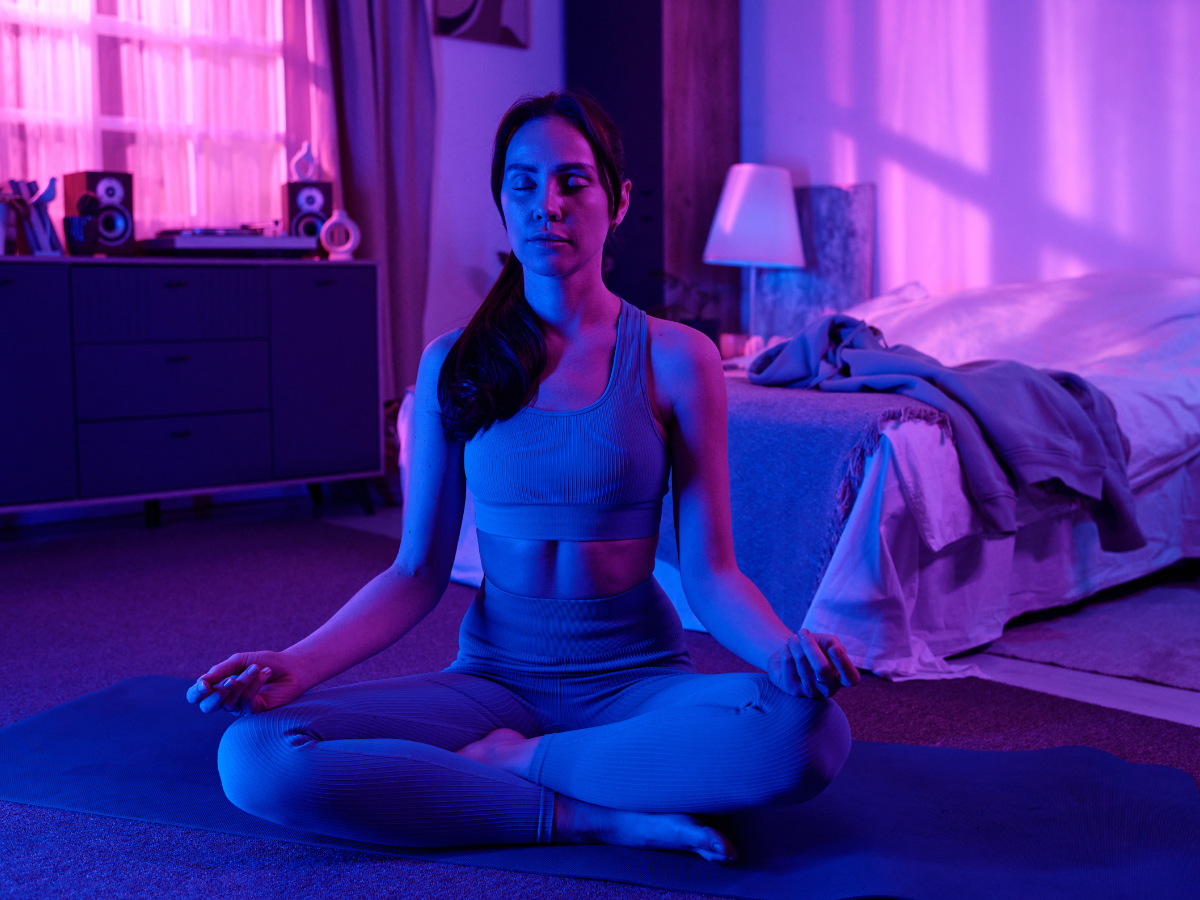
By evening, most bodies are no longer operating at peak form. After hours spent sitting at a desk, commuting and scrolling on our phones, our bodies can start to feel stiff and tense. Hips become stiff, the shoulders creep up and the neck acts as though it’s taken personal offence. Bedtime yoga steps in at just that moment, not with a fanfare, but with quiet competence.
That’s part of its appeal. Bedtime yoga isn’t flashy nor intent on turning anyone into a different person by Thursday. It’s gentle, practical, and easy to live with. Practised regularly, it can support flexibility, smoother movement, steadier breathing, and a calmer mood before sleep.
Why does the body loosen up at night?
The body often loosens up at night because it’s finally being asked to do something other than sit in one position for hours. Gentle stretches, slow twists and easy folds give muscles and joints a chance to move through comfortable ranges again. Bedtime yoga works well here because it feels less like a workout and more like plain common sense.
This matters because flexibility isn’t only for dancers, gymnasts or the mysteriously bendy person in every class. It pays its way in everyday life. Reaching into a cupboard, tying your shoelaces, turning in bed or picking up a bag can feel noticeably easier when your body moves with less resistance and greater ease. Of course, one stretch before bed isn’t a miracle cure in leggings. The real magic is in repetition. A short bedtime yoga routine, done most evenings, gives the body regular opportunities to soften, lengthen, and move more comfortably.
Mobility feels better when the mind slows down
Once flexibility starts improving, mobility is the next useful piece of the puzzle. If flexibility is about muscles lengthening, mobility is about joints moving well, under control, through the ranges needed for everyday life. That’s what makes daily tasks feel easier rather than slightly theatrical.
One of the reasons bedtime yoga is so practical is that it blends stretching with controlled movement. The hips, spine, shoulders and ankles are encouraged to move with steadiness rather than force, which is refreshingly civilised in a world determined to turn everything into a challenge. The result is subtle, not showy. You may find yourself getting out of a chair more smoothly or climbing the stairs with less muttering.
Then there’s the calmer side of the story, and that’s just as important. Bedtime yoga usually pairs movement with slower breathing, which helps take the edge off an overly busy evening. When your breathing settles, the body often feels less braced. When the body feels less braced, moving about can feel easier, too.
Mobility and calm belong in the same conversation for good reason. Bedtime yoga doesn’t just stretch muscles. It encourages the whole system to wind down together, which is often why the practice feels both soothing and physically useful.
A calmer bedtime yoga, one stretch at a time
This is why bedtime yoga keeps its appeal. It’s simple, manageable, and blissfully free of wellness theatre. No expensive gear, no grim routine, no need to become the sort of person who says “journey” three times before breakfast. Just a few steady minutes that help the body feel more open and the evening feel less overwhelming.
Better still, that simplicity gives the habit real staying power. Bedtime yoga supports flexibility, encourages better mobility and helps create deep calm before sleep, not through grand promises, but through repetition. Night after night, it offers the same useful advice: slow down, unclench, breathe properly, and let the day wind itself up. Over time, those modest minutes can build a body that moves more easily and a mind that settles more kindly.