






















































There is a particular kind of betrayal that happens when you walk into a room and forget why you went there. You stand beside the washing basket, staring into the middle distance. Was it your charger? A glass of water? Did you come here to solve a murder? For five strange seconds, your own brain treats you like a suspicious character in a detective series.
Then the reason returns. Usually. Moments like this can feel more loaded as we get older. A forgotten name at 25 is funny. At 45 or 65, the same blank spot may inspire a private Google search at 1 a.m. Yet the story of the ageing brain is more interesting than the old “everything goes downhill” script suggests.
The brain changes with age, yes. Some kinds of thinking may become slower, and certain memory slips become more common. But the adult brain also retains an ability called neuroplasticity: the capacity to change its activity, connections, and organisation in response to experience, learning, and challenge. So, can you train an ageing brain? Yes, but probably not in the way the internet has sold it to you.
Also read: No Magic Pills, Just Superfoods That May Help Protect Your Brain
Your brain never signed a retirement form
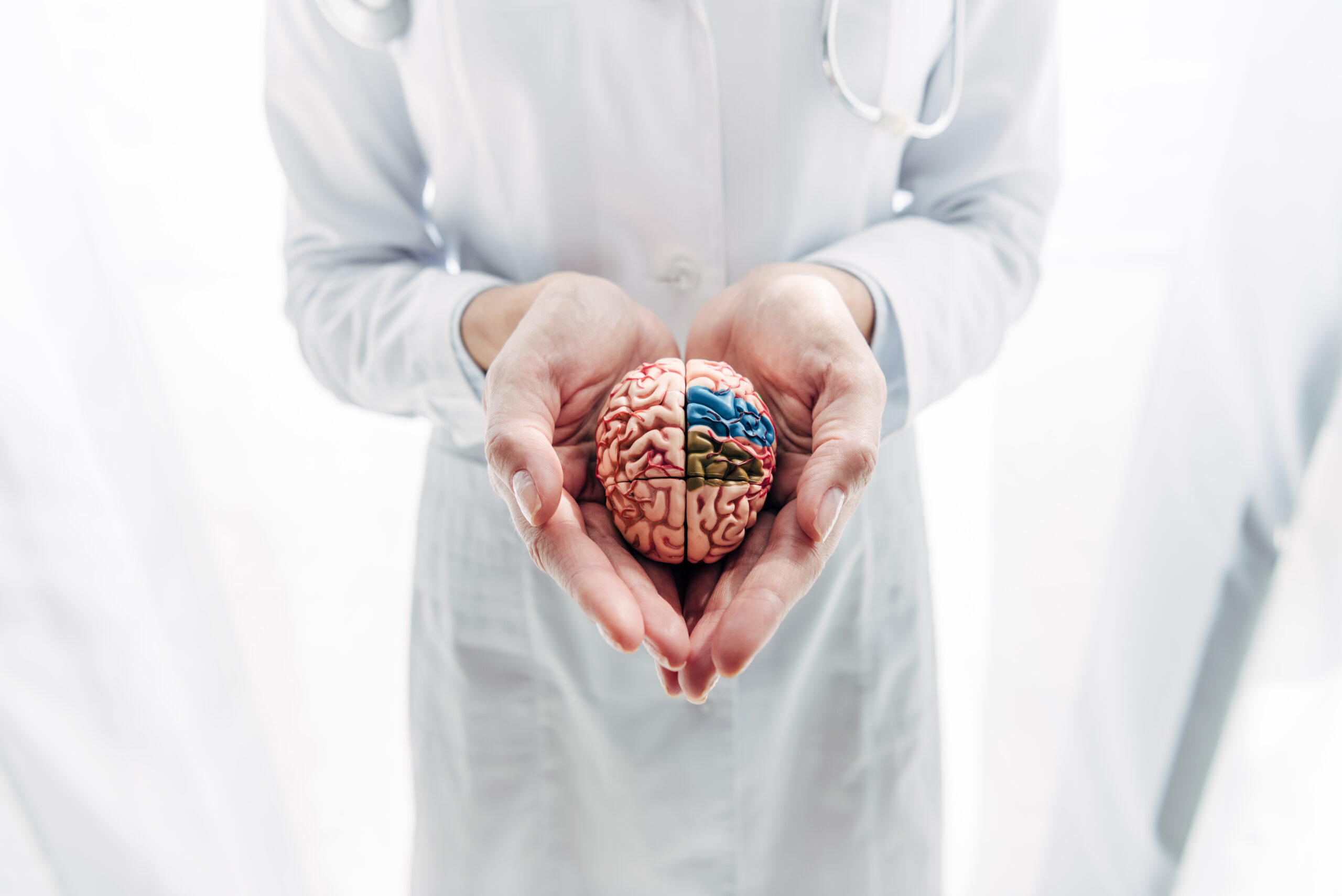
For years, the brain was imagined as wet cement: shaped early, then set. Modern neuroscience offers a more flexible view. Neuroplasticity is the brain’s ability to adapt. Connections can strengthen or weaken, networks can shift and experience can influence function and structure. This capacity continues throughout life, though it changes with age.
Ageing does bring biological changes. Some regions shrink, communication can shift and certain tasks may take longer. But “changes with age” is not the same as “cannot change.” Healthy older adults may find recalling names or multitasking harder, while abilities like vocabulary often remain stable. The brain is not a fading battery but a system adapting to new conditions. So what kinds of experiences give an older brain a reason to adapt?
The crossword has hired an excellent publicist
Mention brain training and someone will inevitably produce a crossword. Crosswords are enjoyable. Sudoku has probably saved millions of people from making eye contact in waiting rooms. But doing one familiar mental activity again and again can make you better at that activity without magically upgrading every corner of cognition.
This is where the brain-training story gets slippery. Research on cognitive training in healthy older adults often finds improvements on tasks people actually practise. The harder question is transfer: do those gains spread to different skills and everyday life? Results are mixed.
This is where the brain-training story gets slippery. Research on cognitive training in healthy older adults often finds improvements on tasks people actually practise. The harder question is transfer: do those gains spread to different skills and everyday life?
Imagine playing a racing video game for six months. You may become spectacular at taking a digital hairpin turn at 180 kilometres per hour. Your parallel parking outside the chemist’s could remain an unfolding tragedy.
Cognition is not one muscle. Memory, attention, processing speed, language, planning and spatial skills involve overlapping but distinct systems. Training one task may sharpen a specific ability, yet broad cognitive health is a larger project. It involves the brain, the body supplying that brain and the life repeatedly asking it to do things.
The brain likes a little productive awkwardness
Think about the last time you learned something that made you feel mildly ridiculous. Maybe you tried a new language and confidently said the wrong word. Maybe you picked up a guitar and discovered your fingers had formed a labour union. Maybe a younger relative showed you a new app while you tapped the screen with the concentration of someone defusing a bomb.
That awkwardness can be a clue. You are outside autopilot. Novel, demanding activities may require attention, memory, error correction, coordination and repeated adjustment. Those demands matter because neuroplastic change is tied to experience. The brain responds to what it repeatedly has to do.
Novelty alone is not fairy dust
Buying a ukulele and allowing it to become decorative furniture will not reorganise your brain through vibes. Challenge needs engagement. Practice matters. So does difficulty that sits between “I can do this half-asleep” and “I would like to throw this violin into the sea.”
Challenge needs engagement. Practice matters. So does difficulty that sits between “I can do this half-asleep” and “I would like to throw this violin into the sea.”
Research on learning in older adults supports a nuanced picture. Cognitive and neural plasticity remain possible later in life, but the size and reach of training effects vary. Studies of second-language learning, for example, have reported promising findings involving attention, memory and brain connectivity, while reviews also note inconsistent results. So yes, learn Spanish. Take dance lessons. Just do not expect guaranteed neurological doses.
Sometimes an older brain builds a diversion
One of the most fascinating ideas in cognitive ageing has little to do with making the brain young again. It may adapt by working differently. Researchers have proposed that older brains can sometimes recruit additional neural resources to help maintain performance when familiar systems become less efficient.
Think of a city after a major road closes. Traffic does not vanish. Drivers find side streets, take longer routes and discover one cursed junction everyone now hates. The brain may show its own versions of rerouting and compensation.
This changes the emotional tone of ageing. The goal does not have to be restoring your brain to its 22-year-old factory settings. Frankly, 22-year-old you may have used those settings to stay awake until 3 a.m. arguing with strangers online.
Ageing well may involve preserving flexibility and giving the brain multiple ways to meet a challenge. Education, mentally demanding work, social engagement, physical activity and continued learning have all been studied in relation to cognitive health and resilience. None provides immunity from dementia. That caveat deserves a spotlight. Neuroplasticity is powerful. It is not a force field.
The road to brain health may start at your feet
Here is the plot twist that brain-game adverts rarely put front and centre: some of the most convincing support for cognitive health begins below the neck. Physical activity matters. Research has linked greater physical activity in older adults with better cognitive outcomes and, in some studies, slower decline.
Global health guidance also includes physical activity among recommended approaches for reducing the risk of cognitive decline and dementia. Why would walking, cycling, dancing, or other movement matter to the brain? Because the brain is an organ, not a mysterious cloud floating above your shoulders.
It depends on blood vessels, oxygen delivery, metabolic health, sleep and a complicated chemical environment. Exercise can influence several processes relevant to brain function and plasticity. There is also a wonderfully human advantage: movement can become cognitively rich without trying too hard.
Walk a different route and you navigate. Join a dance class and you remember sequences. Play badminton and you track a moving object while predicting another person’s actions. Practise tai chi and you combine attention with coordinated movement. The brain, apparently, appreciates a side quest.
The best brain workout
By now, you may be hoping for a neat prescription. Fifteen minutes of chess. Twelve blueberries. One French verb before breakfast. Science refuses to be that tidy. Cognitive health depends on a web of factors, including physical activity, sleep, social connection, mental challenge and cardiovascular health. No single crossword, supplement or brain-training app can carry the whole piano upstairs.
Perhaps that is the real lesson of neuroplasticity. You do not need to wage war against birthdays. Keep giving your brain reasons to participate. Learn something difficult. Walk a new route. Talk to people who make you think. Move your body. Protect your health. None of this guarantees protection from cognitive impairment or dementia. Age, genetics, disease and environment still matter.
But an ageing brain can adapt, compensate, learn and respond to experience. So the next time you enter a room and forget why, give yourself a moment. Maybe you came for your glasses. Maybe they are already on your head. The brain remains trainable. Dignity, sadly, is a separate research question.