
















































High cholesterol can be an unwelcome surprise, particularly when you feel relatively healthy and aren’t sure what to change. Knowing that your heart health needs attention is one thing. Working out how to eat differently without getting caught up in restrictive diets is another.
For Dr Kirstyn Norman, helping people bridge that gap has become the focus of her work. After qualifying and working as an NHS doctor for five years, she retrained as a personal trainer, nutrition coach and behaviour change specialist. She now helps people improve their health through practical changes to their diet, exercise and lifestyle.
Her interest in sustainable healthy eating is personal, too. As a teenager and into her twenties, Kirstyn struggled with eating disorders, yo-yo dieting, “clean eating” and over-exercising. It was only when she discovered strength training towards the end of her medical career that her relationship with food began to change.
“Being surrounded by frailty day in and day out on a care of the elderly ward motivated me to do everything I could to set myself up for a long, healthy and independent life,” she explains. For the first time, exercise became about building muscle rather than burning calories, with a positive knock-on effect on her approach to food and her wider lifestyle.
“Being surrounded by frailty day in and day out on a care of the elderly ward motivated me to do everything I could to set myself up for a long, healthy and independent life.”
That experience eventually led her to establish The Cholesterol Coach. After helping a client improve her eating habits and reduce her cholesterol by more than 40%, Kirstyn recognised how much people needed practical guidance following a high cholesterol result.
So, what does a typical day of eating look like for someone who helps others make heart-healthy changes without resorting to restrictive diets?
Breakfast: overnight oats for a heart-healthy start
Kirstyn’s favourite part of the morning begins with an oat milk latte on the sofa, cuddling her dog. She isn’t particularly interested in giving up life’s small pleasures in pursuit of perfect health.
“There is a lot of talk online about not having coffee first thing in the morning on an empty stomach, but I’m of the opinion that if I’m doing plenty of positive things to support my health, I can protect a few areas of joy and not feel the need to optimise everything!”
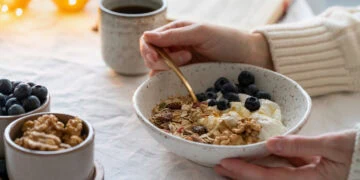
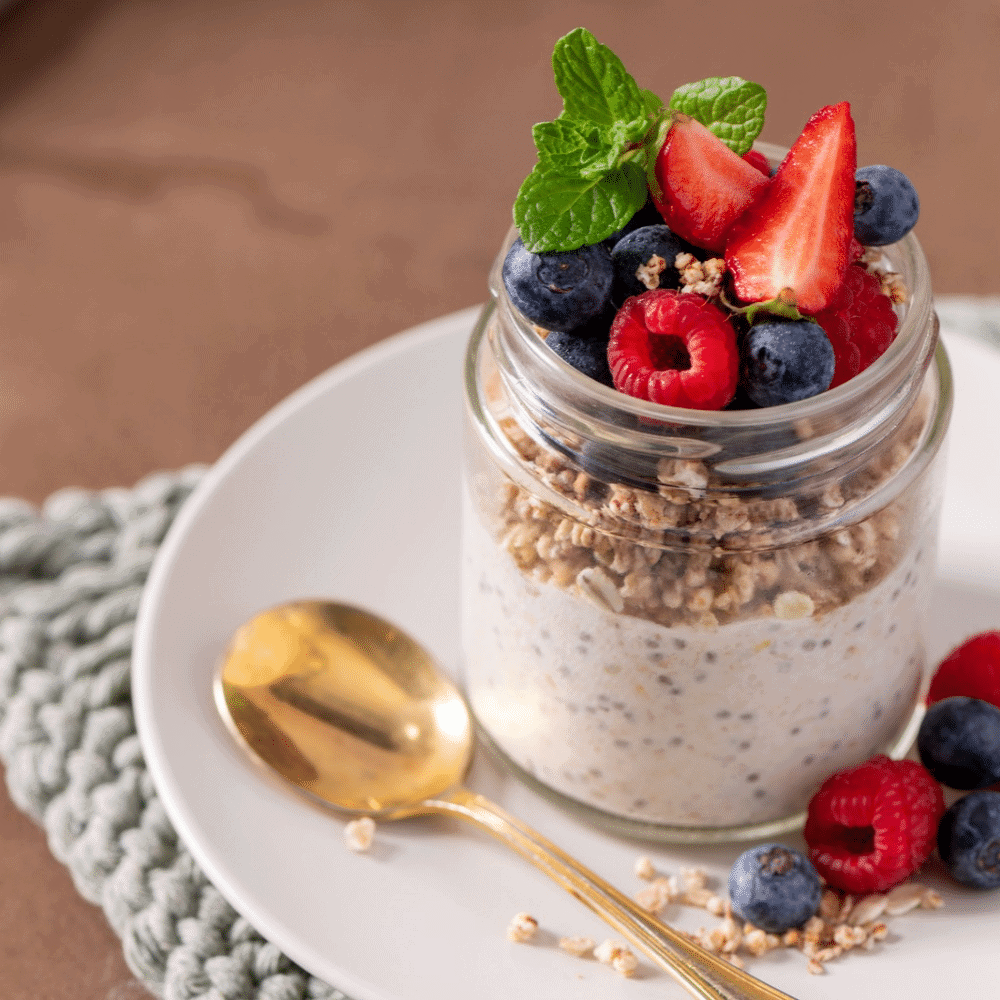
About an hour later, she has breakfast, usually a variation of the creamy overnight oats with berries and flax from her recipe book.
Oats are a particularly useful staple for Kirstyn because they contain beta-glucan, a type of soluble fibre that helps lower LDL cholesterol. It works by helping the body remove cholesterol-rich bile acids through the gut. The berries provide additional fibre and natural sweetness, while chia and flaxseeds contribute more fibre and unsaturated fats. Greek yoghurt adds protein, helping to make breakfast satisfying enough to last until lunch.
Kirstyn prepares four portions on Sunday evening, so breakfast is ready and waiting in the fridge during the working week. It’s a small amount of preparation that makes a nutritious choice easier to maintain, particularly on busy mornings.
Lunch: a little preparation goes a long way
With client calls and networking meetings filling her working day, Kirstyn needs lunches that can be assembled quickly. Her solution is to prepare a few ingredients in advance rather than cook a completely different meal every day.
On Sunday evening, she’ll chop vegetables and cook a batch of chicken breasts, storing everything in the fridge. When lunchtime comes around, she chooses a carbohydrate source to suit her appetite, such as wholegrain microwave rice, a wholemeal wrap or seeded wholemeal bread.
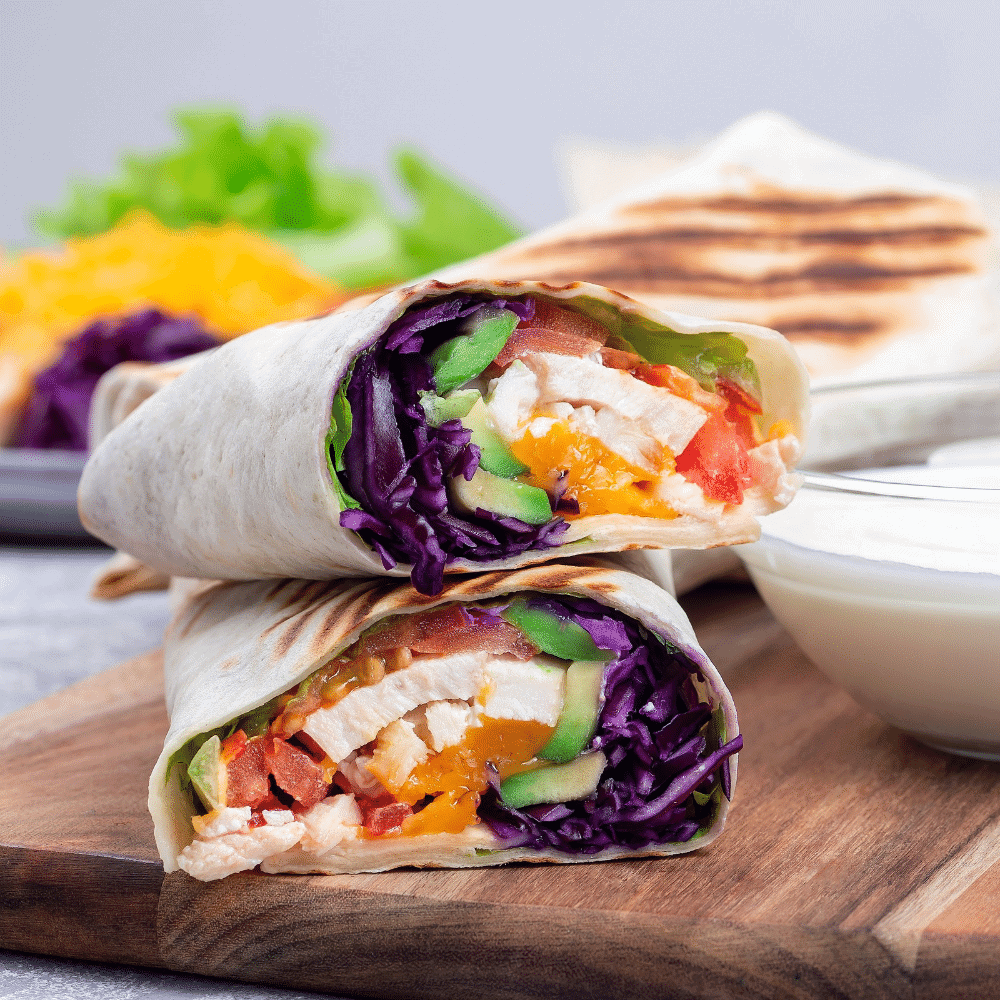
From there, she can put together a chicken salad, wrap or sandwich in minutes. Seeds sprinkled over a salad, pesto spread inside a wrap or hummus added to a sandwich provide a source of unsaturated fats.
She also varies her protein, swapping chicken for tuna, beans or whatever else she fancies. “The base stays roughly the same, making it quick and easy, but changing the ingredients gives me enough variety to stop me getting bored,” she explains.
The approach reflects one of Kirstyn’s central principles for heart health: meals should be nutritious and satisfying without adding unnecessary work to the day.
Wholegrains provide more fibre than their refined counterparts, while beans and other plant proteins can contribute fibre and help replace some sources of saturated fat. Combined with vegetables and healthy fats, they make a useful foundation for everyday meals.
Dinner: balanced meals with plenty of variety
Kirstyn usually starts preparing dinner shortly after finishing work, around 5.30pm, aiming to eat at about 6pm. She enjoys cooking but doesn’t want to spend the entire evening in the kitchen, so her pre-chopped vegetables come in handy again.
Most meals start with plenty of vegetables, often onions, peppers, tomatoes and spinach. From there, dinner might be chicken sausages with gravy, vegetables and mashed potatoes, with the potato skins left on for extra fibre.
On another evening, she might make a curry with chickpeas, turkey and vegetables, served with wholegrain rice. Wholewheat pasta with salmon, pesto and vegetables is another option.
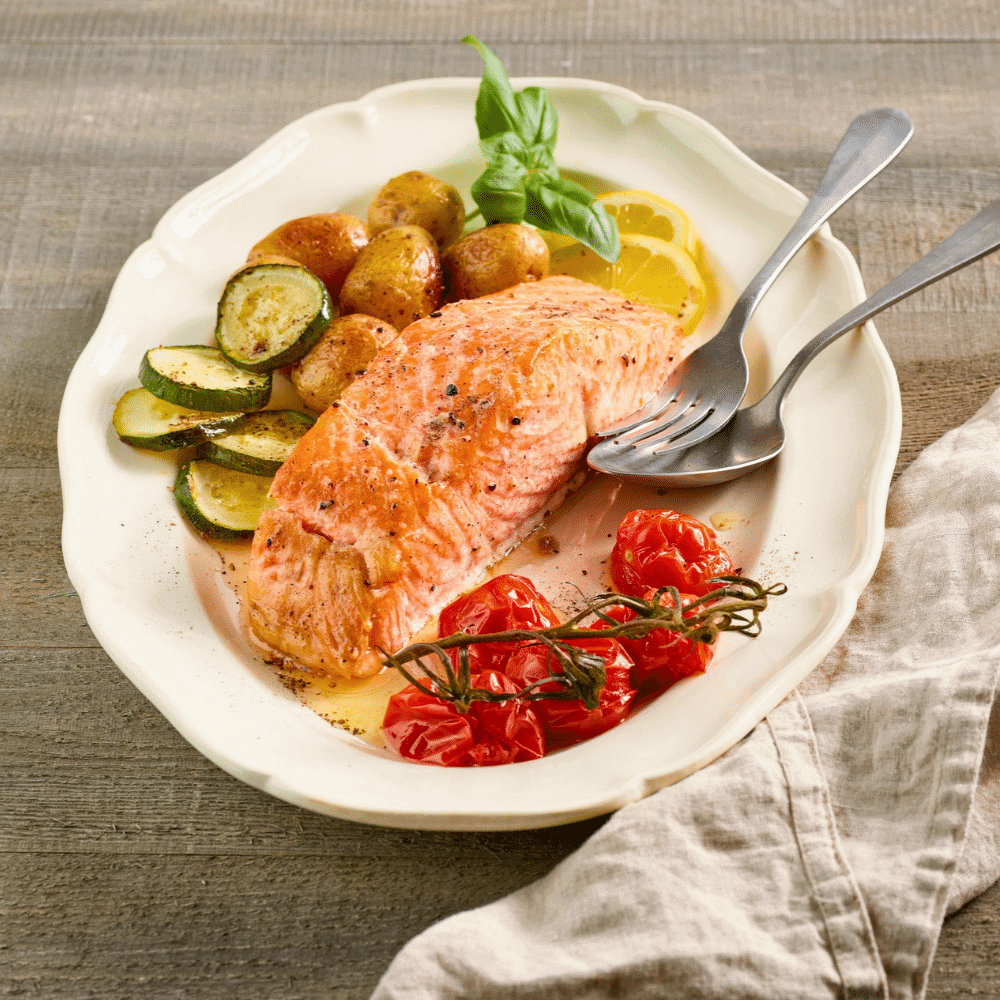
Kirstyn aims to include beans and lentils regularly, eat oily fish at least once a week and vary her protein sources throughout the week. She also aims for at least two portions of fish weekly, including one portion of oily fish for its omega-3 fats.
These choices reflect the balanced plate principle she advocates for her clients. The idea is to fill half the plate with fruit or vegetables, a quarter with lean protein and a quarter with high-fibre carbohydrates, alongside a portion of healthy fats. Following this approach throughout the day can help people get a broad range of nutrients without needing to track every calorie or weigh every ingredient.
It also leaves plenty of room for familiar meals. A curry, a plate of sausages and mash or a pasta dish can all fit into a heart-conscious way of eating, with a few thoughtful choices around the ingredients and portions.
The evening treat she looks forward to
Kirstyn doesn’t generally need snacks between meals because breakfast, lunch and dinner keep her satisfied. If she does get hungry, she’ll usually reach for fruit, yoghurt or a handful of nuts.
But there’s one daily treat she doesn’t intend to give up. At around 7pm, she’ll have an ice cream or lolly, perhaps a Mini Twister, Mini Solero or Mini Magnum. “I look forward to it every day!” she says.
It’s a small detail, but an important one in understanding her approach to nutrition. Kirstyn follows what she describes as an 80:20 style of eating, with most of her diet made up of nutritious foods that support her health, while leaving room for foods she enjoys simply because they taste good. “I’ve tried the ‘100% clean’ approach before and, for me, it wasn’t sustainable. I’d much rather eat well consistently than eat perfectly for two weeks.”
Kirstyn follows what she describes as an 80:20 style of eating, with most of her diet made up of nutritious foods that support her health, while leaving room for foods she enjoys simply because they taste good.
After her own experiences with restrictive eating, flexibility is an important part of the message she shares with clients. A heart-healthy diet doesn’t have to exclude every food that offers pleasure rather than a particular nutritional benefit.
The foods she makes a point of eating
When asked which foods feature most often in her diet, Kirstyn returns to many of the ingredients already appearing throughout her day.
Oats are high on her list because of their beta-glucan content. She also prioritises beans, lentils, fruit and vegetables to increase her fibre intake, alongside nuts and seeds for fibre and unsaturated fats.
In the kitchen, she uses extra virgin olive oil, which is rich in monounsaturated fats. She regularly includes plant proteins such as chickpeas and soya foods, too, rather than relying exclusively on meat for protein.
The bigger picture is a way of eating built around a variety of foods rather than any single ingredient. Oats may be a particularly useful breakfast staple, but their benefits sit alongside the other choices Kirstyn makes throughout the week.
Also read: Lucinda Miller – What I Eat in a Day to Keep My ADHD Brain on Track
The takeaway: focus on what you can add
Kirstyn’s approach to heart health is shaped by her experience of both medicine and restrictive dieting. She understands the importance of evidence-based advice, but also knows that even the best recommendations are of little use if they become too difficult to follow.
Her first suggestion is to use the balanced plate principle as a starting point, making small changes to meals you already enjoy. Add more vegetables, choose wholewheat pasta, include beans or lentils in a familiar recipe or replace a higher-saturated-fat meat with fish or a plant-based protein occasionally.
Preparation matters, too. Chopping vegetables, cooking a batch of protein or preparing breakfast the night before can reduce the number of decisions you need to make when you’re hungry and short on time.
Preparation matters, too. Chopping vegetables, cooking a batch of protein or preparing breakfast the night before can reduce the number of decisions you need to make when you’re hungry and short on time.
But her most important advice is to think about what you can add rather than what you need to remove. “Add oats. Add beans and lentils. Add nuts and seeds. Add more fruit and vegetables. Add wholegrains. Add oily fish and some plant proteins.”
The same thinking applies beyond food. Kirstyn encourages people to add a daily walk, fit in a couple of strength sessions each week and get more sleep where possible.
“Heart health isn’t about one food or one perfect habit. It’s the small things you do consistently that add up over time.”
Learn more about The 12-Week Heart-Healthy Living Course, which takes people step-by-step through the diet, exercise and lifestyle changes proven to help lower cholesterol and protect heart health.
Follow Dr Norman on Instagram, Facebook or her podcast via Spotify.