































































For many people with IBS, eating can feel like a constant exercise in avoidance – scanning menus for trigger foods, worrying about portions and wondering whether the meal they just ate will come back to haunt them.
But for Kirsten Jackson, managing IBS isn’t about building an ever-growing list of foods to avoid. It’s about understanding your own gut, creating strong foundations and keeping your diet as varied as possible.
Kirsten is a registered consultant dietitian specialising in IBS and digestive health, an author and the founder of The IBS Dietitian. Through her clinical work, writing and online Take Control Programme, she helps people understand what is driving their IBS, identify their individual triggers and build a varied diet they can enjoy without constantly worrying about their gut.
Her approach is built around three stages: Stabilise, Personalise and Integrate. Rather than immediately cutting out more and more foods, she first focuses on strong foundations such as nutrition, sleep, movement, mental health and bowel habits. Targeted dietary strategies can then help identify individual triggers before foods and routines are carefully integrated back into everyday life.
“My ultimate aim is not simply to reduce symptoms. It is to help people understand their bodies, support their long-term gut health and feel confident and free around food again,” Kirsten says.
“My ultimate aim is not simply to reduce symptoms. It is to help people understand their bodies, support their long-term gut health and feel confident and free around food again,” Kirsten says.
So, what does a typical day of eating look like for someone who helps people take control of their IBS for a living?
Breakfast: porridge with a personal twist
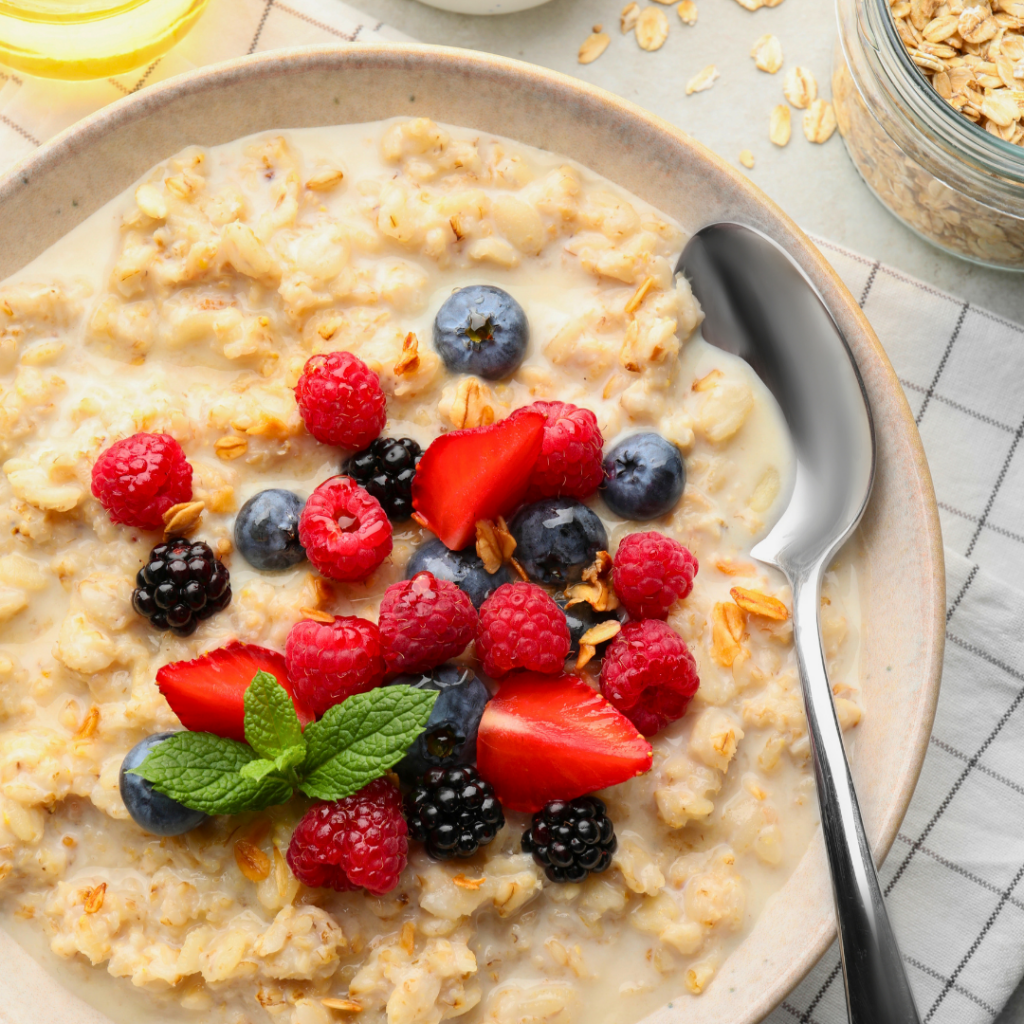
Kirsten usually eats breakfast at around 6am, starting the day with porridge made with milk and topped with berries, peanut butter and Greek yoghurt, alongside coffee and water.
There is plenty of practical thinking behind the combination. The oats and berries provide fibre to support the gut microbiota, while the Greek yoghurt and peanut butter add protein and fat, helping to make the meal satisfying and sustain her energy throughout the morning. The milk and yoghurt also provide calcium.
Oats are a particularly regular feature in Kirsten’s diet. They contain soluble fibre, including beta-glucan, which helps add bulk to stools and provides fuel for beneficial gut microbes. She also eats two kiwifruits every day because she is naturally more prone to constipation. Kiwifruit provides fibre and has good evidence for supporting more regular bowel movements.
These foods aren’t universal remedies for IBS. They are simply practical choices that work well for Kirsten’s own gut and overall health.
Kirsten is lactose intolerant, but that doesn’t mean dairy has disappeared from her diet. She takes a lactase enzyme with breakfast, allowing her to enjoy milk and yoghurt without triggering symptoms. It’s a useful example of the way she approaches IBS: rather than automatically removing a food, she looks for a way to make it work.
Coffee is another part of her morning routine. She enjoys it partly because she likes it and partly because it provides polyphenols – plant compounds that can interact beneficially with the gut microbiota.
But caffeine can stimulate the bowel and aggravate symptoms for some people with IBS, so Kirsten sees coffee as another example of why individual tolerance matters more than universal rules. She also drinks water with breakfast because hydration is an important part of supporting healthy bowel function.
“A food that causes symptoms for one person may be completely well tolerated by another.”
Also read: 6 Signs You’re Not Eating Enough Protein (And What To Do About It)
Lunch: leftovers over restriction
When she is at home, lunch is usually leftovers from the previous evening’s meal. As well as being convenient, this often gives Kirsten a more varied, fibre-rich meal than a quick sandwich. Including vegetables, wholegrains or pulses helps support bowel regularity and the gut microbiota, both of which can play an important role in managing IBS. This reflects the Stabilise stage of her Take Control approach, where the focus is on creating strong foundations before blaming individual foods.
Eating a proper lunch also prevents long gaps between meals and reduces the likelihood of becoming overly hungry and eating a very large portion later, which can place more pressure on the gut. When she is out, however, lunch needs to be more practical. Kirsten has coeliac disease, so finding a safe gluten-free meal on the go that also provides protein and fibre can be difficult.
Her solution is often a Huel shake.
Having a reliable option supports the Integrate stage of her approach: finding realistic ways to look after your gut when life is busy, rather than expecting every meal to be prepared from scratch. The Personalise element is important too. Some people with IBS may find particular ingredients in meal-replacement shakes trigger symptoms, whereas others tolerate them well.
The aim is to identify what works for your individual gut and create a routine that is nutritious, practical and sustainable.
To snack or not to snack…
Kirsten doesn’t tend to snack routinely because leaving a gap between meals allows the migrating motor complex to function.
This is a pattern of muscular contractions that occurs between meals and helps move residual food and bacteria through the small intestine – almost like a housekeeping system for the gut. But she isn’t rigid about it. “If I am genuinely hungry, I will eat something more substantial, and I will still enjoy the occasional treat,” she says.
For Kirsten, managing IBS shouldn’t mean ignoring hunger or creating strict rules around food. It is about having a helpful general routine while remaining flexible enough to respond to what her body needs.
“Health is rarely all or nothing.”
Dinner: one meal for the whole family

Kirsten usually eats dinner at around 4.30pm because she eats with her children, and everyone has the same meal. That might be chicken fajitas with wraps, spaghetti bolognese, a tofu stir-fry or, occasionally, a takeaway.
Because she has coeliac disease, she simply swaps in gluten-free wraps, pasta or takeaway options where necessary rather than preparing an entirely separate meal. She also looks for simple ways to increase the variety of plant foods in family favourites. Walnuts and lentils might find their way into a bolognese, adding fibre and helping to support the gut microbiota.
But Kirsten is careful not to suggest that more fibre is always better for everyone with IBS.
The type of fibre, the quantity and how quickly it is increased can all affect symptoms. What works well for one person may not work for another. “For me, managing digestive health is about making considered adjustments without allowing food restrictions to take over family life,” Kirsten says. She wants meals to remain varied, enjoyable and something the whole family can share.
When work gets stressful, the strategy changes
After ten years as a business owner, Kirsten knows which times of year are likely to be busier and which projects may involve particularly long working days. Rather than waiting for her gut symptoms to worsen, she tries to anticipate these periods.
During particularly busy times, her gut tends to tolerate FODMAPs – a group of fermentable carbohydrates found in foods such as onions, garlic, wheat, beans and some fruits – less well. She temporarily reduces her intake rather than following a strict elimination diet.
She also places greater emphasis on stress management, prioritising sleep, exercising each day even if it is not her usual type of exercise, and making time for meditation. After an especially demanding project, she may even book some time off to rest and “deload”.
This reflects her Take Control approach because managing IBS isn’t just about reacting to food triggers.
Stress can change gut sensitivity and affect how well foods are tolerated, meaning the same diet may not work equally well in every situation. The aim is to understand these patterns, make temporary and proportionate adjustments, and return to a broader diet once the demanding period has passed.
“The goal is to identify genuine triggers without unnecessarily cutting out foods, so that eating remains nutritious, enjoyable and flexible, and IBS has less control over everyday life.”
Movement for the gut and the mind
Kirsten aims for at least 30 minutes of exercise every day. Some days that means heavy lifting or a class. On others, it might simply be a gentle walk. “The intensity matters less to me than moving consistently and choosing something appropriate for my energy levels that day,” she explains.
Sleep is another important part of her routine. Kirsten prioritises around eight hours and uses an eye mask and earplugs to protect the quality of her rest. Sleep and IBS can influence one another, so poor sleep can increase gut sensitivity while digestive symptoms can make it more difficult to sleep well.
Kirsten is also conscious of mental and sensory overload. She keeps all notifications turned off on her phone and sometimes wears earplugs during the day to reduce stimulation.
These may seem like small practices, but they help keep her overall stress levels more manageable.
Because of the close communication between the brain and the gut, supporting her nervous system is just as relevant to controlling IBS as the food she eats.
The takeaway: work with your gut, not against it
For Kirsten, managing IBS doesn’t mean trying to eat the “perfect” diet or progressively cutting out more foods.
Instead, she comes back to the same principles:
- eat meals regularly
- gradually increase a type of fibre you tolerate
- look for your own patterns rather than relying on generic lists of IBS trigger foods
- keep changes proportionate
- test changes systematically
- protect your sleep
- move regularly
- manage stress
- remember that your tolerance can vary depending on stress, sleep, constipation and the quantity eaten
Most importantly, Kirsten doesn’t believe managing IBS should mean an increasingly restrictive diet. “The goal should be to create strong foundations, identify your genuine triggers and maintain the broadest, most enjoyable diet possible,” she says.
Her advice is simple: don’t try to change everything at once. Start with one manageable habit, whether that’s eating meals regularly, gradually increasing a type of fibre you tolerate, taking a daily walk or protecting your sleep.
The goal isn’t simply to reduce symptoms. It is to understand your body well enough that food becomes something you can enjoy with confidence again.
Connect with Kirsten via her website: The IBS Dietician or via her Facebook or Instagram.