



















































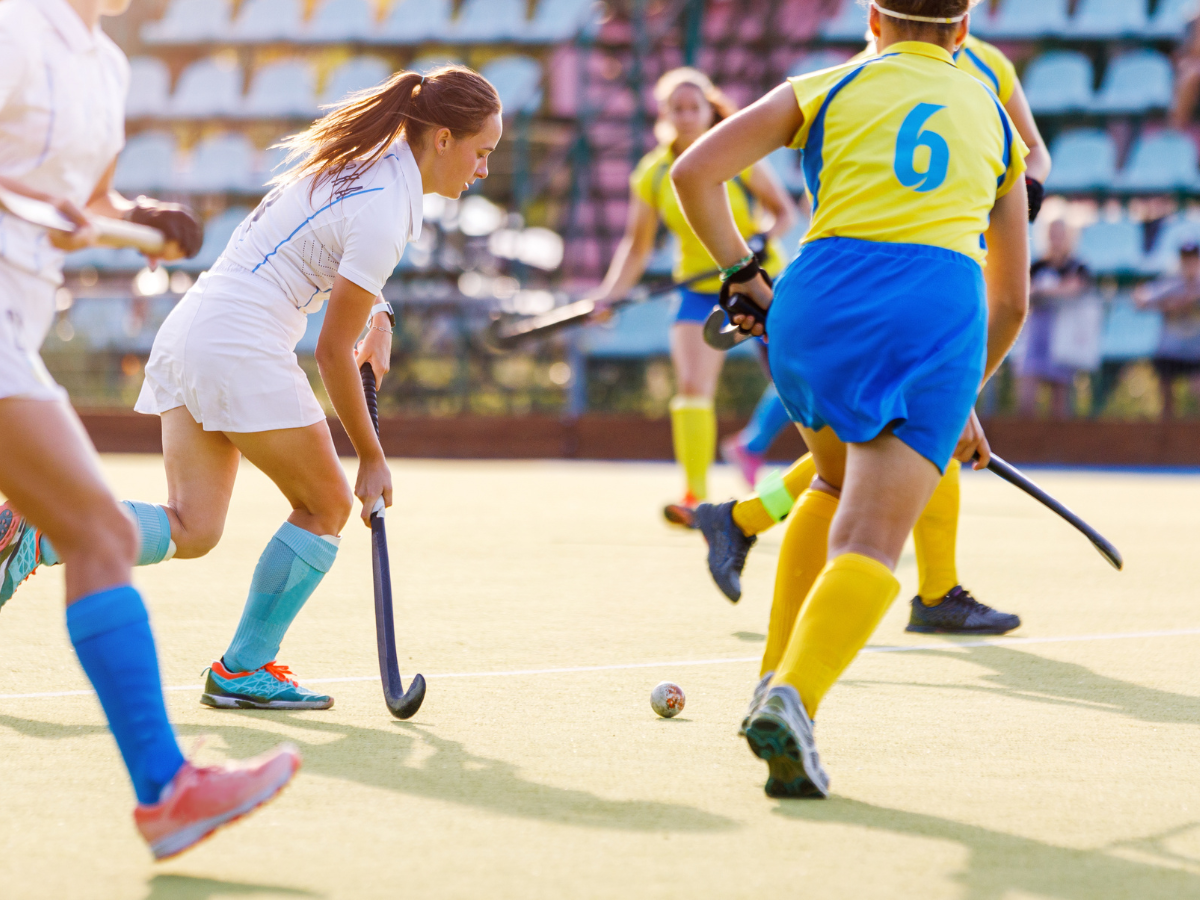
Saturday morning. Cold pitch, hot coffee, and a dad on the touchline who’s forgotten this is under-11s football and not the World Cup final.
We’ve all seen it. Maybe we’ve even been it, just for a moment, before catching ourselves.
School and grassroots sport does an enormous amount for children. It builds fitness, friendships and confidence long before anyone’s thinking about trophies. But somewhere between the first goal and the first trial, sport can tip from joyful into pressured, and that shift usually comes from the sidelines rather than the pitch.
School and grassroots sport does an enormous amount for children. It builds fitness, friendships and confidence long before anyone’s thinking about trophies. But somewhere between the first goal and the first trial, sport can tip from joyful into pressured, and that shift usually comes from the sidelines rather than the pitch.
We spoke to Kevin Simmonds, a grassroots football coach, Manchester City scout and academy owner, about what he sees week to week from young players and their parents. His view was honest. “Kids at that age genuinely don’t know if they’ll make it as footballers,” he says. “Nobody does. So the job of a parent isn’t to manage a career. It’s to help them enjoy the game.”
So let’s talk about how to back your child’s love of sport without becoming the reason they quit it.
Also Read: Editorial Column: What I’ve Learned About Effort, Confidence and Belonging in Sport
The benefits go well beyond fitness
Physical health is the obvious win. Children who play sport regularly are more active for life, and PE participation is linked to lower rates of childhood obesity. But the research points to something bigger than fitness levels.
A Youth Sport Trust report found that participation in school sport and physical activity improves children’s self-belief, mental toughness and wellbeing, with the effect strongest among children from lower income families. A systematic review published in PMC found that children who play sport score higher on measures of happiness and mental health than those who don’t.
Academic performance benefits too. Government-commissioned research reviewed by Ofsted concluded that competitive school sport is positively associated with academic achievement, alongside better diet and general wellbeing. Team sport in particular seems to protect against low mood linked to school stress, according to evidence submitted to the UK Parliament.
Simmonds sees this play out on the pitch too. He’s clear that ability is only part of the picture. “I look for confidence, people skills, and resilience just as much as football ability,” he says. “A kid who can handle a bad game and come back the next week ready to try again will go further than one who’s technically gifted but falls apart under pressure.”
None of that requires a child to be talented. It just requires them to be involved.
Why the “future pro” mindset backfires
Here’s the number worth sitting with. Fewer than two percent of college athletes in America go on to compete professionally, according to the NCAA’s own research. For most sports the figure sits closer to one percent, and that’s after clearing every stage before it, from school teams to college scholarships.
The odds are longer still if you work backwards from school age. One estimate for high school football players in the US put the chance of eventually being drafted professionally at roughly 0.08 percent, according to research cited by the NCAA and reported by college admissions researchers.
The UK picture is different in structure but similar in spirit. Professional sport is a narrow doorway, and talent alone rarely gets a child through it. Timing, opportunity, injury luck and plain chance all play a part too.
The UK picture is different in structure but similar in spirit. Professional sport is a narrow doorway, and talent alone rarely gets a child through it. Timing, opportunity, injury luck and plain chance all play a part too.
Simmonds agrees, and says the players who make it aren’t always the ones you’d expect at age ten. “The ones who go furthest are the ones who work the hardest,” he says. “I test speed, I test endurance, but what really stands out is a kid who wants to improve every single session, who puts in extra time on their own, and who doesn’t moan when it gets hard. Mental strength, passion and drive to improve matter as much as anything physical.”
That matters, because a lot of parental pressure is built on a quiet assumption that early talent equals a future career. Statistically, it almost never does. Which makes the case for keeping sport about enjoyment rather than outcome even stronger. If your child is one of the rare few who does go on to compete at an elite level, brilliant. If they’re not, and they almost certainly won’t be, they’ll still have gained fitness, friendships and confidence that last a lifetime.
Why kids actually quit
Research from the Aspen Institute’s Project Play initiative, based on a survey of nearly 4,000 young people, found that children today spend less than three years playing a given sport on average, often stopping by age 11. The main reason isn’t injury or a lack of ability. It’s that the sport stops being fun.
Parental behaviour plays a measurable role in that. Among children who’d quit sport, Project Play’s research found that 25% said their parents compared them to other players, versus nine percent of current players. Eighteen percent said their parents focused more on winning than on having fun. Former players were also far more likely to say they’d been pressured to play when they didn’t want to.
Parental behaviour plays a measurable role in that. Among children who’d quit sport, Project Play’s research found that 25% said their parents compared them to other players, versus nine percent of current players.
Simmonds sees the touchline version of this regularly, and says it can genuinely confuse a child mid-match. “I’ve had games where I’ve told a player to move one way, and their parent is shouting from the side for them to do the opposite,” he says. “The kid doesn’t know who to listen to. That conflict holds their development back far more than people realise. Let the coach coach. Let the kid think for themselves.”
None of this is about bad parenting in a general sense. Most of it comes from love, and from wanting your child to do well. The trouble is that pressure and support can look similar from the outside while feeling completely different from the inside. As Simmonds puts it, “a supportive parent doesn’t need to give tactical instructions. Stay quiet during play, let the coach do their job, and save the encouragement for when it matters.”
Five things to do
Ask about fun before you ask about the score. “Did you enjoy it?” tells you far more about how the season is going than “did you win?” ever will.
Let them own the sport. Children who choose their own activity, and who feel some say in how they play it, tend to stick with it longer and enjoy it more.
Celebrate effort over outcome. Praising a good tackle or a determined final lap builds resilience. “After a game, focus on the positives rather than the mistakes,” says Simmonds. “If something needs work, frame it as how it could be done better next time, not as criticism.”

Talk to the coach, not over them. If you’ve got concerns about training or game time, raise it privately and calmly. Shouting instructions from the sideline undermines both the coach and your child, and, as Simmonds notes, can leave them unsure whose instructions to follow.
Keep sport in proportion. Homework, friendships, rest and downtime all matter too. A packed schedule of fixtures and extra training isn’t automatically a good thing.
Five things to avoid
Don’t relive your own sporting career through them. If you didn’t make the team, or you did and loved it, that’s your story. Let your child write theirs.
Don’t compare them to teammates or siblings. It’s one of the clearest predictors of a child losing interest, according to the research above.
Don’t argue with officials or coaches in front of your child. It teaches them that adults lose composure under pressure, which is exactly the opposite of what sport should model.
Don’t tie love or approval to performance, even subtly. A quiet sigh after a missed shot registers more than you’d think. Simmonds is especially firm on this point when a child has had a bad game. “That’s exactly when they need encouragement most,” he says, “not silence, and not criticism.”
Don’t assume talent means destiny. Early promise is exciting, but it’s not a career plan, and treating it like one adds pressure a child hasn’t asked for. “It’s too early at that age to know whether they’ll make it,” Simmonds says. “So enjoy watching them play. That’s the part that actually matters.”
The bottom line
Sport gives children something that few other activities can match: movement, friendship, resilience and a sense of belonging, all rolled into one Saturday morning. Almost none of them will turn professional, and that’s fine. What they’ll take from it instead, if we let them enjoy it properly, is a habit of staying active and a genuine love of the game. As Simmonds says, the kids who go furthest are rarely the ones being pushed the hardest from the sideline. They’re the ones who’ve been given the space to fall in love with it themselves.