













































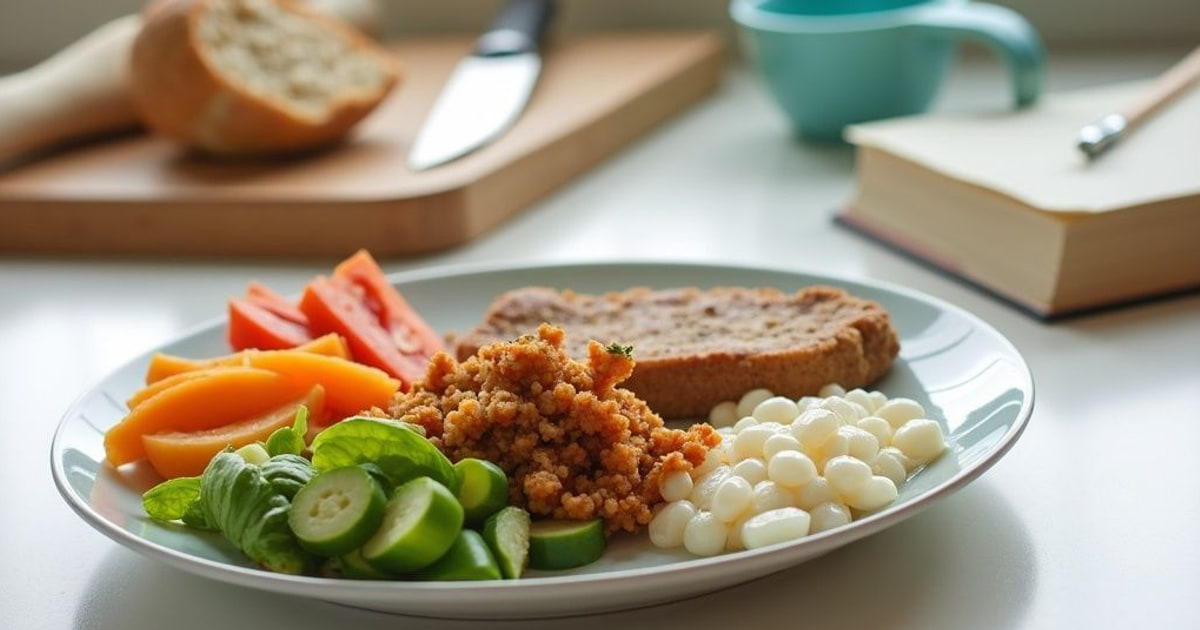
Eating well and maintaining a healthy weight rarely boils down to kale versus crisps. More often than not, the real culprit is quietly perched on your plate.
Portion sizes have a sneaky way of becoming the new normal. One extra helping turns into two, and suddenly your “light lunch” could feed a five-a-side football squad.
For many people in Britain, weight struggles aren’t always about opting for the “wrong” foods. Portions have quietly increased over time, often going unnoticed until your trousers start complaining.
For many people in Britain, weight struggles aren’t always about opting for the “wrong” foods. Portions have quietly increased over time, often going unnoticed until your trousers start complaining.
Portion sizing now sits at the heart of healthy eating, yet it receives far less attention than flashy diets with headline-grabbing names. Experts often describe it not as a rigid set of rules, but as a practical way to restore balance to everyday meals without turning dinner into a maths test.
The influence of portion sizes
Portion control is exactly what you’d expect, keeping an eye on how much food actually lands on your plate. Sounds obvious, doesn’t it? Yet it’s remarkably easy to lose track once you’re halfway through your meal and suddenly wondering where that extra spoonful came from.
Why does it matter so much? Because portion size quietly dictates how many calories you consume, whether you realise it or not.
Portion creep isn’t usually glaring. It’s the extra spoonful you didn’t plan for or the top-up that seemed harmless at the time. You start off in control, then end up wondering how it all added up so quickly.
Funny how that “little extra” always acts like it’s not paying any rent on your plate. That gap between intentions and reality is often where progress quietly slips by unnoticed.
Funny how that “little extra” always acts like it’s not paying any rent on your plate. That gap between intentions and reality is often where progress quietly slips by unnoticed.
The British Heart Foundation points out an interesting quirk of human biology: it can take about 20 minutes for the brain to catch up and recognise that you’re full. Ever noticed you feel fine midway through your meal, then suddenly stuffed a bit later? That lag is more important than most people realise.
Giving yourself a short breather before going back for seconds can make a real difference. It gives you a moment to check in and work out whether you’re actually hungry, or the first round was enough.
Strategies for effective portion management
Managing portions doesn’t mean living off lettuce leaves and pretending pud isn’t on your mind. Far from it. It’s more about tuning in, making small, sensible adjustments, and developing an approach to eating that doesn’t feel like hard graft.
One of the oldest tricks in the book is swapping your usual plate for a smaller one. Smaller plate, same meal, and suddenly it looks like you’ve got the full works.
You can also go more precise with a measuring jug or a set of kitchen scales if you fancy a clearer sense of what a portion actually is.
If weighing everything feels a faff, your hand will do the job. A palm for protein, a fist for carbs, an easy rule of thumb if you’re out and about.
The British Heart Foundation also mentions standard calorie guidance for weight loss: about 1,500 kcal for women and 1,800 kcal for men, though needs vary from person to person.
Snacks are where things often go astray. Pre-portioning them instead of dipping straight into the packet keeps things under control.
When eating out, keeping super-sized portions or extra sides to a minimum can quietly make all the difference, and you won’t feel like you’re missing out.

The link between hydration, pace, and appetite
Managing how much you eat gets most of the headlines, but staying hydrated quietly helps behind the scenes, much like that underrated mate who somehow keeps everyone organised. Drinking water before meals has been linked to eating less in some studies, though the science isn’t crystal clear yet.
Either way, topping up fluids throughout the day is an easy win that can help with slimming down, with next to no effort.
Mindful eating goes hand in hand with this approach. It’s really about slowing the pace and actually noticing your food, rather than eating on autopilot. Ever looked down and wondered where your dinner went? That’s exactly the habit mindful eating aims to break.
You eat at a steadier pace, make the most of every bite, and finish when you feel nicely full, not just when the plate is suddenly empty and you’re left thinking it’s done a runner.
Making eating patterns visible
Keeping track of what you eat can feel a bit like saving receipts for your appetite, but it works. A food diary gives you the unvarnished truth, not the version your brain tries to submit as evidence.
That “light nibble” that somehow became a proper motorway services spread? Writing it down makes those moments difficult to brush off.
Photo food diaries are another option. Take snaps of meals and snacks instead of jotting everything down. Quick, simple, and a touch humbling once your photo album looks like a street market.
Looking over your records can be just as revealing as making them. Patterns start to emerge, small habits stand out, especially with support from a medical professional or dietitian.