


















































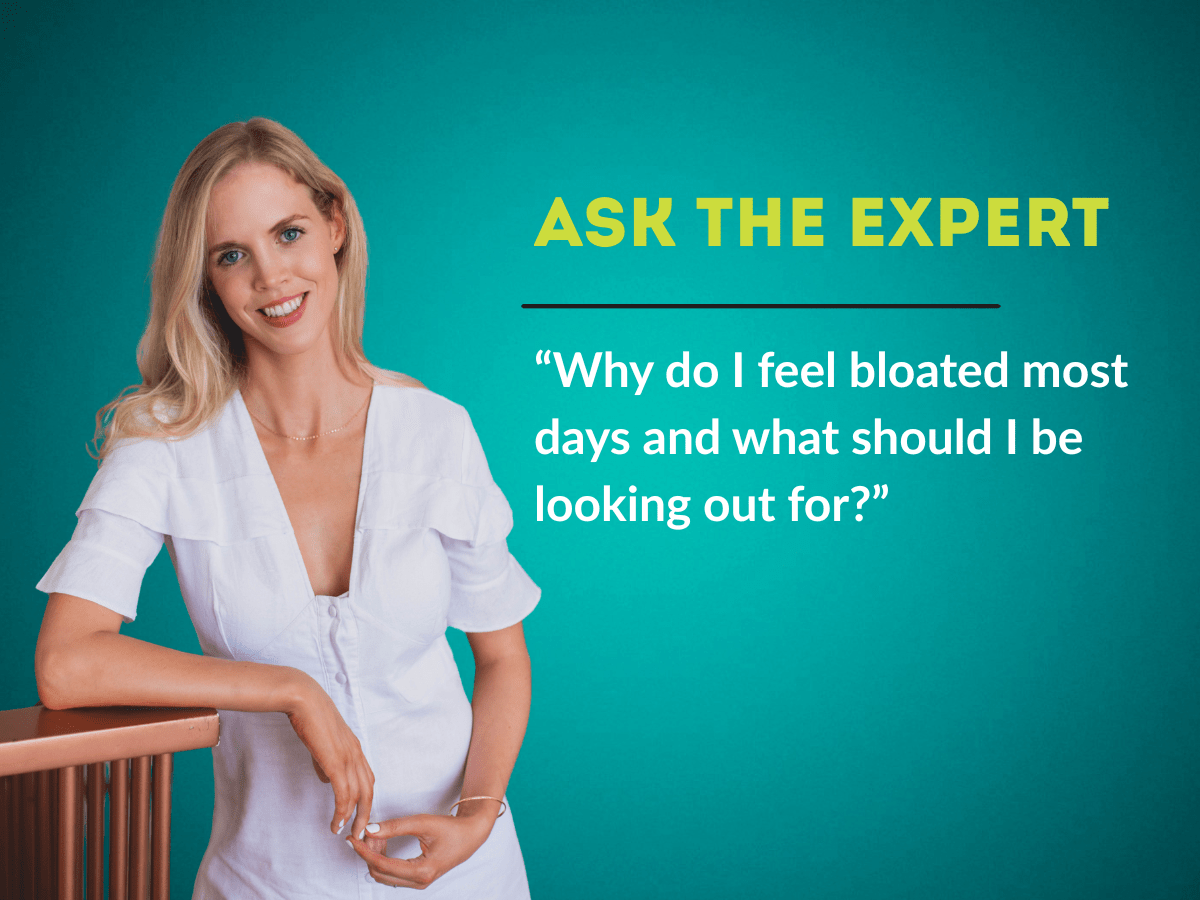
Q: “Why do I feel bloated most days and what should I be looking out for?”
A: What I tend to find with clients is that, by the time they come to me, they have started blaming more and more foods for their bloating. Food can absolutely contribute, particularly fermentable carbohydrates, but it is rarely the only factor involved.
A temporary increase in fullness or abdominal size after eating can be normal. However, bloating that happens frequently, causes discomfort or affects daily life should not simply be dismissed as normal. Social media may promote the idea that every healthy stomach stays flat all day, which is equally misleading.
Bloating often results from a combination of food fermentation, constipation, meal size, hormonal changes, swallowed air and gut hypersensitivity. This means the solution may involve adjusting particular foods, but cutting out more and more foods without understanding the wider pattern can lead to unnecessary restriction.
Track when symptoms occur alongside meals, bowel habits, your menstrual cycle and stress. Speak to your GP if bloating is persistent or worsening, particularly with unintentional weight loss, blood in your stool, vomiting, anaemia or a significant change in bowel habits. Women should also seek advice for persistent bloating with pelvic pain, early fullness or urinary symptoms.

Our Expert: Kirsten Jackson
– Consultant IBS Dietitian & Founder
– The IBS Dietitian
– Author of ‘Take Control of Your IBS – the step by step guide that actually works’
Visit her website here.