



















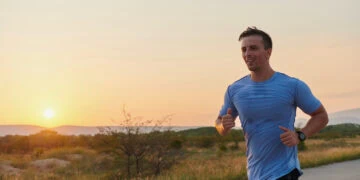








Luke Grenfell-Shaw is extraordinary not only because of what he has achieved, but because of the way he has chosen to live. Today, he is a professional trail runner for Brooks and represents Great Britain on the international stage, taking on some of the world’s most demanding races and mountain adventures. But his journey to the start line has been anything but ordinary.
At 24, Luke was told he had stage IV cancer and could have just months to live. Until that point, the future had always been somewhere ahead of him – a place where the big adventures, ambitions and pipe dreams could happen one day.
Suddenly, “one day” wasn’t guaranteed.
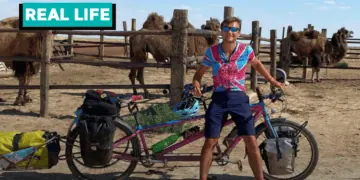
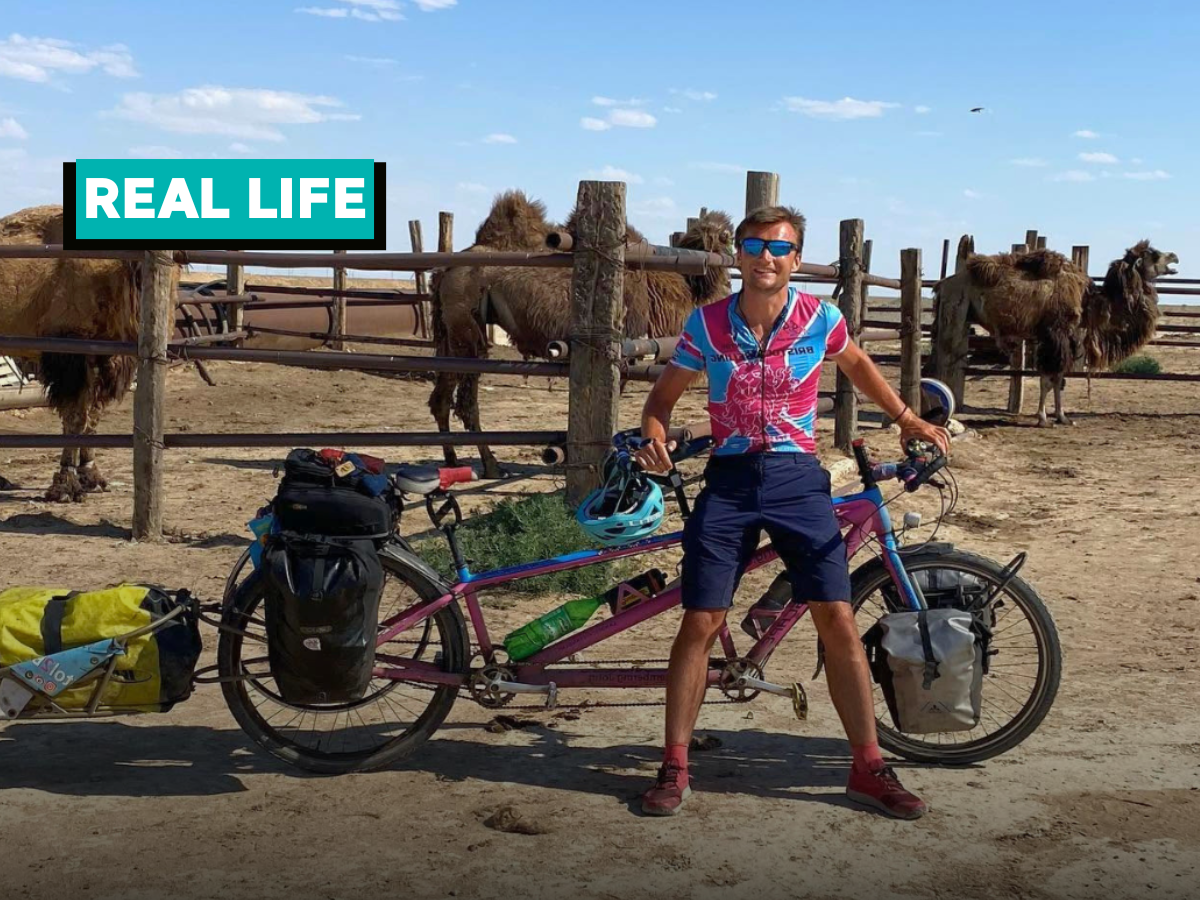
“I expected to live for months, possibly a year or two if I was really lucky,” Luke recalls. “It forced me to think, ‘What do I want to do now with my life? What can I not put off until later?’” That question has shaped almost everything he has done since. From cycling 30,000 km from Bristol towards Beijing to taking on demanding trail races and mountain adventures, Luke has built a life around a simple idea – if there’s something he dreams of doing, why wait?
The future had to become now.
Growing up in Bristol, Luke worked as a tutor, university lecturer and filmmaker, and describes himself as someone who tries to remain curious about the world around him. Learning languages, exploring new cultures and even attempting latte art are all part of that curiosity.
But it was cancer that gave him a new perspective on how he wanted to spend his time. Rather than allowing his diagnosis to define the limits of his life, Luke began asking what might still be possible.
That mindset has taken him from a cancer diagnosis in his twenties to the international trail-running stage – but his story isn’t simply about endurance, athletic achievement or overcoming adversity. It is about finding purpose, embracing uncertainty and making the most of the time we have.
Also read: The Warrior Walker and His 20 000km Journey to Inner Peace.
From intention to action
Luke had wanted to cycle across the world for several years, but had always imagined doing it sometime in the future. Then, lying in Southmead Hospital in Bristol, he was told that his cancer was essentially going to kill him. “That was the moment I realised ‘the future’ had to become now,” he says. “I thought to myself, if I survive long enough, this is how I want to spend my final time alive.”
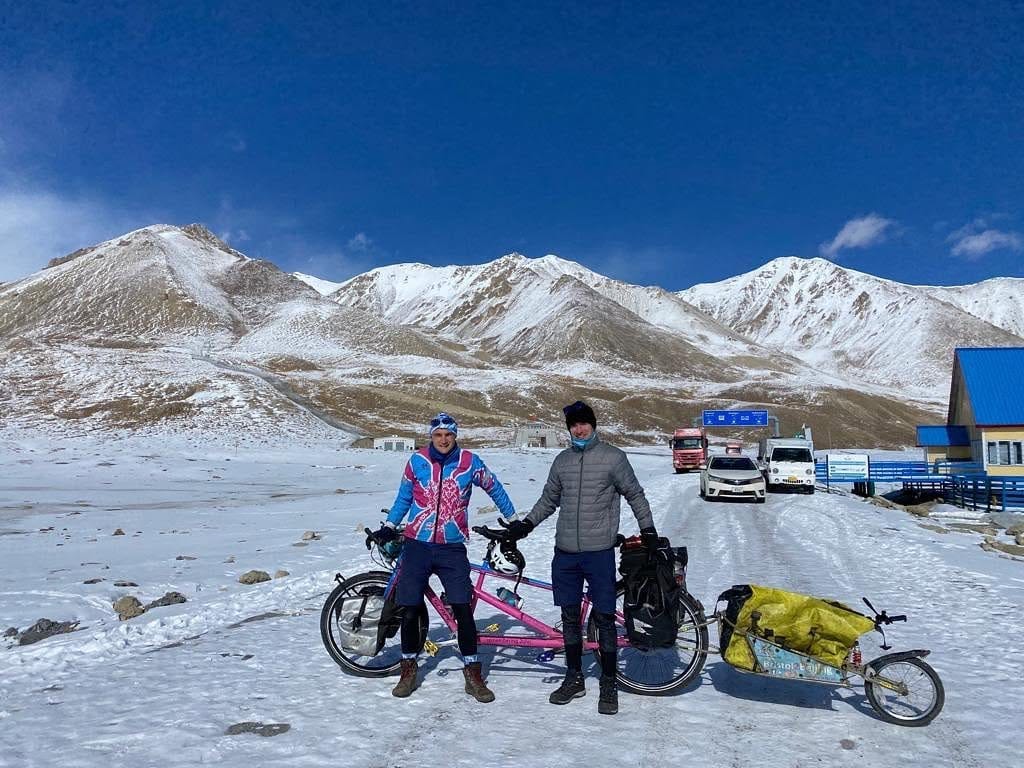
Cycling from Bristol to Beijing became that dream.
For Luke, cycling offered the perfect way to experience the world. Rather than simply passing through countries, he could become immersed in them – meeting people, experiencing the landscape and following the ancient routes of the Silk Roads.
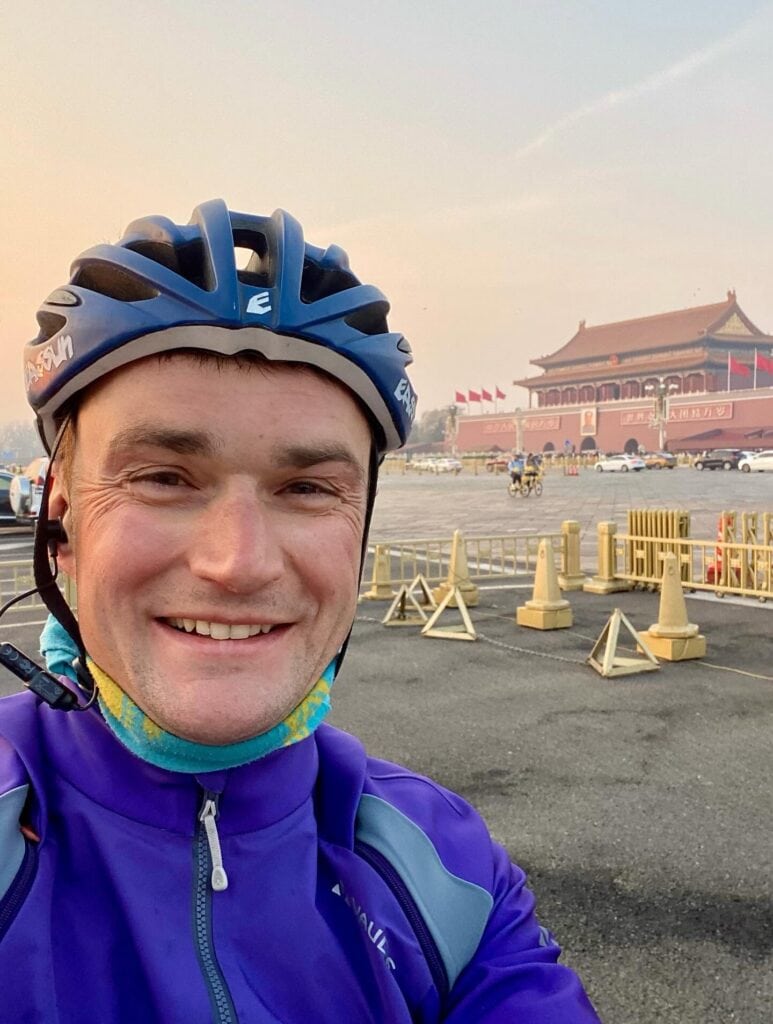
“I wanted to cycle to Beijing to see how Eurasia changed as I cycled East, and take the path of the Silk Roads,” he explains. “To me, cycling is the best way of having an adventure: you get to meet lots of people, mishaps usually become some of the best memories and you’re really connected to the landscape you’re pedalling through.”
The journey also challenged some of his assumptions about the world.
The people you meet along the way
While cycling through Pakistan, Luke says he felt incredibly safe, with strangers regularly looking out for him and his riding companion, TJ.
Then, while crossing the desert in Uzbekistan, a stop at a tiny village shop turned into an unexpected overnight stay. After chatting to the shopkeeper while buying supplies, Luke was invited to stay with him and his family. “He only had a single room, but welcomed me fully,” Luke says. “At midnight we went swimming in the river underneath a sky teeming with stars.”
For Luke, moments like that are part of what makes adventure so powerful. The destination matters, but so do the people, the mishaps and the experiences that could never have been planned.
Learning to live with uncertainty
Cancer also taught Luke something that has stayed with him long after his treatment ended – uncertainty isn’t an interruption to life. It is life.
“Embracing uncertainty is simply embracing the true nature of life,” he says. “There is a huge amount of uncertainty. So when something huge and unexpected comes along, that’s not ‘fair’ – that’s just part of the game.” Rather than worrying about everything that might happen, Luke has learned to focus on what he can control, particularly when it comes to his health.
“I like to think of us each as a captain of our own ship,” he explains. “We can’t control the weather, but we can set our course, make sure the sails and ropes and anchors are all ready. Then if a storm comes along, we stand the best chance of making it through.”
“I like to think of us each as a captain of our own ship,” he explains. “We can’t control the weather, but we can set our course, make sure the sails and ropes and anchors are all ready. Then if a storm comes along, we stand the best chance of making it through.”
That philosophy has become particularly relevant as he continues to challenge his body.
Luke’s cancer has been in remission since he completed treatment, but he remains aware that it could return. Rather than allowing that uncertainty to stop him living, it has given his life an added sense of urgency.
Finding freedom in the mountains
Today, Luke is drawn to long-distance running events and mountain adventures, tackling demanding trail races in some of the world’s most spectacular landscapes.
The physical challenge is only part of the appeal. “I feel so lucky that my body allows me to do them – I’m alive and strong and well,” he says. “But more than that, these events are in incredibly beautiful places.”
Running through forests, crossing streams and moving through mountains gives Luke a feeling that is difficult to replicate in everyday life. “I always think that it’s such a special way to spend a day – not staring at a phone screen but immersed in nature.”
After everything his body has been through, his relationship with it has changed too. Physical strength is no longer something to take for granted. Every demanding race is also a reminder of what he once feared he might lose.
When pain becomes a reminder
When a race becomes particularly painful, Luke returns to that perspective. “At a tough point in a race, one of the strongest motivators is the thought: when you were on chemotherapy you would have done anything to be in this much pain, to still be alive and be able to do this,” he says. “It might last for a few hours but in the big scheme of things that’s not that much.”
Luke’s approach isn’t about constantly pushing harder. In fact, one of the biggest lessons he has learned is knowing when to listen to his body. “Balance is always important,” he says. “I think the most important thing is to listen to your body.”
“Balance is always important,” he says. “I think the most important thing is to listen to your body.”
That applies whether you’re a professional athlete or simply someone trying to make healthier choices. Ambition doesn’t mean ignoring your limits – it means understanding them and finding a sustainable way forward.
The power of a tiny start
For anyone who feels overwhelmed by the size of a goal, Luke has deliberately simple advice: start small. “As small as possible that gets you underway,” he says. “We get better at, and eventually good at, what we repeatedly do. So the most important thing is a tiny start.”

For someone who wants to start running, that might mean nothing more than putting on their shoes, getting out the front door and running for one minute. “Anything beyond that is a bonus,” Luke says. “If you can get into the habit of getting out the front door, then you’ll be building a running habit too.”
For someone who wants to start running, that might mean nothing more than putting on their shoes, getting out the front door and running for one minute. “Anything beyond that is a bonus”
It is advice that reflects the philosophy Luke has carried with him since his diagnosis. The biggest changes don’t happen overnight. Dreams don’t become reality simply because we decide to pursue them. But small, deliberate steps can eventually take us somewhere we never imagined. :It’s our habits that define us and dictate what we’re able to achieve. It’s a daily affirmation of yourself and your priorities. We are what we continually do.”
Don’t wait for a reason to start living
Perhaps that is the biggest lesson Luke hopes people take from his story. “Not to wait until something terrible happens to start living your dreams and best life,” he says.
Cancer forced Luke to stop postponing his life for some distant future. But you don’t need a life-changing diagnosis to do the same. “If you start getting closer to living your dream, then you’re going to be the biggest winner,” he says. “Start with small, easy-to-change things. Bigger changes take time.”
From a hospital bed in Bristol to a bicycle journey across Eurasia and trails through some of the world’s wildest landscapes, Luke Grenfell-Shaw’s story is ultimately not about outrunning uncertainty. It’s about accepting that we can’t control what lies ahead – and choosing to make the most of where we are right now.
Follow Luke’s journey on Instagram, Facebook and YouTube.
Luke’s journey is also captured in the documentary A Life in Tandem, offering a deeper look at the experiences that have shaped his remarkable story.