










































You walk in. Within seconds, your mind has already made a decision. Not about your workout. Not about your goals. About where to stand. You drift towards the edge. Near a wall. Maybe beside a machine that looks “safe,” even if you barely know how it works.
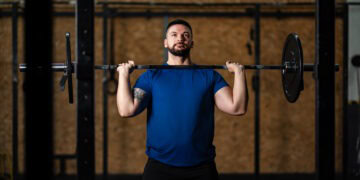
You avoid the open floor, convinced it’s a space reserved for people who look stronger, fitter, and far more comfortable being there. Someone strolls confidently into the middle and starts lifting, and you think, Wow. Main character energy.
You avoid the open floor, convinced it’s a space reserved for people who look stronger, fitter, and far more comfortable being there. Someone strolls confidently into the middle and starts lifting, and you think, Wow. Main character energy.
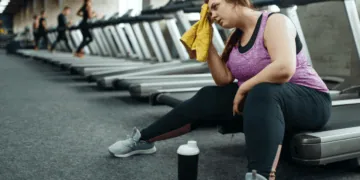
Meanwhile, you feel like a supporting character holding a water bottle like a prop.
In this case, your gym anxiety often has less to do with confidence and more to do with geography. The layout of the space. The invisible map your brain draws the moment you step inside. Where you place yourself can subtly increase or decrease how exposed you feel.
You’re not imagining it. Before your thoughts even finish forming, your brain has already started scanning the room for cues. Psychologists call this rapid appraisal. It’s fast, automatic, and heavily tied to survival instincts. Not dramatic survival, like outrunning a tiger. Social survival. Where am I safest? Where do I fit?
That awkward moment where time slows down
The doorway holds a strange power. That small threshold where everything suddenly seems louder. You step in and pause. Not fully frozen, but not moving either. You act like you’re surveying the room with purpose, as if you’re late for something important. In reality, your brain is running ten tabs at once. Where do I go? What do I do first? Why does everyone else look like they’ve rehearsed this?
This moment defines the difference between “I belong here” and “I’ve made a terrible mistake.”
From a behavioural perspective, your brain is doing a rapid safety scan. It’s checking visibility, movement, and how exposed you are. Open spaces, especially those right in the centre, feel high-pressure.
Not dangerous in a literal sense, but socially intense. There’s movement from all directions. No clear boundaries. No easy exit.
So you do what most people do. You move to the perimeter. And honestly, that’s not a flaw. Humans tend to prefer edges. Corners give a sense of control. You can see the room without feeling like the room is seeing all of you at once. It’s the same instinct that makes people pick seats near the wall in restaurants. The gym just amplifies it. More space. More movement. More reasons to suddenly care about your elbows.
Edges, corners, and the illusion of safety
Spend a few minutes observing a gym, and patterns emerge. Not in a creepy way. In a “we are all running similar scripts” sort of way. Beginners gravitate towards machines lined up neatly along the walls. There’s comfort in structure. Each machine has a clear purpose. Sit here. Push this.Pull that. Done. No guesswork, no choreography.
Meanwhile, the middle floor, with its open space and free weights, feels like a different country. No clear borders. No instructions on the wall. Just people moving in ways that look both intentional and slightly intimidating. So you stay near the edges. Maybe longer than you meant to.
Meanwhile, the middle floor, with its open space and free weights, feels like a different country. No clear borders. No instructions on the wall. Just people moving in ways that look both intentional and slightly intimidating. So you stay near the edges. Maybe longer than you meant to.
And that’s where things get interesting.
That “safe zone” can quietly shape your entire experience. You feel calmer, yes. But you might also feel stuck, as if you’re orbiting the gym rather than getting involved in it. Subtle shifts can change that. Small changes in position that tell your brain: we’re expanding our territory.
Move one step closer to the centre. Not all at once. No need to charge into the spotlight as if you’re auditioning for a fitness advert. Just… inch forward. Stand near a piece of kit that sits between the wall and the open floor. A middle ground. A diplomatic zone
You’re still anchored, but you’re not hiding. These are the kinds of gym anxiety tips that sound almost too simple. Move a few feet. Change your angle. And yet, they work because they speak your brain’s language: space equals safety.
Gym anxiety tips hidden in plain sight
Ever noticed how your behaviour changes depending on where you’re standing? Stand near the entrance, and you feel temporary. Like you might leave any second. Your workout becomes shorter, more tentative. You’re testing the waters. Stand in a corner, and you feel protected, but also a bit disconnected. You do your sets, but it feels more like watching than taking part.
Stand somewhere in the middle, even just a little closer than usual, and something shifts. Your movements become more deliberate. You commit to the exercise. You stay longer than you expected. It’s not magic. It’s context.
Your environment sends signals, and your body responds. Psychologists sometimes talk about “affordances,” which simply means a space suggests certain actions. A chair invites sitting. A clear path invites walking. A wide, open gym floor invites movement, but only if it feels accessible. So the approach isn’t to force confidence out of thin air. It’s to place yourself in spots that invite the behaviour you want.
If you always start your workout in the same corner, try shifting your starting point slightly. If you tend to hover in quieter areas, have a go at spaces with a bit more flow, but not chaos. Think of it as turning up the volume, not changing the channel.
You’re not trying to become the boldest person in the room overnight. You’re just teaching your brain that different parts of the gym are there for you, not off-limits. And yes, there will be moments when you feel exposed. That’s part of the process. But exposure in small, controlled doses is usually manageable. Like dipping your toes in the water before diving in.
The gym has a map, learn to read it
At some point, something subtle happens. You stop thinking so hard about where to stand. You step inside feeling more at ease and self-assured.. Not because you’ve become a fearless gym-goer, but because the space no longer feels like a puzzle.
At this point, you know the layout. You recognise patterns. You have a few “anchor spots” you return to, places that feel familiar enough to ground you. That’s when the gym starts to feel less like a stage and more like your own turf.
And here’s the thing. Everyone you see moving confidently has their own map. It didn’t appear overnight. It was built through repetition, small adjustments, and a few awkward moments spent pretending to check their phone. You’re building your map now.
So the next time that wave of uncertainty hits as you walk in, change the question.
Instead of thinking, “Do I look like I belong here?” ask, “Where do I want to stand today?” It’s a smaller question. More practical. And surprisingly powerful.
Because once you start paying attention to your position in the room, you gain a kind of control that doesn’t rely purely on confidence. You’re working with your environment, not against it. That’s the core of effective gym anxiety tips. Not grand declarations or motivational speeches, but small, intentional choices that change how a space feels.
A step to the left. A move towards the middle. A decision to stay a tad longer. Nothing dramatic. Just enough to turn the gym from a place you endure into a place you slowly, steadily learn to occupy.