


























































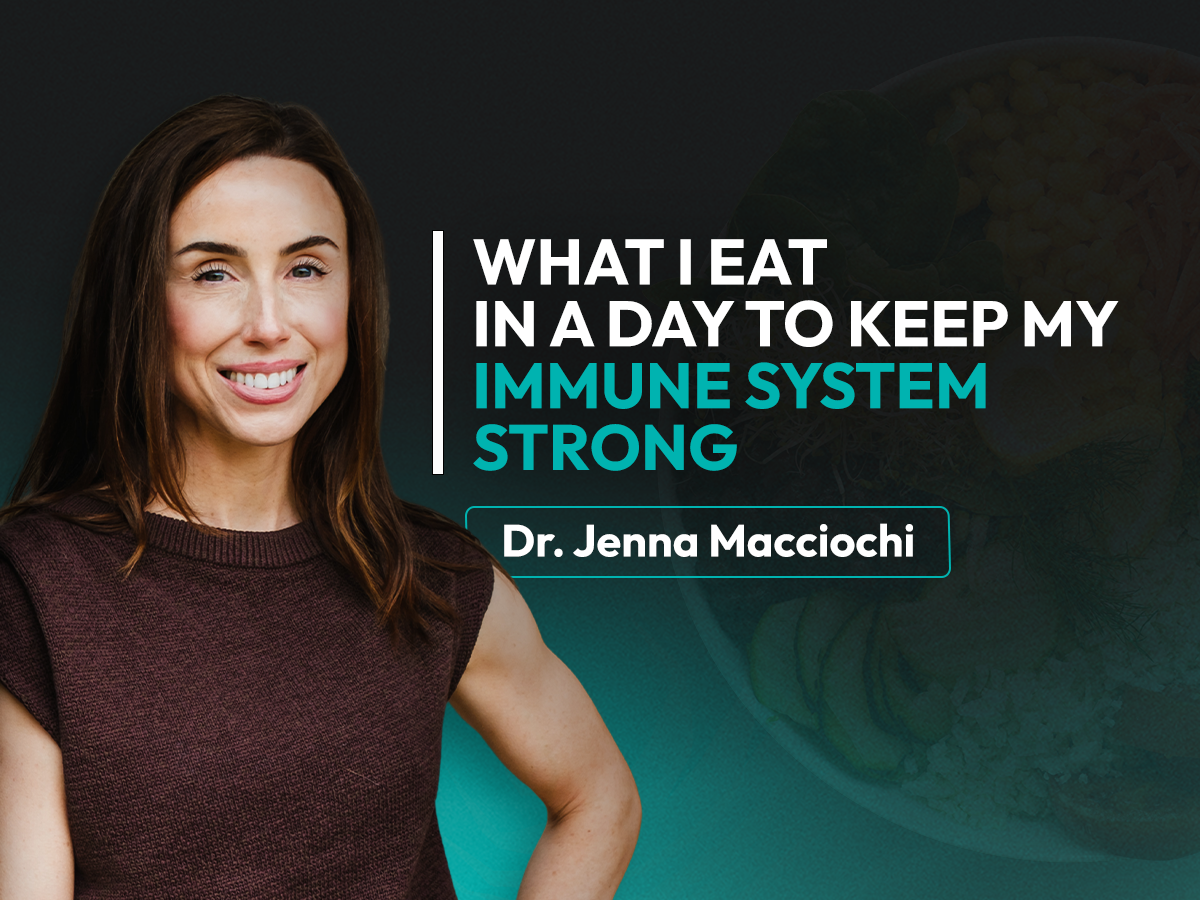
For many people, the idea of an immunologist’s diet probably conjures images of carefully measured meals, endless supplements and a kitchen cupboard full of “immune-boosting” ingredients.
But for Dr Jenna Macciochi, supporting immune health is much less about chasing quick fixes and much more about creating the right conditions for the body to do what it was designed to do.
As an immunologist, Jenna has spent years studying the relationship between nutrition, lifestyle and the immune system. But her approach is surprisingly simple. She doesn’t believe in one miracle food or a single habit that transforms health overnight. “Immunity isn’t built by one meal, one supplement or one green juice,” she explains. “It’s shaped over time by thousands of small decisions.”
For Jenna, those decisions extend beyond what is on her plate. Sleep, movement, stress management, time outdoors and connection with others all play a role in helping the immune system function at its best.
So, what does a typical day of eating look like for someone who studies immunity for a living?
Morning light before morning coffee
Jenna’s day doesn’t start with caffeine. It starts outside. Before breakfast, she likes to spend a few minutes outdoors, getting natural daylight to help regulate her body clock. “Our immune system keeps time too,” she explains.
Many immune cells follow daily rhythms, influencing processes such as inflammation and the body’s response to infection. For Jenna, stepping outside is a simple habit that supports both her sleep patterns and her immune health.
After that, she starts the day with a large glass of water – nothing complicated, just replacing what her body has lost overnight and supporting the protective barriers in her nose, lungs and gut.
Breakfast: protein first, plants always
Jenna’s breakfast is usually eggs with whatever greens happen to be in the fridge. Spinach, kale or chard all make regular appearances. “It doesn’t need to be Instagram-worthy,” she says.

For Jenna, the important thing is building a meal that supports her body. Protein plays a key role because immune cells are constantly being created, repaired and replaced. “Protein isn’t just for muscles,” she explains. “It’s the raw material for much of your immune system.”
“Protein isn’t just for muscles,” she explains. “It’s the raw material for much of your immune system.”
The greens are there because she genuinely enjoys them, but they also reflect her understanding of how nutrition interacts with the body.
After discovering she carries a common genetic variant that affects one of her detoxification pathways, Jenna became even more aware of the importance of regularly including leafy greens and cruciferous vegetables in her diet.
Rather than seeing genetics as something to fear, she sees it as another reminder that nutrition and biology are always having a conversation.
Also read: My Food Diary: What I Eat to Fuel HYROX Performance
Coffee, but not because it’s a “health hack”
Mid-morning brings one of life’s simple pleasures: coffee. Jenna enjoys it because she likes it, not because she is trying to turn it into a wellness ritual. Interestingly, coffee does contain polyphenols – plant compounds that can interact with the gut microbiome.
If hunger strikes, she’ll usually reach for a handful of nuts or seeds rather than waiting until she is overly hungry. They provide important minerals such as zinc and selenium, which support normal immune function.
Lunch: feeding the gut, not chasing trends
When it comes to lunch, Jenna’s focus is fibre. She believes it is one of the most underrated parts of a healthy diet, especially considering many people do not get enough of it.
Her meals often centre around beans, lentils or wholegrains, alongside plenty of vegetables and sometimes fermented foods like kimchi or sauerkraut.
But Jenna isn’t eating fermented foods because she believes they are a magical solution. “I eat them because I enjoy them and they add another layer of diversity to my diet,” she says.
The real hero, she explains, is fibre.
When gut microbes break down fibre, they produce compounds that help support the gut lining and influence immune function. Considering a large proportion of immune activity happens around the gut, feeding those microbes makes good biological sense.

Afternoon: pressing pause before stress takes over
For Jenna, wellbeing isn’t only about food. The afternoon is often when she makes time to reset, whether that means a short walk or a few minutes of slow nasal breathing.
As well as being an immunologist, Jenna is also a breathwork teacher, so she understands how closely connected stress and the immune system are. “Stress isn’t the enemy. We need it,” she explains. “The problem is when we never switch it off.”
Those quiet moments help signal to the nervous system that the body is safe, creating space to move away from being in a constant state of alert.
Dinner: the meal that matters beyond the plate
Dinner is the meal Jenna protects most carefully – but not necessarily because of the food. It’s because it is often when she sits down with her children.
Shared meals are one of those everyday habits that can have a bigger impact than we realise. Beyond nutrition, eating together supports connection, and social connection is closely linked with overall health.
Shared meals are one of those everyday habits that can have a bigger impact than we realise. Beyond nutrition, eating together supports connection, and social connection is closely linked with overall health.

The food itself is usually simple. Fish appears a couple of times a week, alongside plenty of vegetables and a source of carbohydrates such as potatoes, brown rice or another wholegrain.
Jenna doesn’t focus on getting every meal perfect. She focuses on the bigger picture. “I think about patterns,” she says.
Evening: the underrated immune booster
As the day winds down, Jenna turns her attention to sleep. She dims the lights, puts her phone away earlier when she can and prioritises rest.
After years of studying immunity, she believes sleep is one of the most powerful habits people can protect.
Sleep helps regulate inflammation, supports immune memory and prepares the body for the challenges of the following day. “If you asked me to name the single habit I’d protect above almost everything else, sleep would be very close to the top of the list,” she says.
The takeaway: consistency beats perfection
For Jenna, supporting the immune system isn’t about expensive supplements, trendy ingredients or trying to eat perfectly. “I don’t chase superfoods,” she says. “I don’t eat perfectly.”
Instead, she returns to the same foundations:
- plenty of plants
- enough protein
- more fibre
- movement
- time outdoors
- good sleep
- managing stress
- sharing meals with people she loves
None of these habits are particularly glamorous. But that is exactly the point. “The immune system has never been interested in glamorous,” Jenna says. “It’s interested in consistency.”
If you’d like to connect with Dr Macciochi visit her website or follow her on Instagram.