















































Ever feel like your fitness has slipped down the family priority list?
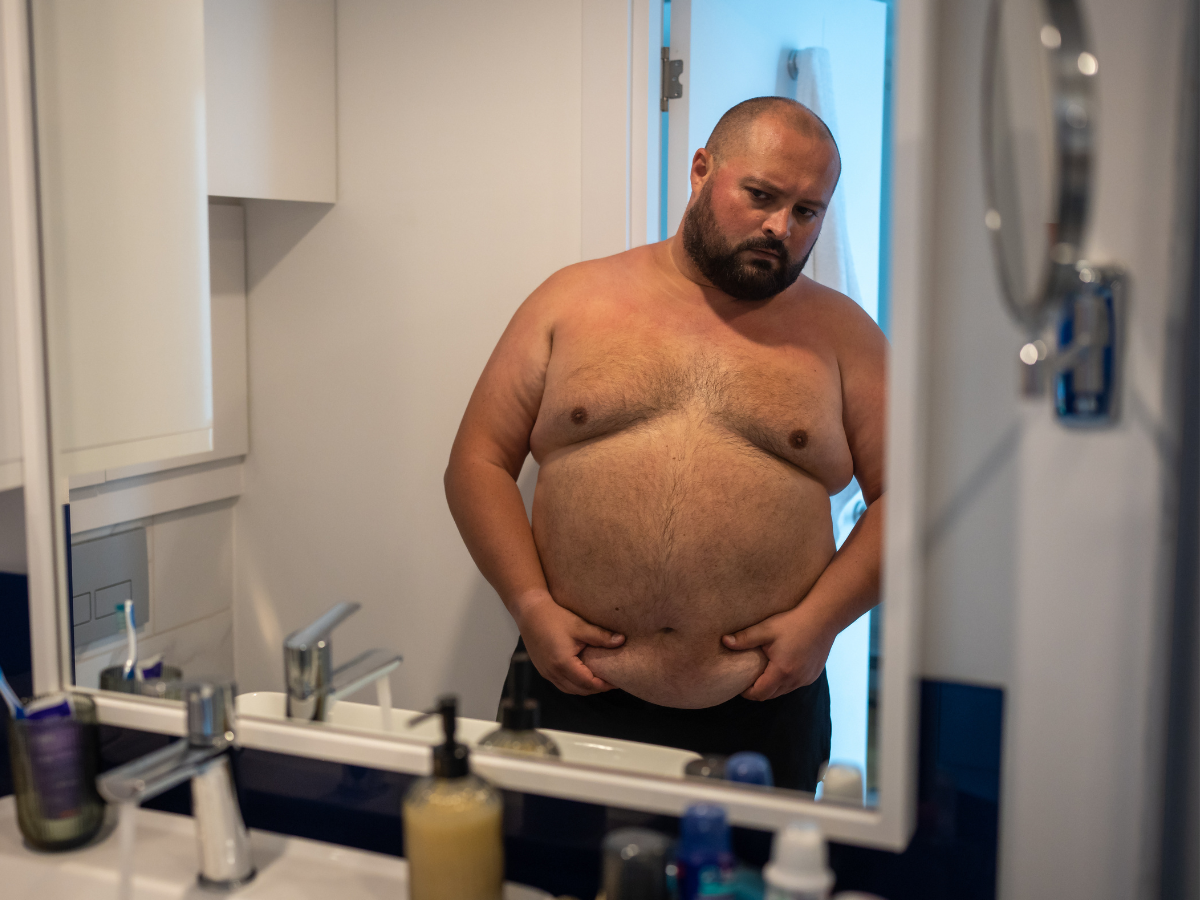
One minute you’re playing football in the garden without thinking twice. The next, you’re squeezing into jeans that used to fit perfectly and wondering when that extra weight appeared around your middle.
For many dads, it’s not a lack of motivation that’s the problem. It’s a lack of time. Between work, school runs, after-school clubs, family dinners and trying to be present at home, spending six days a week in the gym simply isn’t realistic.
For many dads, it’s not a lack of motivation that’s the problem. It’s a lack of time. Between work, school runs, after-school clubs, family dinners and trying to be present at home, spending six days a week in the gym simply isn’t realistic.
Here’s the good news: it doesn’t have to be.
If your goal is to lose belly fat, improve your fitness and feel stronger, three well-planned gym sessions each week can deliver impressive results. The key is making every minute count.
Why belly fat becomes harder to lose after becoming a dad
Fatherhood changes almost everything, including your routine.
Late nights become normal. Meals are often eaten in a rush. Exercise gets pushed aside when someone needs help with homework or another school event pops up in the diary.
Then there are the long hours spent sitting at a desk before driving home and collapsing on the sofa.
It’s the perfect recipe for gradually gaining weight around the waist.
Stress also plays a role. When life feels constantly busy, your body produces more cortisol, a hormone linked with increased appetite and fat storage, particularly around the abdomen.
Stress also plays a role. When life feels constantly busy, your body produces more cortisol, a hormone linked with increased appetite and fat storage, particularly around the abdomen.
The important thing to remember is that you’re not alone.
Millions of fathers experience the same shift. The answer isn’t trying to train like you did in your twenties. It’s finding a smarter, more sustainable approach that fits around real life.
The truth about losing belly fat
Let’s clear up one of the biggest myths in fitness.
Doing hundreds of sit-ups won’t burn belly fat.
Your body doesn’t choose where it loses fat first. Instead, fat loss happens across the entire body when you consistently burn more energy than you consume.
That means your workout should focus on movements that recruit lots of muscles at once rather than spending half your session doing crunches.
These are known as compound exercises, and they’re your best friend when time is limited. Exercises such as squats, presses, rows and lunges train multiple muscle groups in one movement, helping you burn more calories while building lean muscle. Compound movements are widely regarded as the foundation of effective strength training because they improve efficiency and overall strength while engaging more of the body in every exercise.
Building muscle matters too.
Muscle tissue requires more energy to maintain than fat tissue, meaning you’ll naturally burn slightly more calories throughout the day while also improving your strength, posture and everyday function.
Why three gym sessions are enough
Many people believe better results come from spending more time in the gym.
In reality, consistency beats frequency.
Three quality sessions every week are far more effective than six sessions one week followed by none the next because life got busy.
Training three times each week also gives your muscles enough time to recover, reduces the risk of burnout and fits far more comfortably into a busy family schedule.
Think of it this way.
You’re not trying to become a professional athlete.
You’re trying to become a healthier, stronger dad with enough energy to keep up with your children.
That’s a very achievable goal.
Workout One: Build your foundation
Goal: Build strength, increase muscle and burn calories.
Start with a five-minute warm-up on the treadmill, rowing machine or exercise bike.
Then complete the following:
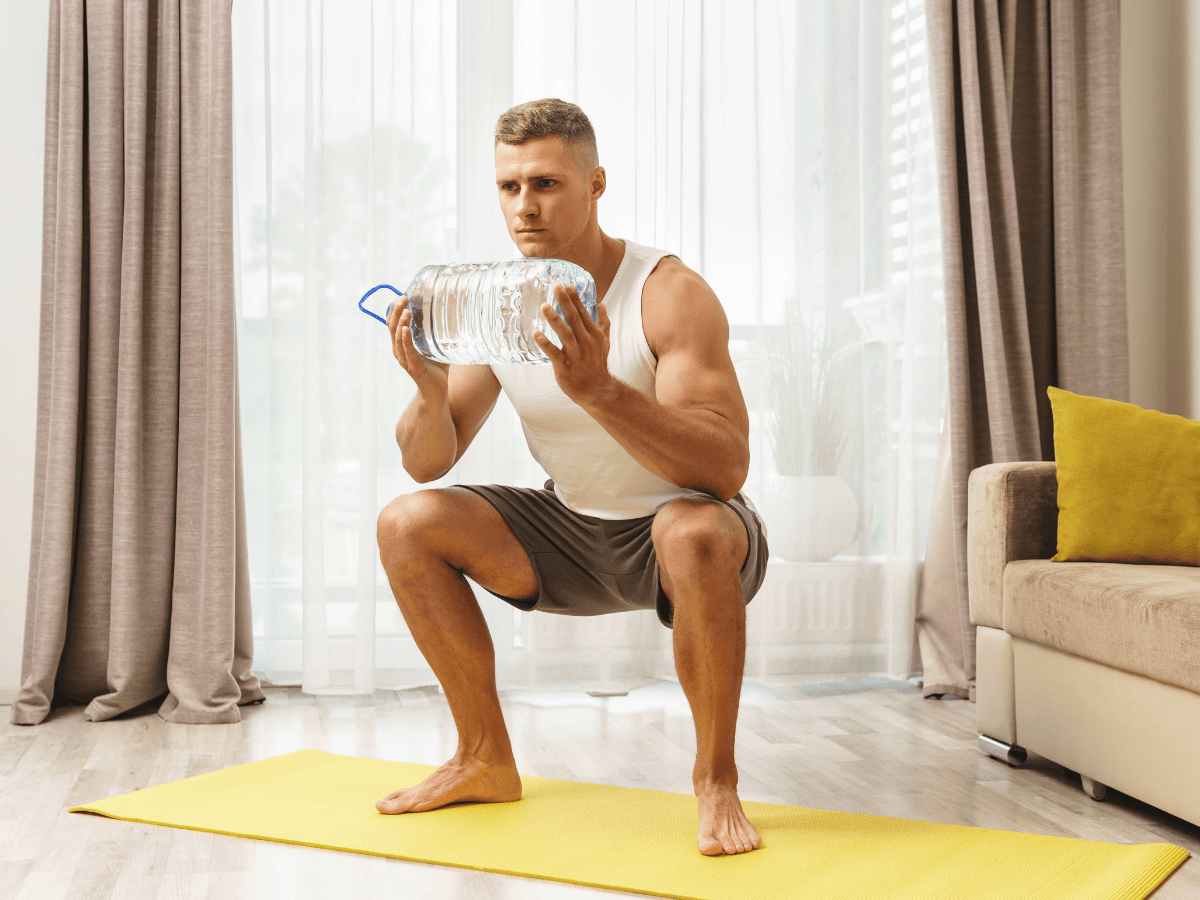
Goblet Squats
Three sets of 10 repetitions
Squats work almost every major muscle in your lower body while challenging your core and improving mobility.
▶ Watch proper squat technique: Squat University: How To Squat Properly
Bench Press or Push-ups
Three sets of eight to 12 repetitions
Whether you choose the bench press or bodyweight push-ups, you’ll strengthen your chest, shoulders, triceps and core.
▶ Push-up technique: How To Do The Perfect Push-Up (ATHLEAN-X)
Lat Pulldown
Three sets of 10 repetitions
Strong back muscles improve posture and balance out all the pushing movements you perform throughout the week.
▶ Lat pulldown tutorial: Jeff Nippard: How To Lat Pulldown Properly
Romanian Deadlift
Three sets of 10 repetitions
This movement strengthens your hamstrings, glutes and lower back, making everyday lifting much easier.
▶ Romanian deadlift guide: Romanian Deadlift Tutorial (Squat University)
Front Plank
Hold for three rounds of 30 to 45 seconds.
Forget endless crunches. A strong core is built by resisting movement rather than repeatedly bending your spine.
Finish with 10 minutes of intervals on the rowing machine or stationary bike.
Alternate one minute at a challenging pace with one minute of easy recovery.
Workout Two: Strength meets conditioning
This session keeps your heart rate elevated while still building muscle.
Complete the following exercises as a circuit.
Perform one exercise after another before resting for 90 seconds. Repeat the circuit three or four times.
Kettlebell Swings
15 repetitions
These develop explosive power while increasing your heart rate quickly.
▶ Technique guide: Kettlebell Swing Tutorial (StrongFirst)
Walking Lunges
10 repetitions each leg
Excellent for leg strength, balance and core stability.
▶ Walking lunge demonstration: Walking Lunge Technique (Onnit Academy)
Dumbbell Shoulder Press
10 repetitions
Strong shoulders make everyday tasks, from carrying shopping bags to lifting children, feel much easier.
▶ Shoulder press guide: Dumbbell Shoulder Press Tutorial
Seated Cable Row
12 repetitions
Balance your upper body strength while supporting better posture.
▶ Cable row tutorial: Seated Cable Row Technique
Battle Ropes
30 seconds
A brilliant finisher that challenges your upper body and cardiovascular system without placing excessive stress on your joints.
▶ Battle rope basics: Battle Rope Exercises For Beginners
At the end of this workout, you’ll have trained your entire body, elevated your heart rate and burned a significant number of calories, all in around 45 minutes.

Workout Three: Cardio, Core And Fat Burning
Your final workout of the week is all about improving your cardiovascular fitness while strengthening the muscles that support your spine, hips and pelvis. A stronger core won’t magically melt belly fat, but it will improve posture, reduce your risk of injury and help you perform better in every other exercise.
Begin with a five-minute warm-up on the treadmill or exercise bike.
Next, choose one of the following cardio sessions.
Option One: Incline treadmill walk
Walking shouldn’t be underestimated. Increasing the incline raises your heart rate without the impact of running, making it a great choice if your knees or lower back aren’t fans of high-intensity exercise.
- Walk for 25-30 minutes
- Incline: 8-12%
- Speed: brisk enough that you can talk, but not sing
▶ Watch: Incline Walking For Fat Loss
Option Two: Rowing intervals
The rowing machine works almost every major muscle group while giving your heart and lungs a solid workout.
Complete:
- One minute hard
- One minute easy
- Repeat 10 times
▶ Watch: How To Use A Rowing Machine Properly
Finish With Core Stability
Rather than endless sit-ups, focus on exercises that train your core to stabilise your body.
Dead Bug
Three sets of 10 reps each side.
This exercise teaches your core to resist movement while protecting your lower back.
▶ Watch: Dead Bug Exercise Tutorial
Side Plank
Hold for 30-45 seconds each side.
Excellent for strengthening the obliques and improving hip stability.
▶ Watch: How To Side Plank Properly
Pallof Press
Three sets of 10 repetitions each side.
This underrated exercise strengthens your deep core muscles while improving balance and rotational control.
▶ Watch: Pallof Press Tutorial
By the end of the week, you’ll have completed three balanced workouts that target every major muscle group while helping you burn calories efficiently.
Five Habits That Will Speed Up Your Results
Your workouts matter, but what happens during the other 165 hours of the week matters even more.
Here are five simple habits that can make a noticeable difference.
One. Prioritise protein
Protein helps preserve muscle while you’re losing weight and keeps you feeling fuller for longer.
Aim to include a good source with every meal, whether that’s chicken, fish, eggs, Greek yoghurt, lean beef, tofu or cottage cheese.
Two. Walk more than you think you need to
You don’t need to train every day, but moving every day is a different story.
Try to:
- Walk during your lunch break
- Park further away
- Take the stairs
- Walk while your child is at football practice instead of sitting in the car
Those extra steps soon add up.
Three. Cut back on liquid calories
Sugary coffees, fizzy drinks and a few extra pints at the weekend can quietly undo a week of hard work.
Swap them for water, sugar-free alternatives or sparkling water with fresh fruit.
Four. Sleep whenever you can
No parent enjoys perfect sleep, especially with younger children.
Still, aim for seven hours where possible. Poor sleep can increase hunger hormones, reduce motivation and make healthy choices feel much harder the next day.
Five. Eat mindfully
It’s surprisingly easy to finish your child’s leftovers without thinking.
Those handfuls of chips, chicken nuggets and biscuits all count.
Slow down, eat at the table where possible and pay attention to portions.
Small changes repeated consistently often outperform dramatic diets that last only a few weeks.

The Biggest Mistakes Busy Dads Make
The desire to make up for lost time often backfires.
Here are the traps to avoid.
Trying to train every day
Motivation fades quickly when your routine becomes impossible to maintain.
Three sessions every week is infinitely better than seven sessions for two weeks followed by giving up.
Doing only cardio
Running for an hour might burn calories today, but strength training helps preserve muscle while improving your metabolism over the long term.
The most effective programmes combine both.
Ignoring nutrition
You can’t out-train a poor diet.
Exercise supports fat loss, but your eating habits remain the biggest driver of progress.
Chasing perfection
One takeaway doesn’t ruin your progress.
Neither does missing one workout.
The people who succeed are simply the ones who keep showing up.
What Results Can You Expect?
Everyone loses weight at a different pace, but consistency usually brings noticeable improvements within a few months.
Weeks one to four
- More energy
- Better fitness
- Improved confidence in the gym
- Clothes beginning to feel more comfortable
Weeks four to eight
- Increased strength
- Visible improvements in posture
- Waistline starting to reduce
- Better stamina during everyday activities
Weeks eight to 12
- Noticeable fat loss
- Better muscle definition
- More confidence
- Healthier habits becoming second nature
Rather than obsessing over the scales, pay attention to how you feel, how your clothes fit and how much easier everyday life becomes.
Being able to carry the shopping in one trip, kick a football around without getting out of breath or keep up with your children at the park are all signs you’re moving in the right direction.
The Bottom Line
You don’t need marathon gym sessions to become fitter, healthier or leaner.
For busy dads, success comes from making exercise realistic enough to repeat week after week.
Three focused workouts, a few healthier food choices and a little more movement each day can have a remarkable impact over the course of a year.
Your children won’t remember whether you had a six-pack.
They’ll remember the dad who had the energy to play, explore, laugh and be present.
And that’s a goal worth training for.
Quick Summary: The Busy Dad’s Fat-Loss Formula
✓ Train three times each week with a mix of strength and cardio
✓ Prioritise compound exercises that work multiple muscle groups
✓ Aim for 7,000 to 10,000 steps most days
✓ Include protein with every meal
✓ Don’t chase perfection. Focus on consistency
This content is for general information only and not a substitute for professional advice. Please check with a healthcare provider before making changes to your fitness or diet.