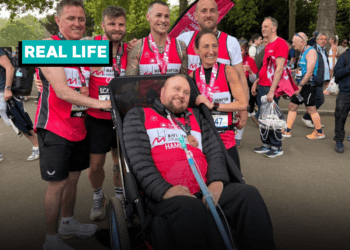






















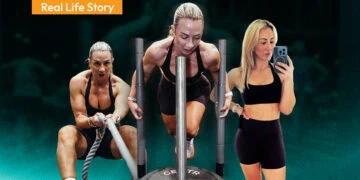














In 2017, a routine gym session turned life upside down for Sophie Butler, leaving her paralysed in an instant. “I lost my footing when squatting in a Smith machine and fell with 70kg on my back,” she recalls. “It paralysed me instantly.”
For someone whose life had revolved around strength and fitness, the accident was not just a physical blow – it was a test of mental resilience unlike anything she had faced.
But rather than letting the accident define her, Sophie chose to redefine what strength meant. “Fitness has been a huge part of both my physical and mental recovery,” she says. “Physically, I needed to be strong to regain what I could of my independence. After becoming disabled, strength wasn’t about aesthetics – it became functional. Endurance, mobility, adapting exercises, it all became essential to my daily life.”
Rather than letting the accident define her, Sophie chose to redefine what strength meant.

Confidence, too, had to be rebuilt from the ground up. “People think I’m very confident, and in some ways I am,” she admits. “But where I really find belief in myself is by showing up and following through with the things I say I’ll do. Even when they’re hard or look different from what I imagined, completing them solidifies my faith in my own abilities.”
Learning to train again
Returning to the gym after spinal rehab was a study in adaptation. “A typical gym isn’t built for disabled people,” she explains. “My first sessions were just me walking around with a notebook, noting which machines I could use and how to modify exercises. From there, I created entire workouts based on what I could do.”
The discipline and resilience required to train at a high level became a lifeline. “It was actually a relief,” Sophie says. “During my time in hospital, I wasn’t mentally stimulated. Returning to a familiar kind of training felt like coming back to a version of myself I used to recognise. Resilience isn’t optional when you’ve been dealt the cards I was – you have to play the best hand you can.”
Returning to a familiar kind of training felt like coming back to a version of myself I used to recognise.
Taking on the London Marathon
Today, that resilience is being tested in a new way: preparing for the London Marathon. “I always thought I might like to do it one day, but I finally took the leap after seeing the crowds,” she says. “I’m also raising money for the charity that provided me with a physio scholarship when I first became paralysed. This journey feels very full circle. I know how important the work they do is and I’m so passionate about making sure every single person who experiences a spinal injury gets the care and resources they need so it doesn’t have to be the end of their life.”

Marathon preparation has required adapting nearly every part of her life. “The physical load is huge. I’m gearing up for a 31km run, the longest distance so far. I’m eating more than I ever have, working daily on shoulder mobility and adjusting training to suit the scale of the challenge. But having a set date makes it feel achievable.”
The mental battle behind the miles
The mental hurdles, she admits, have been the toughest part of the journey. “I think the mental aspect is the biggest challenge,” Sophie says. “I did a half marathon in February and I’m really happy with how it went, but I didn’t have any music and around 16k I just found myself getting bored. It was a big learning curve. I’ll definitely need Beyoncé on the big day!”
For those facing their own challenges, Sophie’s message is simple but powerful. “You can challenge yourself to do hard things, no matter what the challenge is. It might be a 5k, learning to swim, or something completely different. Sometimes the challenge is just getting out of bed when all you want to do is hide. I’ve been there, and I know it’s possible to push through.”
Looking ahead, Sophie isn’t slowing down. “After the marathon, I want to try adapted skiing. I’ve been inspired by the Winter Olympics/Paralympics. Outside of fitness, I want to explore storytelling more. Sharing stories is one of the most important aspects of humanity, and I want mine to live on.”
From paralysis to the brink of one of the world’s most iconic races, Sophie Butler’s story is a reminder that strength isn’t just about muscles – it’s about resilience, adaptation, and the courage to keep moving forward, no matter what life throws your way.
Want to connect with Sophie? Follow her on Instagram: @sophjbutler