





























Before 2022, champion bodybuilder Neil Andrews’ life was full and fast-moving. He was working full time, raising his daughter Phoenix and, as he says, “just chasing progression in all aspects”.
A father of two and fiancé, Neil grew up in Port Talbot and has lived in Swansea for the past 11 years. Fitness was never a phase. “Training has always been instilled in me since I was young,” he explains, from martial arts and gymnastics to basketball, boxing and powerlifting. “I’ve always been obsessed with muscles, as far back as I can remember.”
He was, by his own description, “very health conscious” and had not been to the doctor in nearly nine years. That belief in his body made the warning signs easy to misread.
The morning something felt wrong
It started quietly, at home, on a Sunday morning. “I just woke up shaking quite uncontrollably,” Neil says. “Legs, arms, like I was freezing.” His first instinct was illness. “I thought I was coming down with flu or a virus, getting into bed under blankets to get warm.” At the time, he did not realise that “unknowingly, I was shaking for another reason”.
That moment marked the beginning of a life-threatening chain of events.
Hearing the diagnosis
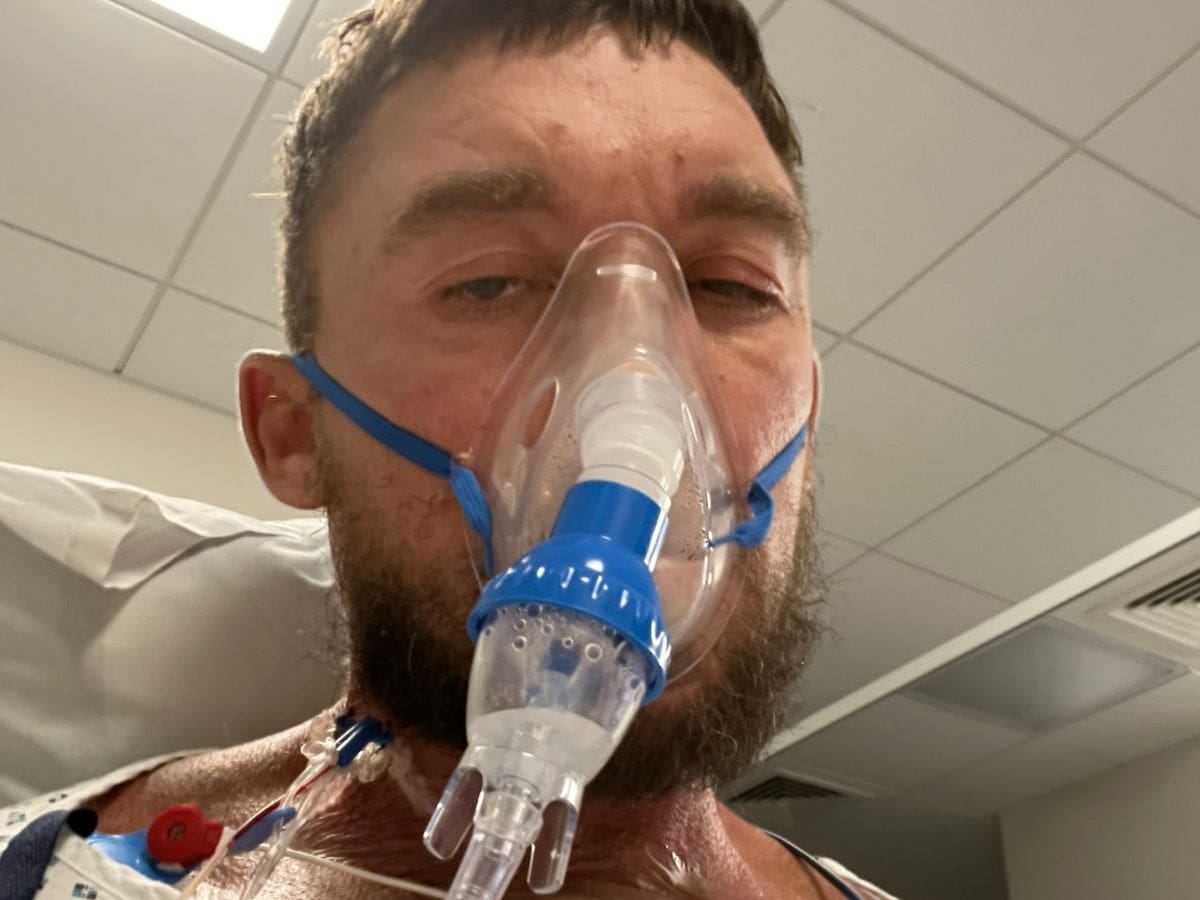
Neil was diagnosed with infective endocarditis, a severe heart infection that, in his case, followed a routine scale and polish at the dentist.
The news felt surreal. “I just thought, this can’t be happening to me,” he says. “Not my heart.”
Sitting in intensive care, the emotional weight landed suddenly. “Once I was told in ITU, I just emotionally thought, this is it.”
Twenty-four hours to save a life
The seriousness of his condition became impossible to ignore when six surgeons stood at the bottom of his bed. “They told me, ‘We don’t know how you’re alive, as you’ve been in heart failure for the past week,’” Neil recalls.
His valve was beyond repair. “My valve is obliterated,” he was told.
Normally, treatment would involve weeks of antibiotics before surgery, but Neil was given a stark reality check. “We would normally give you antibiotics for two weeks then operate,” one surgeon said. “But you won’t be here in two weeks. We have 24 hours to save your life.”
Neil was told to get his affairs in order. “I had to make a video for my daughter,” he says. He called his father and sister on FaceTime and told them he had been warned he might not survive. “I don’t think I’m going to make it,” he remembers saying.
Recovery stripped right back
The operation saved his life, but recovery was relentless. Neil spent days in a high-dependency cardiac unit dealing with “chronic sleep deprivation, vertigo and hallucinations”. He spent “around 12 to 18 hours a day in a chair” because he could not sit or lie in a bed.
He lost 20 kilograms and had to learn how to walk again. “Walking into the bathroom and seeing myself for the first time in weeks in the mirror was emotionally challenging,” he says. In total, he spent three months on the Cyril Evans Ward.
Movement as medicine
Rebuilding began with movement. “I’m not somebody who is going to sit there and see my recovery out,” Neil says. He started small, then kept going. “I was taking my oxygen off and walking to the door, then the corridor, then around the ward, to eventually around the hospital.” Doctors told him they had never seen someone recover like he did, even as he refused pain medication.
After discharge, lifting was off limits for three months. “So I was basically training legs daily,” he says. When upper-body training was finally allowed, the reality hit hard. “I couldn’t even do a side lateral with a five-kilo dumbbell.” At that point, his focus was clear. “Daily, it was just about recovery and focusing on getting my strength back, not even bodybuilding.”
Finding strength through pain

The months that followed were tough. Neil trained while his sternum healed after being sawn open during surgery. “I trained in pain for months,” he says, “but I just got through each session.”
Progress came slowly, but it came.
“Every day, I was getting a little stronger.” He credits his mindset for carrying him through. “I just have this work ethic that’s in my DNA, and I knew how important it was to get back fit and healthy.”
Rethinking goals and listening to the body
For a long time, competing again did not feel realistic. “I never thought I’d ever compete again,” Neil admits.
He rebuilt strength and weight without knowing what would happen if he dieted down. “I didn’t know if I stripped back my body fat what I’d look like, or if I could do this competitively anymore.”
Looking back now, he believes his lifestyle played a role in his survival. “You reap what you sow daily,” he says. “I believe the lifestyle I live, being fit and healthy, saved my life.” Training, he explains, is stress, and so is getting lean for shows. “My body is used to that trauma, and that’s how I was able to hold on for a week, unbeknown, leading up to my heart diagnosis.”
A message worth hearing
Neil’s message to others, especially those who train hard, is simple and direct. “Please look after your physique,” he says. “This vessel that carries us through life, people think it’s just going to take you till the end of time. It’s not unless it’s looked after.” He does not hesitate when asked what matters most. “The single biggest investment you will ever make is in yourself.”
The words that carried him through remain close. “Get comfortable being uncomfortable,” Neil says. And when the weight of it all feels heavy, he adds, “This too shall pass.”