






























































Exercise can start to feel a bit different over time. Joints may ache more than they used to, balance can feel less steady, and even simple routines might take extra effort. That doesn’t mean staying active has to be difficult, it just means finding a better way to move.
Aquatic exercise and aquatic therapy offer exactly that. In the water, movement feels lighter, safer, and more comfortable, while still giving your body the activity it needs. Whether the aim is to stay fit, ease discomfort, or improve mobility, the pool provides a space where exercise feels more manageable, and even enjoyable.
Why water works wonders for ageing bodies
Water naturally supports the body, which makes a big difference during exercise. Its buoyancy reduces joint stress by up to 90%, taking pressure off the knees, hips, and spine. For those dealing with arthritis or stiffness, this alone can make movement feel possible again.
At the same time, water provides resistance in every direction. Even slow, controlled movements require effort, helping to build strength without the need for heavy weights. This balance of support and resistance is what makes aquatic exercise both gentle and effective.
At the same time, water provides resistance in every direction. Even slow, controlled movements require effort, helping to build strength without the need for heavy weights. This balance of support and resistance is what makes aquatic exercise both gentle and effective.
Warm water, usually between 28–32°C, adds to the benefits. It helps relax tight muscles, improve blood flow, and reduce stiffness. Alongside this, hydrostatic pressure, the natural pressure from the water, supports circulation and can help reduce swelling, making movement smoother and more comfortable.
A safer way to build strength and balance
Balance becomes increasingly important with age, especially when it comes to preventing falls. The water provides a supportive environment where you can practise movement with less risk.
If balance is lost, the water cushions the body and slows movement, reducing the chance of injury. This makes it easier to try exercises that might feel too risky on land. Over time, these movements help strengthen the core and legs, improving overall stability.
Simple exercises like water walking, side leg raises, and gentle squats are effective for building strength and coordination. Even standing on one leg with support can help improve balance and confidence in everyday activities.
Simple exercises like water walking, side leg raises, and gentle squats are effective for building strength and coordination. Even standing on one leg with support can help improve balance and confidence in everyday activities.
Finding what works for you
Aquatic exercise isn’t one-size-fits-all, and that’s part of its appeal. It can be adapted to suit different needs, whether focused on recovery or general fitness.
Aquatic therapy is typically guided by a professional and designed for rehabilitation. It’s especially helpful for individuals managing conditions such as arthritis, osteoporosis, chronic pain, or neurological conditions. Exercises are tailored to improve movement, reduce discomfort, and support recovery.
On the other hand, general pool exercises, like water aerobics or walking lengths, focus on maintaining fitness and staying active. These activities are often done in groups, which can make the experience more engaging and enjoyable.
A workout that supports your heart and mind
Water-based exercise doesn’t just help muscles and joints, it also supports overall health. Gentle aerobic activity in the pool can improve heart function, boost circulation, and build endurance without placing too much strain on the body.
Regular movement in water can also help manage long-term conditions such as high blood pressure or type 2 diabetes. Because the exercises are low impact, they’re easier to keep up consistently, which is key to long-term health.
Regular movement in water can also help manage long-term conditions such as high blood pressure or type 2 diabetes. Because the exercises are low impact, they’re easier to keep up consistently, which is key to long-term health.
There are also mental benefits. The steady, rhythmic nature of water movement can help reduce stress and promote relaxation. Group classes or shared pool time can also provide social interaction, which plays an important role in overall wellbeing.
Simple pool exercises to get you moving
Getting started with pool exercises doesn’t require a complicated routine. Many effective movements are simple and easy to learn.
Water walking is one of the best starting points. Walking forwards and backwards in waist- or chest-deep water helps build strength and improve balance. From there, adding movements like high-knee lifts or leg extensions can further support mobility.
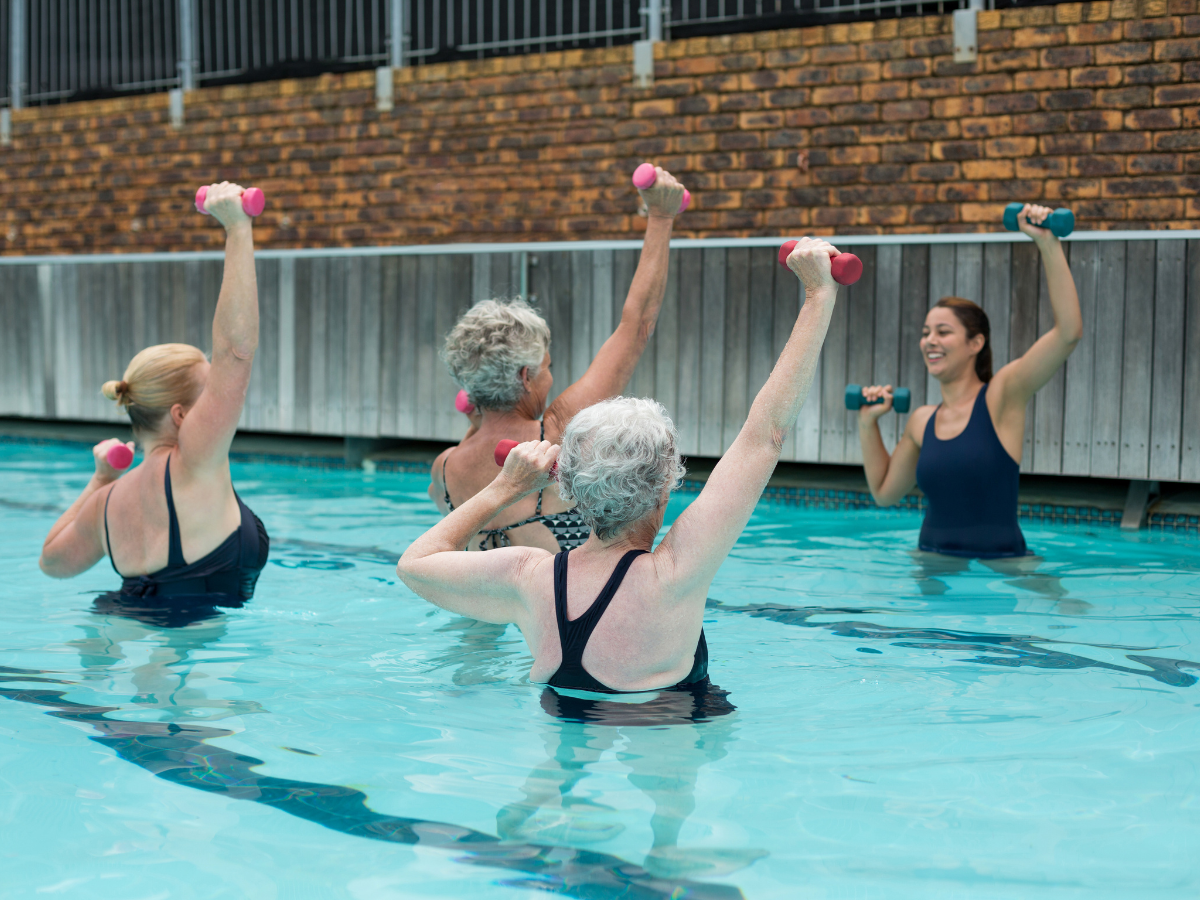
Strength exercises can include arm pushes and pulls against the water or using light water weights. For the lower body, movements like water squats and side leg raises help build muscle without putting stress on the joints.
More dynamic options, such as deep-water jogging or gentle star jumps, can improve cardiovascular fitness. Balance-focused exercises, like standing on one leg or shifting weight side to side, help improve coordination and stability.
Tips to start safely and stay consistent
Starting slowly is key. Short sessions of around 10 to 15 minutes are enough in the beginning, with time and intensity increasing gradually as confidence improves.
Starting slowly is key. Short sessions of around 10 to 15 minutes are enough in the beginning, with time and intensity increasing gradually as confidence improves.
Choosing the right environment also matters. Pools with handrails, ramps, and warm water can make a big difference in safety and ease of use. Simple tools like floatation belts or pool noodles can provide extra support while building confidence.
Staying aware of how your body feels is important. Hydration, proper warm-up, and rest when needed all contribute to a safer experience. Those with existing health conditions should consult a healthcare professional before starting a new routine.
Staying active doesn’t have to involve discomfort or strain. Aquatic exercise offers a way to move more freely, build strength, and support overall health in a setting that feels safe and manageable.
With regular practice, it can help improve mobility, reduce pain, and build confidence in everyday movement. For many, the pool becomes more than just a place to exercise, it becomes somewhere to feel better, both physically and mentally.