







































At some point in life, balance stops being something you take for granted. One day you’re stepping off kerbs like an action hero in a film. The next day you pause at the edge of the pavement and think, Hang on. Let me negotiate with gravity first.
This is normal. As people get older, the systems that keep us upright start to slow down. Muscles lose strength. Reaction time gets a little less sharp. The inner ear, which helps with balance, becomes slightly less precise. Even the joints themselves, especially ankles, knees, and hips, become less responsive.
But here’s the encouraging part. Research in geriatric exercise science shows that balance is highly trainable, even later in life. A few simple movements practised regularly can improve stability, reduce the risk of falling and strengthen the joints that keep the body steady. Just think of balance training as routine maintenance, like tightening the bolts on a beloved bicycle.
Also read: The Simple Training That Protects Your Balance, Grip And Mobility After Fifty
Your ankles are busier than you think
Most people think balance comes from the legs. That’s partly true, but the real stars of the show are the joints quietly coordinating the whole performance.
Start with the ankles. These little hinges adjust constantly while you stand or walk. Each time you shift your weight, your ankles make tiny corrections to stop you toppling over. They’re like backstage crew members in a theatre production. Invisible, essential and working nonstop.
Then there are the knees and hips. They absorb shock, adjust posture and help you recover when you stumble. Together, these joints form a sort of stability chain. When that chain weakens, even slightly, balance becomes less reliable.

Think about standing on a bus when the driver brakes suddenly. Your body sways forward, then corrects itself in a split second. That correction happens because the ankles, knees, and hips react quickly. Strong joints bring the body back into balance. Slower reactions make the wobble last longer and that extra second can make all the difference. This is where balance training earns its stripes.
Strong joints bring the body back into balance. Slower reactions make the wobble last longer and that extra second can make all the difference. This is where balance training earns its stripes.
Scientists often use the term proprioception, which describes the body’s ability to sense its position in space. Your body knows where it is without needing to look. Balance exercises strengthen that internal navigation system. The joints respond faster. The muscles coordinate more smoothly. Everyday movements begin to feel automatic again. Which brings us to a surprisingly handy place for practice.
Try the living room balance test
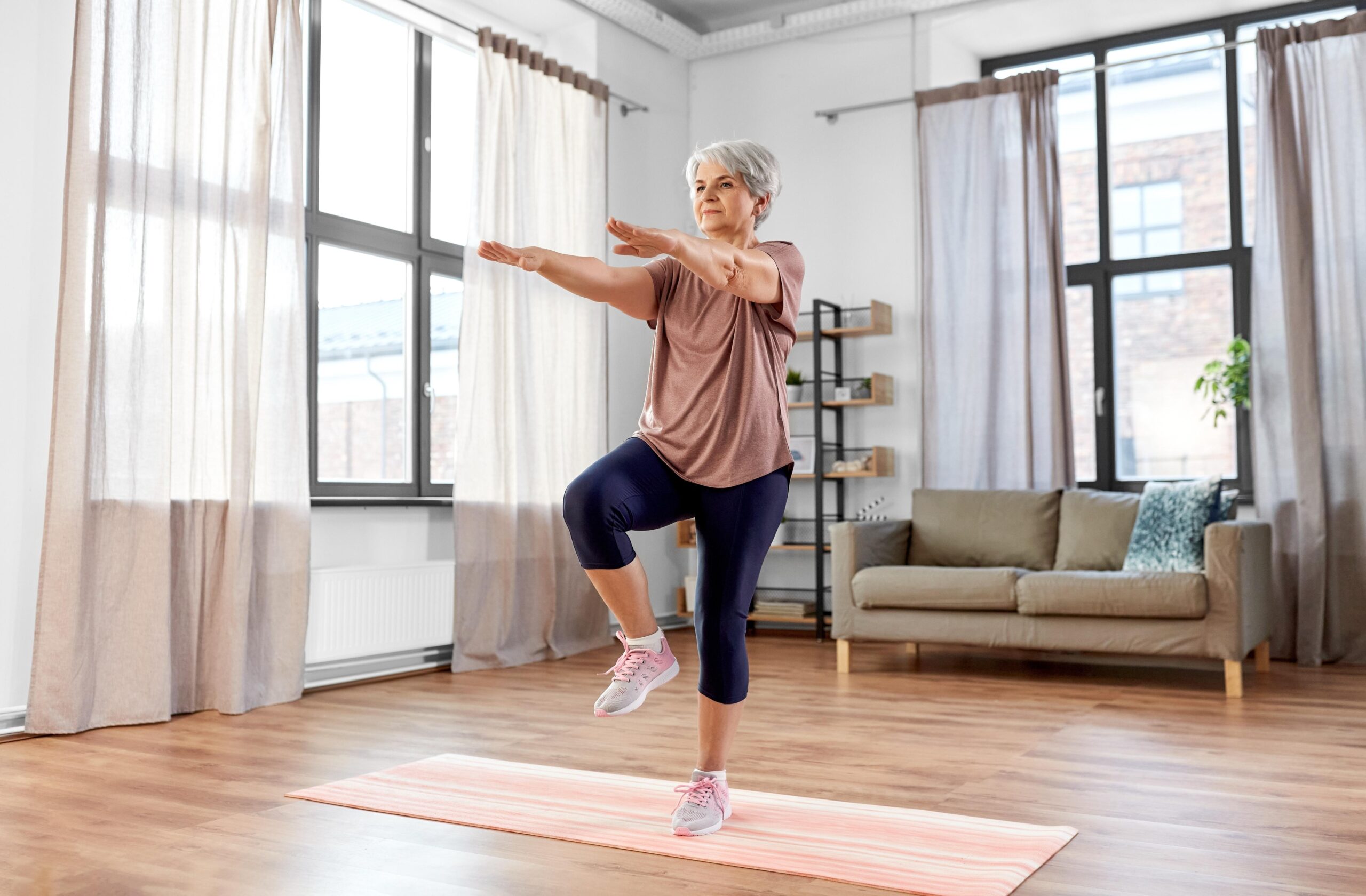
Balance training rarely requires a special environment. Your living room, kitchen or a small patch of garden works perfectly well. Stand near a worktop or solid chair and lift one foot slightly off the floor. Hold that position for a few seconds, then swap legs.
It feels simple because it is simple. Yet the ankles immediately begin adjusting to keep you steady. The knees align. The hips stabilise. Suddenly a five-second pause becomes a tiny joint workout.
Another easy practice involves slow heel-to-toe walking across the room. One foot directly in front of the other, as if you’re following a painted line on the floor. It might feel a bit theatrical at first. Somewhere between a tightrope walker and a detective studying footprints. That’s perfectly fine. The joints benefit from the challenge.
These movements train the body for real situations. Climbing stairs, stepping off kerbs, turning quickly when someone calls your name from across the room. Balance exercises rehearse those reactions before the body actually needs them.
Consistency matters far more than intensity. A few minutes every day trains the joints more effectively than the odd ambitious workout. It’s maintenance rather than proper exercise. Like tightening a loose screw before the chair starts to wobble.
Turn stumbles into recoveries
When people talk about falls, they often describe them as accidents. Something sudden. Something unavoidable. In reality, many falls follow a familiar pattern. A small trip. A delayed reaction. A knee that can’t stabilise quickly enough. An ankle that doesn’t adjust in time. Strengthening the joints changes that sequence.
Responsive ankles correct small slips before they escalate. Stable knees keep weight distributed properly during movement. Strong hips help the body regain control after an unexpected stumble. The result is not only better balance; joint health improves as well.
Stable knees keep weight distributed properly during movement. Strong hips help the body regain control after an unexpected stumble.
Movement helps nutrients circulate through cartilage. Muscles surrounding joints act like shock absorbers. Regular activity improves flexibility and circulation, which can reduce stiffness and discomfort over time.
Many people notice the benefits in everyday tasks. Standing up from a chair becomes smoother. Walking across slightly uneven paving feels less nerve-racking. Carrying shopping feels steadier.
There’s another advantage that rarely gets mentioned in fitness guides, and that is: confidence. Anyone who’s felt unsteady knows the cautious shuffle that follows. Steps shorten. Movements slow. You start studying the floor as if it hides secret traps. Balance training slowly rewrites that story.
The joints begin cooperating again. Ankles respond faster. Knees feel more dependable. Hips stabilise the body when movement gets unpredictable.
Suddenly the body moves with a little more ease. Gravity still exists, of course. It always will. But with strong joints and steady balance, gravity feels less like an opponent and more like a dance partner that you can handle just fine.