













































Forget the idea that getting stronger always means learning new exercises or chasing more equipment. Progress does not always come from adding more. Often, it comes from doing the same things differently.
That is where a bodyweight workout stands out. Instead of constantly switching routines, it allows you to build strength with the same core movements, adjusting their difficulty as you go.
Whether you are just starting out or already deep into a routine, the approach stays consistent. You do not need a growing list of exercises or access to machines. What changes is how much control, effort, and precision each movement demands.
Over time, that consistency removes guesswork. You are not jumping between methods. You are building on what you already know, with each variation adding a new layer of difficulty.
No equipment workouts that stay with you
If you are just starting, the real win is not variety. It is getting comfortable with a small set of movements that you will keep using.
Squats, press-ups, and lunges are not just beginner exercises. They are long-term staples that evolve with you. What starts as a basic movement gradually becomes more demanding as your strength improves.
The squat works your quads, glutes, and hamstrings while building coordination through your hips and knees.
With feet shoulder-width apart, you lower your hips as if sitting into an invisible chair, then drive back up. Early on, a chair or wall helps with balance. Later, depth, control, and tempo become the challenge.
With feet shoulder-width apart, you lower your hips as if sitting into an invisible chair, then drive back up. Early on, a chair or wall helps with balance. Later, depth, control, and tempo become the challenge.
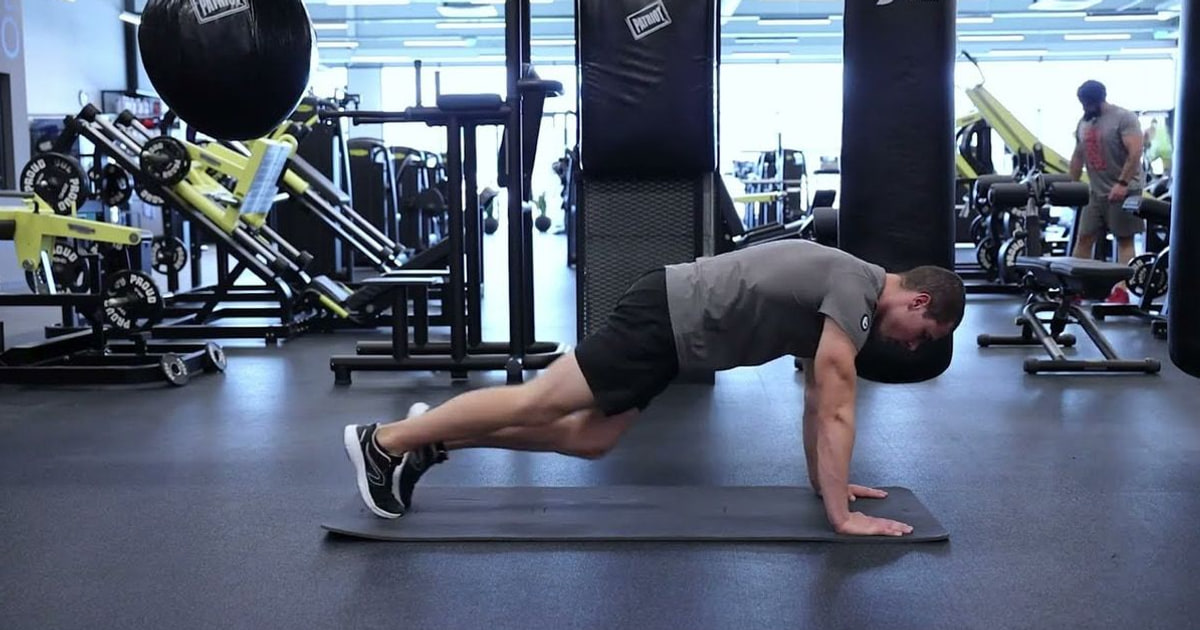
Press-ups work the chest, shoulders, triceps, and core. In a plank with hands slightly wider than your shoulders, you lower your body and press back up in one line. Knee or wall versions build the base, but the same movement continues to challenge you as you progress.
Lunges follow the same pattern. You step forward, lower the back knee, then push back up. At first, it is about coordination. Later, it becomes about stability, control, and strength in each leg.
The movements do not change. What changes is how demanding they feel.
Conditioning without changing the playbook
Once you move past the basics, the structure stays the same, but the pace shifts. Bodyweight training does not need entirely new exercises to build endurance.
It relies on how you organise the same movements. Shorter rest periods, faster transitions, and repeated circuits increase the intensity without introducing anything unfamiliar.
That moment when a short session leaves you out of breath is not about complexity. It is about how the work is arranged. Strength and conditioning start to overlap, using the same exercises in a more demanding format.
That moment when a short session leaves you out of breath is not about complexity. It is about how the work is arranged. Strength and conditioning start to overlap, using the same exercises in a more demanding format.
Supporting movements follow the same idea. Planks strengthen the core, which keeps everything steady, while glute bridges support your hips and lower back. They stay in your routine, but they start to matter more as everything else gets harder.
Progression that builds on what you already do
As you get stronger, progress comes from adjusting the difficulty, not replacing the exercise.
That is where progression becomes more straightforward. Instead of learning something new, you push the same movement further. More reps, slower tempo, reduced rest, or more challenging variations all increase the demand.
Going from knee press-ups to standard press-ups, then to decline versions where your feet are elevated, is a clear example. The movement pattern stays familiar, but each step requires more strength and control.
Going from knee press-ups to standard press-ups, then to decline versions where your feet are elevated, is a clear example. The movement pattern stays familiar, but each step requires more strength and control.
The same applies to lower-body work. A standard squat can shift into single-leg variations, while lunges can progress to more demanding variations, such as the Bulgarian split squat.
To perform this movement, place one foot on a raised surface behind the body while the front leg supports the weight. Holding this position adds balance to the equation, increasing the challenge without changing the core movement itself.
To perform this movement, place one foot on a raised surface behind the body while the front leg supports the weight. Holding this position adds balance to the equation, increasing the challenge without changing the core movement itself.
Instead of chasing new exercises, you stay with the same foundation and build upwards.
Adding resistance to your bodyweight workout without changing direction
Bodyweight training works well on its own, but resistance bands add another layer without changing the overall approach.
They increase the difficulty of familiar movements rather than replacing them. Squats, presses, and pulls feel different with added tension, but the workout’s structure remains consistent.
Therapy bands often support lighter work, such as stretching or recovery, while loop bands increase resistance for lower-body exercises and assisted pull-ups.
Tube bands with handles expand the range further, allowing movements that resemble cable exercises while still following the same patterns.
Therapy bands often support lighter work, such as stretching or recovery, while loop bands increase resistance for lower-body exercises and assisted pull-ups.
The goal stays the same. You are not adding complexity. You are building on what is already there.
The full payoff: less guesswork, more consistency
Bodyweight training does more than build strength. It simplifies how progress happens. Instead of constantly looking for the next routine, you rely on a small group of movements that continue to challenge you over time.
The consistency makes it easier to stay on track because you are not starting over or having to learn from scratch.
It also fits easily into everyday life. A park, a garden, or a quiet space at home becomes enough. No setup, no equipment, just a routine that grows with you.
The focus shifts from variety to execution. Warm up, cool down, and give your body time to recover. Build gradually and pay attention to how each movement feels as it becomes more demanding.
Progress does not always require something new. Sometimes, it is about refining what you already do.
This content is for general information only and not a substitute for professional advice. Please check with a healthcare provider before making changes to your fitness or diet.