
















































At some stage in every fitness journey, the arms become a project.
You head to the gym and do what many people do: you start chasing the arms directly. Curls for the biceps. Kickbacks for the triceps. A few overhead extensions for good measure. Soon you find yourself running through a small parade of arm exercises, all designed to coax those muscles into looking sharper, firmer, more defined.
You head to the gym and do what many people do: you start chasing the arms directly. Curls for the biceps. Kickbacks for the triceps. A few overhead extensions for good measure.
Meanwhile, across the room, someone hangs from a pull-up bar, hauls their body upwards, drops down, and goes again. Another person rows a heavy cable towards their ribs. Someone else bangs out press-ups on the floor.
They’re not technically “training arms.” Yet their arms are working the entire time.
That detail often goes unnoticed. Many of the exercises people label as chest, back, or shoulder movements recruit the biceps and triceps as major helpers. Pull something towards your body and the biceps jump in. Push something away and the triceps take over. Your arms clock in for work long before you get to the curl rack.
Which raises an interesting gym question. If these bigger movements already train the arms, how necessary are all those extra curls and extensions? Do compound exercises quietly build toned arms while everyone else queues for the dumbbells?
The shortcut hidden inside big lifts
Many exercises people think of as chest or back workouts also train the arms along the way. During upper-body movements, the arms almost never stay on the sidelines. They help control the weight, stabilise the joints, and contribute to the pull or push from the first repetition all the way to the last.
During upper-body movements, the arms almost never stay on the sidelines. They help control the weight, stabilise the joints, and contribute to the pull or push from the first repetition all the way to the last.
Take the press-up. Most people file it under chest day. Yet every time you press your body away from the floor, your triceps extend the elbow and help drive the movement. Do twenty press-ups and your triceps have already clocked twenty solid contractions. No kickbacks required.
Rows tell a similar story. When you pull a barbell, cable, or dumbbell towards your torso, the biceps flex the elbow and contribute to the pull. The back muscles lead the action, but the arms remain active partners all the way through the movement. Set after set, rep after rep, they keep showing up for work.
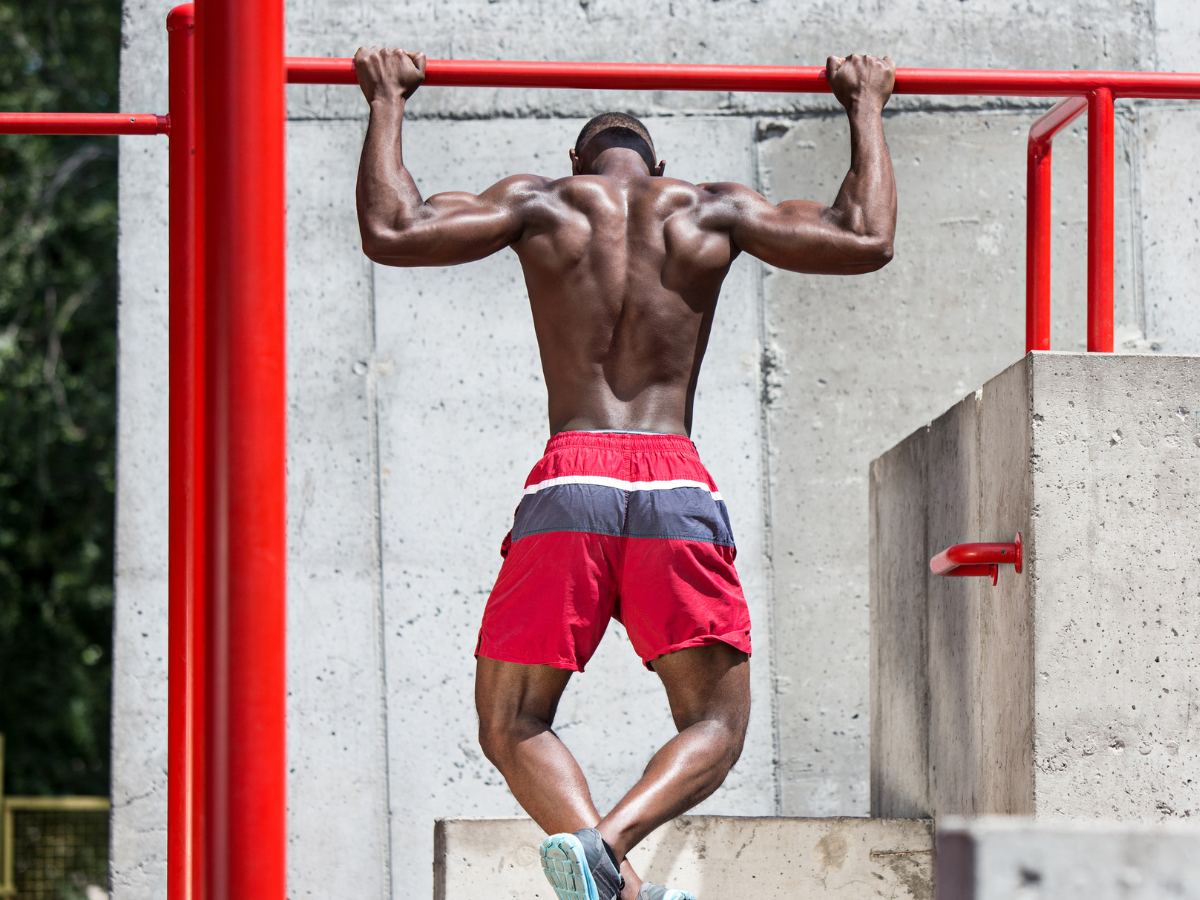
Pull-ups may be the most dramatic example. Hanging from a bar and pulling your body upwards demands effort from the back, shoulders, forearms, and core. Yet the biceps play a major role in bending the elbow and helping move your body towards the bar. Anyone who has finished a tough set of pull-ups knows the sensation: the arms feel it.
Exercises like these belong to a category called compound movements. They involve multiple joints and several muscle groups working together. Because the body shares the effort across many muscles, people can usually handle heavier weights. Heavier loads create more mechanical tension in the muscles, one of the key drivers of muscle growth.
This explains something that often surprises newcomers to the gym. Arm definition sometimes improves even when a programme contains very few direct arm exercises. Rows, presses, and pull-downs provide plenty of stimulation for the biceps and triceps along the way.
This explains something that often surprises newcomers to the gym. Arm definition sometimes improves even when a programme contains very few direct arm exercises.
There’s another practical benefit hiding here. Compound movements make efficient use of time. One exercise trains several muscles at once. In one set of rows you work the back, shoulders, biceps, and core. In one set of press-ups you train the chest, triceps, and shoulders. For people squeezing workouts between work, errands, and life in general, that efficiency matters.
The arms get plenty of attention during these bigger movements, even when they’re not top billing in the workout. They assist the bigger muscles, stabilise the joints, and help move the weight from start to finish.
The curl rack redemption story
Isolation exercises target one muscle group at a time. Bicep curls. Triceps kickbacks. Overhead extensions. They remove the supporting cast and give one muscle the spotlight. This approach has value. Sometimes muscles need extra attention.
Imagine someone who performs plenty of compound lifts yet feels their arms lag behind their shoulders and back. Their rows get stronger. Their presses improve. Their arms still look modest. Frustrating, isn’t it? Isolation work helps here. Direct arm exercises add training volume to the specific muscles responsible for elbow movement.
Think of compound exercises as the main course. Isolation exercises act like seasoning. A little extra flavour at the right time. They also help people feel the muscle working. Beginners often struggle with this connection. Ask someone new to lifting where their triceps are and they may gesture vaguely towards the general area behind their elbow. A few focused sets of extensions teach the body what that muscle actually does.
So the clever approach blends both strategies. Compound movements form the backbone of the workout. Press-ups, rows, presses, pull-downs. These exercises train large muscle groups and challenge the arms along the way.
Isolation exercises come in at the end. A few sets of curls. A few sets of triceps work. Enough to give the arms direct attention without turning the whole workout into a curling marathon.
Picture it as teamwork. Big lifts handle the heavy lifting – literally – whilst arm exercises finish the job.