



































































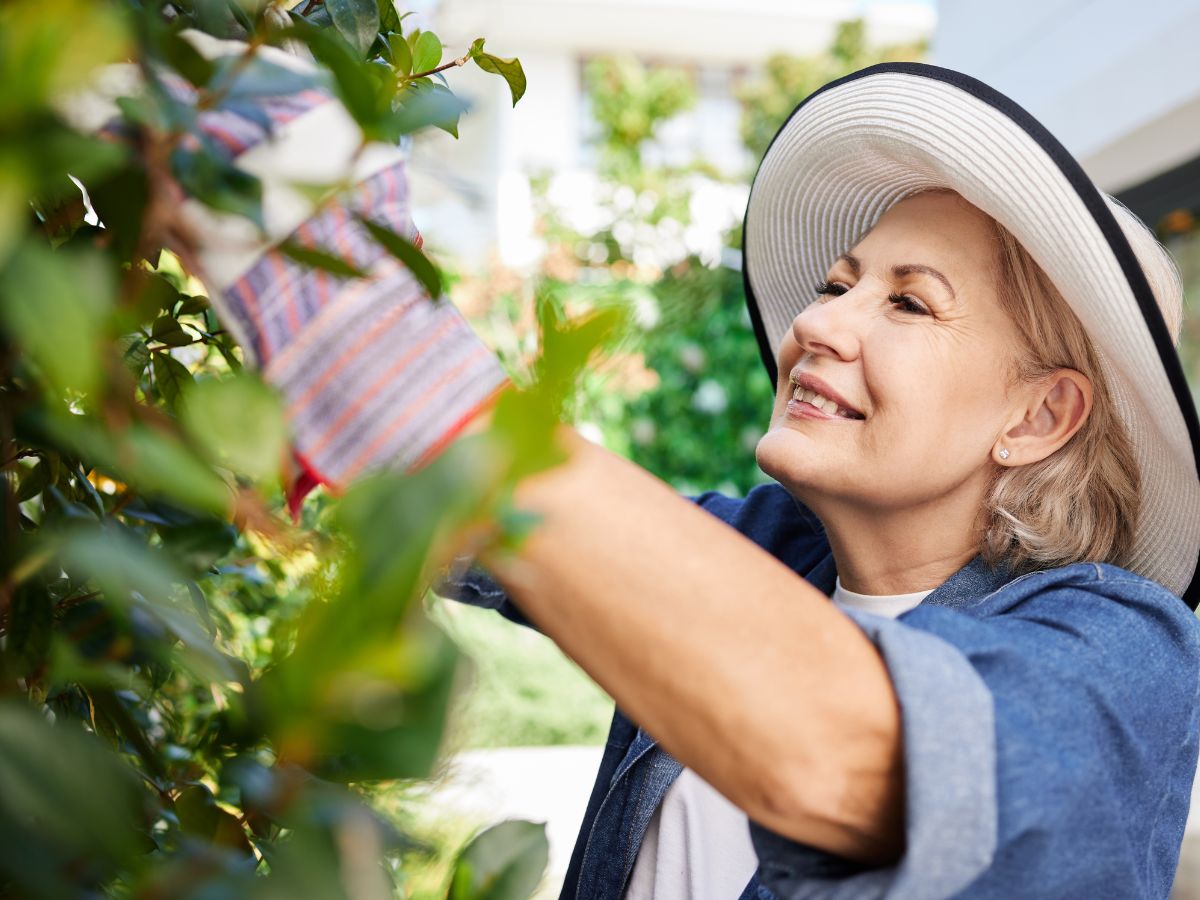
There is a certain sort of tiredness that comes from doing nothing all day. You sit, you rest, you tell yourself you deserve it, and you do, but by evening, your body feels stiff, your mind a bit foggy, your mood not quite where you want it.
Now compare that to a different sort of tiredness. The one that comes after an hour in the garden.
Your back might feel it, your hands might be a little grubby, but there is also something else. A lightness. A sense that your body actually did what it was meant to do. That difference matters more than we often admit. Gardening, for many older adults, offers many great benefits when it comes to maintaining your own vitality.
Movement that feels natural
Exercise can feel daunting. Gyms are noisy. Workouts come with rules. And sometimes, your joints have ideas of their own. Gardening gets around all of that. You bend to check on a plant. You reach for a branch that’s growing the wrong way. You carry a watering can that feels heavier on the way back. None of these actions announce themselves as exercise, but put together, they create a full-body routine.
Exercise can feel daunting. Gyms are noisy. Workouts come with rules. And sometimes, your joints have ideas of their own. Gardening gets around all of that.
Research shows that gardening can count as moderate physical activity, particularly when tasks like digging or raking are involved. That means your heart rate rises gently, your muscles stay engaged, and your joints keep moving without being overworked.
This sort of movement is especially valuable as we get older. Muscle strength, flexibility, and balance don’t look after themselves. They need regular use. Gardening provides that in a way that feels purposeful and not just repetitive. Even your hands benefit. Activities like planting, pruning, and pulling weeds help maintain grip strength and dexterity. These are small details that make a big difference in daily life.
This sort of movement is especially valuable as we get older. Muscle strength, flexibility, and balance don’t look after themselves. They need regular use.
Then there’s the sunlight. Spending time outdoors helps your body make vitamin D, which supports bone health. No, a few minutes in the garden won’t solve everything, but it does help.
And when combined with regular movement, it helps keep your bones stronger and your body more resilient. Perhaps most importantly, gardening allows you to move at your own pace. No timers. No pressure. Just you, your plants, and whatever energy you’ve got that day.
Your brain likes a bit of muck
There is something about being around plants that settles the mind. You might notice it without really thinking about it. You step outside, start watering, and gradually, the noise in your head begins to quieten. Not disappear, but soften.
Science supports this. Time spent in green spaces has been linked to reduced stress, improved mood, and lower levels of anxiety. Some studies even show that activities like gardening can lower cortisol, the body’s main stress hormone. But beyond stress relief, gardening keeps your mind active in a steady, gentle way.
Science supports this. Time spent in green spaces has been linked to reduced stress, improved mood, and lower levels of anxiety. Some studies even show that activities like gardening can lower cortisol, the body’s main stress hormone.
You think about what needs watering. You remember which plants need more sunlight. You decide what to plant next season. These are small decisions, but they keep your brain ticking over. For older adults, this sort of mental activity is important. It supports memory, attention, and problem-solving without feeling like a chore.
There is also the sensory aspect of gardening. The smell of earth after rain. The texture of leaves. The colours changing as plants grow. These experiences stimulate the brain in ways that screens and indoor environments often can’t.
Some research suggests that people who garden regularly tend to have better cognitive health as they age. There are even studies showing a link between gardening and lower rates of dementia. It’s important to understand that this doesn’t prove cause and effect, but the connection is strong enough to be meaningful.
Some research suggests that people who garden regularly tend to have better cognitive health as they age. There are even studies showing a link between gardening and lower rates of dementia.
And then there are the memories. A certain plant might remind you of your childhood home. A familiar scent might take you back decades. Gardening has a way of reconnecting you with your own history, in a way that feels natural rather than forced.
A reason to get up and step outside
As we get older, social circles can shrink. Friends move away. Families get busy. Days can become quieter than expected. Gardening offers a gentle way to reopen those links. It might start with a simple conversation. A neighbour notices your plants and asks a question. You swap tips. Maybe you share a cutting. Over time, these small interactions build into something more.
Friends move away. Families get busy. Days can become quieter than expected. Gardening offers a gentle way to reopen those links. It might start with a simple conversation. A neighbour notices your plants and asks a question.
Social connection is closely tied to both mental and physical health. Feeling part of a community can reduce loneliness, improve mood, and even support heart health. But even when you garden on your own, there’s still a sense of connection. You’re caring for something. Watching it grow. Responding to its needs. That creates a sense of purpose, something many people find themselves missing after retirement.
And if physical limitations make traditional gardening tricky, there are always ways to adapt. Raised beds reduce the need to bend. Pots bring plants closer to you. Even a few containers on a windowsill can provide many of the same benefits.
The garden responds to care. And in return, it offers a way to stay active, keep your mind engaged, and feel connected to others, to nature, and to yourself. All from a small patch of earth, and a willingness to give it a go.