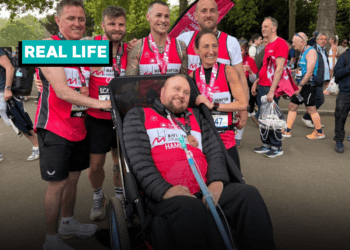
















When Elizabeth Espin moved from South Africa to the UK in March 2020, just ten days before lockdown hit, she brought a firm commitment to keeping fit. Back home, her day started with a 5am run – early enough to fit in movement without taking time away from her kids. Exercise had long been her way of staying grounded. It gave her structure. It gave her space.
But a quiet concern had been growing alongside her discipline.
“I’d had a lump in my breast for some time,” she explains. “It was diagnosed as benign in South Africa. But when I kept running, it started to feel sore. The lump was getting bigger.”
“It was diagnosed as benign in South Africa. But when I kept running, it started to feel sore. The lump was getting bigger.”
Diagnosis, Surgery – and a Run Two Days Later

Not long after arriving in the UK, Elizabeth found herself in a whirlwind of medical appointments. “I was diagnosed with a soft tissue sarcoma in my breast. I was told on the Monday, saw the Royal Marsden Sarcoma Specialist Unit on the Friday, and had a full mastectomy the following Wednesday.” By Saturday, she was back out for a gentle run.
“Losing a breast wasn’t a big deal for me – you can get new ones,” she says. “But feeling out of touch and not in control of my body was the hard part. I found exercise to be an escape. It was the one thing I could control.”
In lockdown, she’d started online HIIT workouts with Mark Wright. “I was the strongest I’d ever been,” she says. That foundation helped carry her through the initial chaos of diagnosis and surgery.
But radiotherapy brought everything to a halt. “Six weeks of treatment, five days a week. It was harsh. The skin on my chest melted away. It was raw. Exercise had to stop because of the sheer pain.”
As soon as treatment ended, she began to move again. “It was amazing to watch the skin heal. And with that, I got back into training. I felt so thankful I could use all of my body.”
Half Marathon, Panic, and a Turning Point
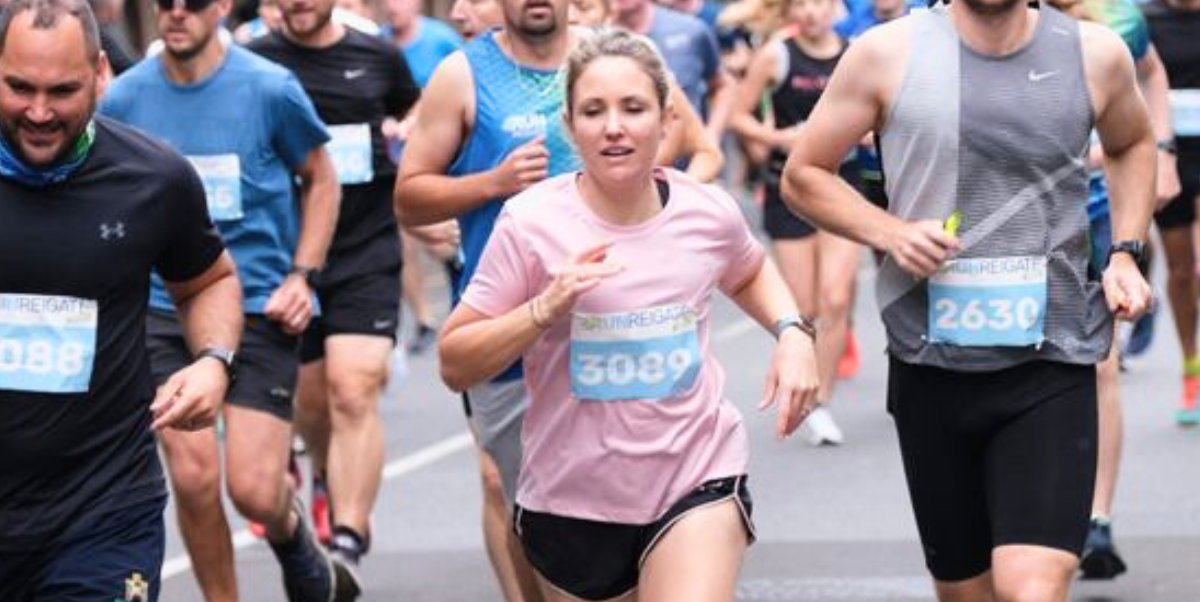
One year after her mastectomy, Elizabeth signed up for a half marathon. “I was determined to be back – better and stronger.” But the experience was more complex than she’d expected. “I ran like a machine for about 5km, and then I had what I think was a panic attack. I was on the side of the road, crying. I felt frustrated that I’d had a setback, annoyed that I was there, grateful I could still be active, but also cross that I felt like a victim.”
That moment changed things. “It made me realise I needed to be kinder to my body, and not separate it from my emotions. I couldn’t hide behind just being physically fit.”
In May 2023, she faced her toughest chapter yet – flap surgery. Surgeons used skin and fat from her stomach to reconstruct her breast. “It was a nine-hour surgery. For eight weeks, I had pain from my hips to my neck. I couldn’t stand up straight for twelve weeks. Physical movement was almost impossible.”

It affected every part of her life. “I couldn’t lift a kettle, couldn’t do anything with my kids. I wasn’t having fun with my husband. I felt like a total loser.”
Finding Strength in Slower Ways
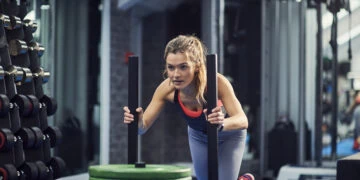
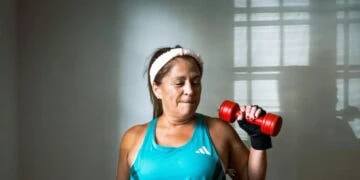
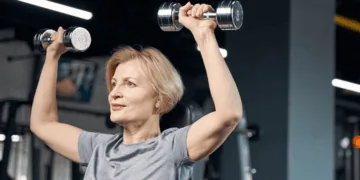
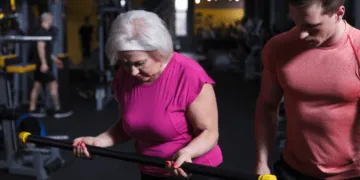
Running was out. For 18 months, her lower back couldn’t handle it. “My glutes, hamstrings and lower back were in a constant state of cramp and seizure.” So she did something she’d avoided for years: she started lifting weights. “Weight training has changed everything. I learned that exercise means nothing if you aren’t strong.”
“I found myself crying while running or walking. It was my private time – maybe it gave my head and heart a chance to connect.”
Now, she listens to her body more. “I know it sounds cheesy, but after everything, it’s necessary. Sometimes the routine just doesn’t work. Right now, my lower back’s in agony – it seized two weeks ago. I haven’t played tennis or been to the gym, and I’m not beating myself up about it.”
What kept her going? “I just kept thinking, what else will I end up saying I can’t do if I don’t at least try? I hadn’t worked this hard, found the man of my dreams, moved countries, and started really enjoying life just to become unfit and unhealthy.”

Some of the hardest moments came when she was alone. “I found myself crying while running or walking. It was my private time—maybe it gave my head and heart a chance to connect.”
Still Moving, Still Aiming
Her mindset has shifted. “I still expect my body to work hard and be its best, but now I’m focused on the goal, not just the destination. I don’t get disappointed if I’m not ‘there’ yet.”
“It never gets easier – you just get stronger.”
To anyone facing treatment or recovery, she says: “A diagnosis is never great, but things are as they are. Take every small step you can. Feeling overwhelmed is okay. If you’re having a good day, just take it. Find your new normal.”
And don’t let anyone tell you it’s over. “Don’t assume it’s all going to be awful. Don’t let people say, ‘you can’t exercise through treatment’ or ‘you’ve just had surgery, you’re crazy.’ Exercise heals. It reminds your body it’s still alive.”
“It never gets easier – you just get stronger. The more you do, the more you can do.”