















































Search “weight loss injections and testosterone uk” and you will find a lot of confident claims and very little that has actually been tested properly. Some threads insist the jabs tank your testosterone. Others insist they boost it. Neither is being straight with you about how thin the research still is. Here is what has actually been studied, what has not, and what that means if you are using one of these medications and training seriously.
This is not medical advice. If you have concerns about your testosterone, or you are thinking about changing anything related to a prescribed medication, speak to your GP or prescriber rather than adjusting anything yourself.
What We Actually Know So Far
The most talked-about finding comes from a research review presented at ENDO 2026, the Endocrine Society’s annual meeting, which looked at existing trials of GLP-1 medications in men with obesity-related low testosterone. The headline finding was reassuring.
These drugs showed no negative effect on hormone levels, sexual function or sperm quality, and in men whose low testosterone was tied to their weight, levels tended to improve rather than worsen. One 16-week trial of liraglutide cited in the review found testosterone increases that outperformed testosterone replacement therapy alone.
Read past the headline and the caveats matter. Only five trials met the researchers’ criteria for inclusion, the results varied between them, and the review’s own authors called for larger studies before drawing firm conclusions. This is early, promising evidence, not a settled answer, and anyone quoting it as proof that weight loss injections raise testosterone is skipping past that part.
Also read: The Truth About Testosterone and Your Workouts
Why Losing Weight Alone Can Move The Needle
Weight and testosterone are already linked well before any medication enters the picture. The NHS notes that low testosterone, known medically as late-onset hypogonadism, can develop in men who are obese or have type 2 diabetes, separate from the gradual 1% a year decline that comes with normal ageing from your thirties onward. Excess body fat is associated with lower testosterone, while weight loss can help raise testosterone levels in men with obesity. The relationship is complex, but the evidence suggests that losing weight can partially reverse obesity-related reductions in testosterone.
This matters because it means any testosterone improvement seen in men on weight loss injections may simply be the effect of losing weight rather than anything the drug is doing directly to your hormones. The distinction matters less for your day to day, and more for understanding why the two things travel together in the data.
For context, weight loss injections are still a minority pursuit among UK men. A UCL study found that 1.6 million adults across England, Wales and Scotland used one of these medications in the year to early 2025, with uptake among men sitting at 1.7%, roughly half the rate seen in women. Testosterone questions are being asked by a relatively small, and until now under-studied, group of men.
Weight Loss Jab And Gym Performance, What Actually Changes
Separate from testosterone, there is a more immediate and better-documented effect worth knowing about if you train. Data presented at the same ENDO 2026 conference, drawn from Fitbit activity tracking, found that people starting a GLP-1 medication walked around 560 fewer steps a day within months of beginning treatment. Appetite suppression and rapid weight loss appear to bring general activity down alongside food intake, and less daily movement is one of the clearer routes to losing muscle rather than fat during treatment.
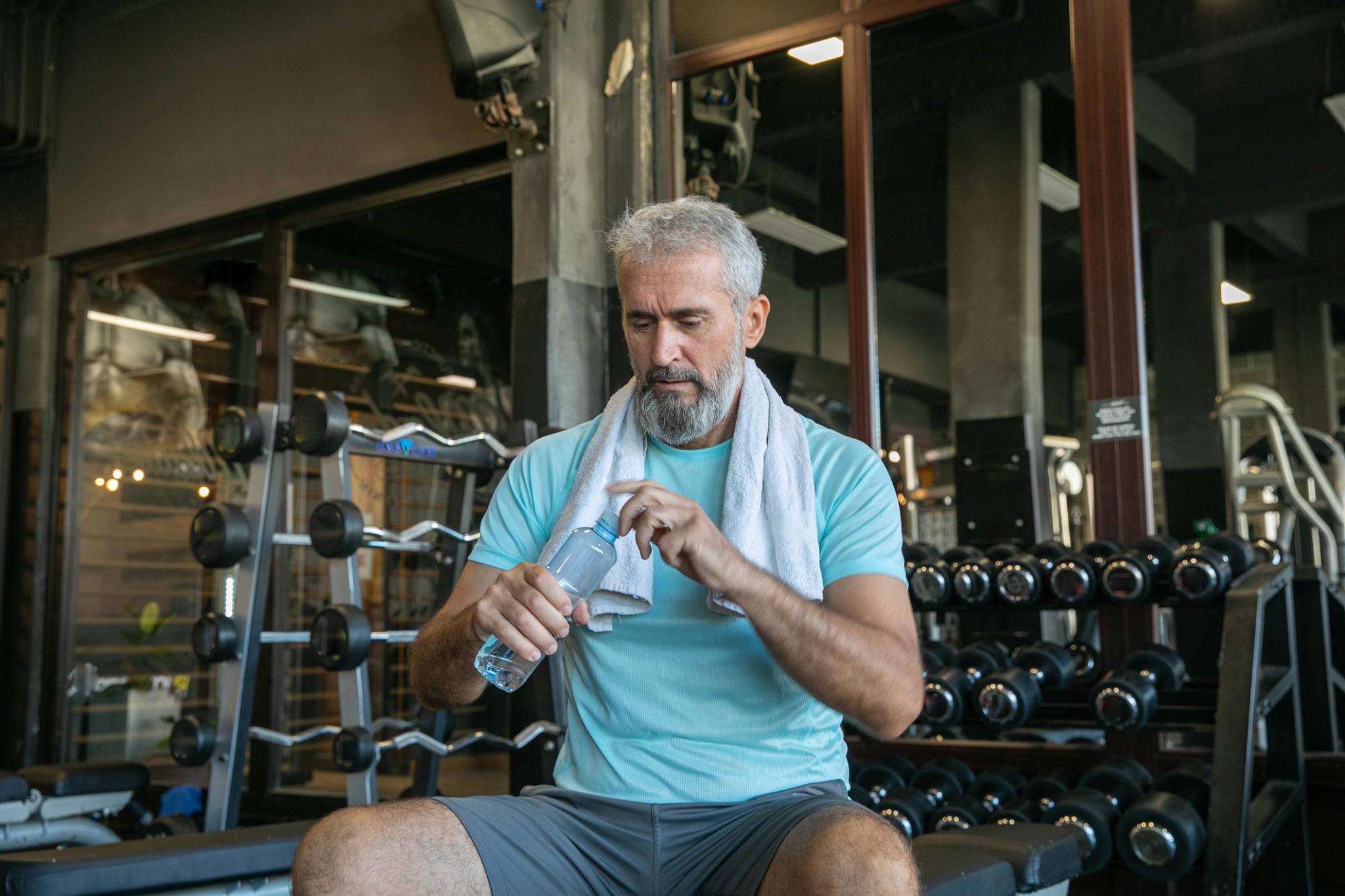
This is where a weight loss jab and gym performance genuinely intersect, and it has nothing to do with testosterone. Reduced appetite makes it harder to eat enough protein to support training, reduced daily movement removes a chunk of the activity that normally protects muscle, and the two together can leave strength and gym performance sliding even while the number on the scale looks like a success.
Researchers are now running trials specifically aimed at this problem, including one ongoing study looking at whether structured resistance training and higher protein intake can prevent the disproportionate muscle loss seen in some people on these medications.
What This Means If You Are Using One
None of this points towards stopping or avoiding a prescribed medication over testosterone worries the evidence does not currently support. What it does point towards is protecting the things you have more control over.
Keep training, and keep it heavy rather than easing off as appetite drops. Prioritise protein at every meal even when eating in general feels harder, since a smaller appetite is usually where the shortfall starts. Keep half an eye on your daily activity outside the gym, given how directly that seems to fall once treatment begins, and consider tracking your steps if you were not already, simply so the drop does not happen unnoticed.
Prioritise protein at every meal even when eating in general feels harder, since a smaller appetite is usually where the shortfall starts.
And if fatigue, low mood, reduced libido or other symptoms associated with low testosterone show up and do not improve as you lose weight, that is a conversation for your GP, backed by a blood test, not something to self-diagnose from a forum thread.

A Word On Testosterone Replacement Therapy
Some men on weight loss injections are also considering, or already using, testosterone replacement therapy, and the two are sometimes discussed as though they are interchangeable solutions to the same problem. They are not. TRT treats low testosterone directly, weight loss injections treat weight, and the ENDO 2026 review’s own conclusion was that treating the underlying weight issue may, in some men, reduce the need for TRT altogether rather than the two being run side by side.
That is a genuinely useful reframe, but it is a decision for you and a doctor with your bloodwork in front of them, not something to work out from general research. If you are on TRT and starting a weight loss injection, or the other way round, tell whoever is prescribing each one about the other, since neither should be managed in isolation.
Where This Leaves You
Weight loss injections and testosterone in UK men is a genuinely under-researched area, and the honest answer right now is cautiously reassuring rather than definitively settled. Early evidence suggests these medications do not harm testosterone and may help it in men whose low levels were tied to their weight, but the trials behind that finding are small and the researchers themselves say more work is needed.
The better-established story is the one about activity and muscle, where a weight loss jab and gym performance are connected through appetite and daily movement rather than hormones. Train hard, eat your protein and keep the conversation about your hormones with the person who can actually test them.