



















































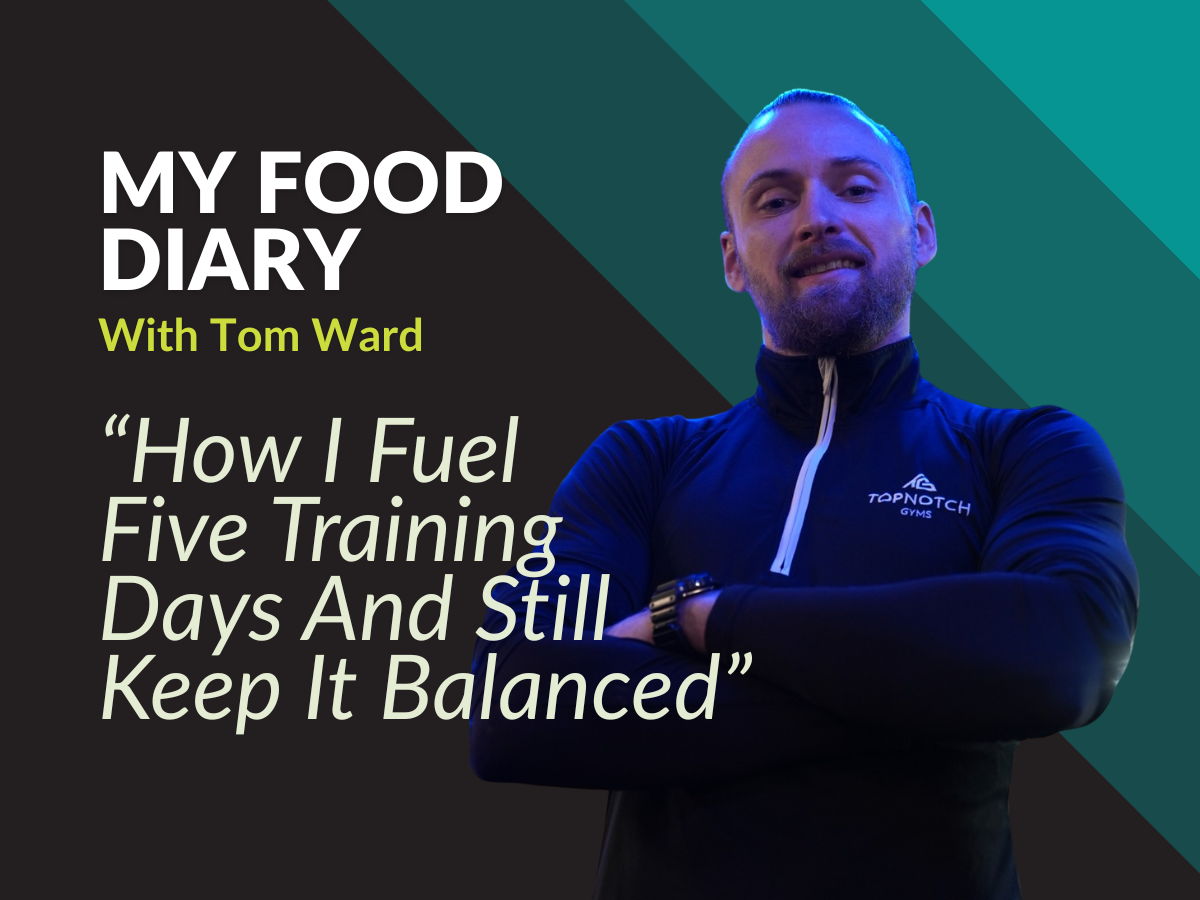
If you manage a busy London gym and train most days yourself, food stops being a side note. It becomes strategy.
Tom Ward, Business Manager at TopNotch Soho, sees his diet as fuel for a full-on lifestyle. In a typical seven-day week, five are active. Think strength work with calisthenics and lifting, explosive football sessions, plus Pilates, Reformer and yoga for core strength and mobility. One rest day is tighter on calories. Sunday is relaxed.
So what does that actually look like on a plate?
First things first, he doesn’t eat breakfast
Tom has followed intermittent fasting for three to four years, Monday to Saturday. He skips breakfast entirely and breaks his fast at midday.
Why?

He finds it sharpens his training performance and helps him avoid blood sugar swings. For him, pushing that first meal later in the day creates steadier energy and fewer crashes. It is structured, deliberate and something he has tested over time.
This isn’t about skipping meals to eat less. It is about timing food to match output.
12pm – breaking the fast with purpose
Lunch is where the real fuelling starts.
Tom meal preps twice a week, usually Sundays and Wednesdays. His lunches are high in protein with carbohydrates to support training sessions.
A typical plate might be:
- Beef ragu with pasta
- Chicken with rice or potatoes and vegetables
There is nothing fussy here. Protein for muscle repair. Carbs for performance. Vegetables for overall health.
He trains hard. His food reflects that.
7pm – refuel and rebuild
Dinner usually lands around 7pm, depending on the day.

Again, the focus is protein first. Steak, chicken or mince tend to headline the plate, with carbohydrates added to replenish glycogen after training.
It is consistent. Reliable. Performance-led.
If you are wondering whether he tracks every gram, the answer is no. Structure matters. Obsession does not.
Snacks that serve a purpose
Yes, he snacks.
Fruit, nuts and boiled eggs are his go-to choices in the afternoon or after dinner. They are quick, portable and aligned with his overall intake. Nothing random. Nothing mindless.
If time is tight after a session, he will use a protein shake to keep calories and recovery on track. It is a practical solution, not a lifestyle badge.
Three litres and a lot of movement
Hydration is non-negotiable.
Tom aims for at least three litres of water a day. He adds electrolytes around workouts and drinks coffee through the morning and afternoon, shaped around his training schedule.
With football intervals and strength sessions in the mix, that level of hydration is essential rather than optional.
The 70–30 rule
Here is where it gets interesting.
Tom lives by a 70–30 rule. Around 70 percent of his meals are prepared and controlled. The other 30 percent is flexible. He eats what he wants within reason.
That balance has helped him maintain a lean physique with minimal weight fluctuation. Over time, his approach has become more intuitive. Years of intermittent fasting and structured eating have built discipline, but also awareness.
If he is caught without prep, he makes better decisions because the habits are already there.
That is the real takeaway.
Nearly 20 years in the game
Tom has worked in almost every role in the fitness industry over the past two decades. Today, he oversees business management at TopNotch Soho, bringing experience from the gym floor to the boardroom.
His diet is not extreme. It is aligned.
Five active days. One stricter rest day. One relaxed Sunday. High protein. Smart carbs. Plenty of water. Room for flexibility.
Food, in his world, is there to support performance, recovery and longevity.
And if you are juggling training, work and real life, that might be the most sustainable goal of all.